Supreme Court Sets Monthly Value of Homemakers’ Labor at ₹30,000 in Motor Accident Claims
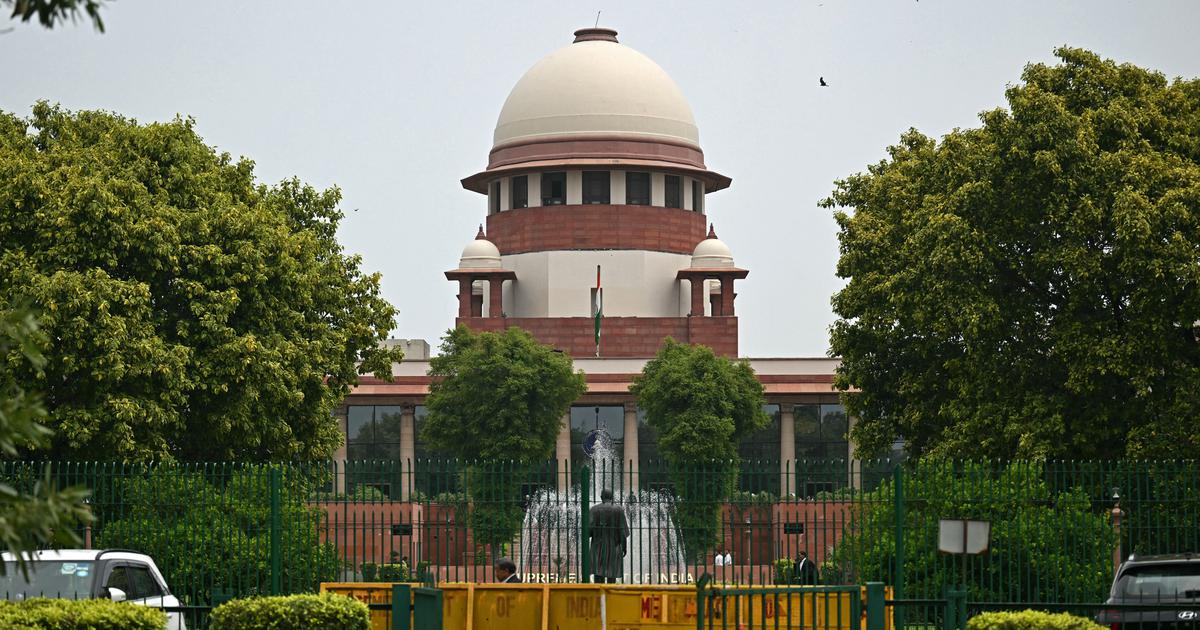
In a landmark judgment, the Supreme Court of India has quantified the value of domestic labor performed by homemakers at ₹30,000 per month. This significant decision was announced during the hearing of a case involving an appeal from a man seeking additional compensation following the tragic death of his wife in a motor vehicle accident that occurred in Haryana in 2001.
The Punjab and Haryana High Court had previously awarded the family a compensation of ₹8 lakh in 2024, but the Supreme Court deemed it necessary to reassess the contribution of homemakers to family and society. A bench comprising Justices Sanjoy Karol and N.K. Singh emphasized that the ₹30,000 valuation reflects the minimal loss of domestic care in the absence of a homemaker.
During their deliberations, the justices highlighted that the court’s determination would be subject to a 10% increase every three years, acknowledging the evolving economic landscape and the increasing recognition of caregiving roles. The bench underscored that caregiving, predominantly undertaken by women, contributes significantly to the nation’s economy, accounting for approximately 15% to 17% of the gross domestic product (GDP).
In their remarks, the justices noted the profound impact of homemakers, stating, “The homemaker not only supports the growth of individuals but also contributes to the nation’s development.” They expressed hope that the term ‘homemaker’ would soon be recognized as synonymous with ‘nation builder.’ This redefinition is crucial, as the justices pointed out the irony of considering homemakers as dependent on the earning members of the household, when in reality, the home’s functioning heavily relies on their efforts.
Such a ruling marks a significant step toward acknowledging the invaluable contributions of homemakers within Indian society. By assigning a tangible value to domestic labor, the Supreme Court is paving the way for a broader understanding and appreciation of the responsibilities that homemakers shoulder. This decision not only has implications for compensation in motor accident claims but also prompts a national dialogue about the recognition of domestic labor in various spheres.
As the nation continues to grapple with issues of gender equality and women’s rights, this ruling serves as a reminder of the essential role that homemakers play in the fabric of society. It also encourages further discussions on the need for equitable recognition of all forms of labor, both paid and unpaid, and could lead to more comprehensive reforms in social and economic policies.