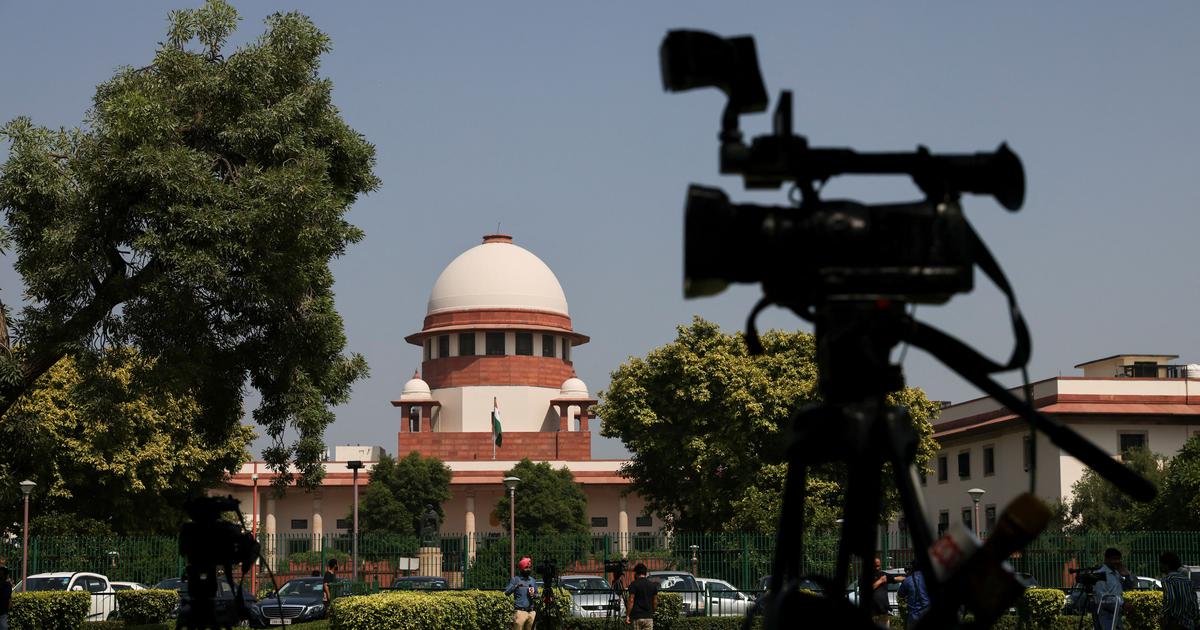
The Supreme Court of India has recently stated that the current legal framework is adequate to address instances of hate speech, dismissing calls for new judicial directives. This decision came during a hearing involving multiple petitions that sought stricter measures and guidelines to combat the growing menace of hate speech in the country.
Justices Vikram Nath and Sandeep Mehta, who presided over the case, emphasized that the belief that current laws do not cover hate speech is misguided. They reiterated that the legislative framework, including provisions in the Indian Penal Code (IPC), already encompasses laws designed to curb actions that incite enmity, disturb public order, or offend religious sentiments.
The Court pointed out that it is not within its purview to create new criminal offences or to extend the scope of existing laws through judicial pronouncements. According to the justices, the fundamental principle of separation of powers prohibits the judiciary from expanding the legislative domain. Instead, they noted that their role is limited to highlighting areas in need of reform rather than enacting laws.
This ruling has sparked a variety of reactions across the political spectrum and among civil society, where some believe that the existing laws lack the robustness needed to deter hate speech effectively. Critics argue that the need for explicit guidelines is more pressing than ever, especially in light of recent incidents highlighting the rise of communal tensions and hate speech incidents in various parts of the country.
The Court’s refusal to issue additional guidelines comes at a time when many sectors of Indian society are advocating for stronger legal measures to tackle hate speech, particularly in an era marked by increasing polarization. Nevertheless, the justices maintained that the solution lies within the existing legal framework, and they pointed to the Bharatiya Nagarik Suraksha Sanhita, which provides for the filing of First Information Reports (FIRs) in cases of cognizable offences. This suggests that the legal system is equipped to respond to hate speech effectively, provided that existing laws are implemented properly.
As the debate surrounding hate speech continues, it remains essential for both government bodies and civil organizations to work collaboratively on reinforcing the legal mechanisms already in place. The Supreme Court’s recent pronouncement serves as a reminder of the need for responsible discourse and adherence to the established laws that govern communal harmony and public order in India.