In the wake of the Bharatiya Janata Party’s (BJP) significant victory in the West Bengal Assembly elections, the state has witnessed several incidents of alleged communal intimidation and vandalism, causing concern among local communities. The BJP, which secured 207 out of the 294 seats, has ended the 15-year rule of the Trinamool Congress led by Mamata Banerjee, marking a substantial shift in the political landscape of the region.
On Tuesday morning, reports emerged of BJP activists taking down a nameplate from a gate on Masjid Bari Road in Barasat town, located in North 24 Parganas. The party workers replaced it with a hoarding proclaiming the road as “Netaji Pally Road.” This action has raised eyebrows, as Nitish Mondal, a local BJP leader, claimed that this renaming had been a long-standing demand of the party. He stated that their requests to change the road’s name had been ongoing for nearly a decade and that the local community supported the alteration. However, this claim is met with skepticism among residents and local observers.
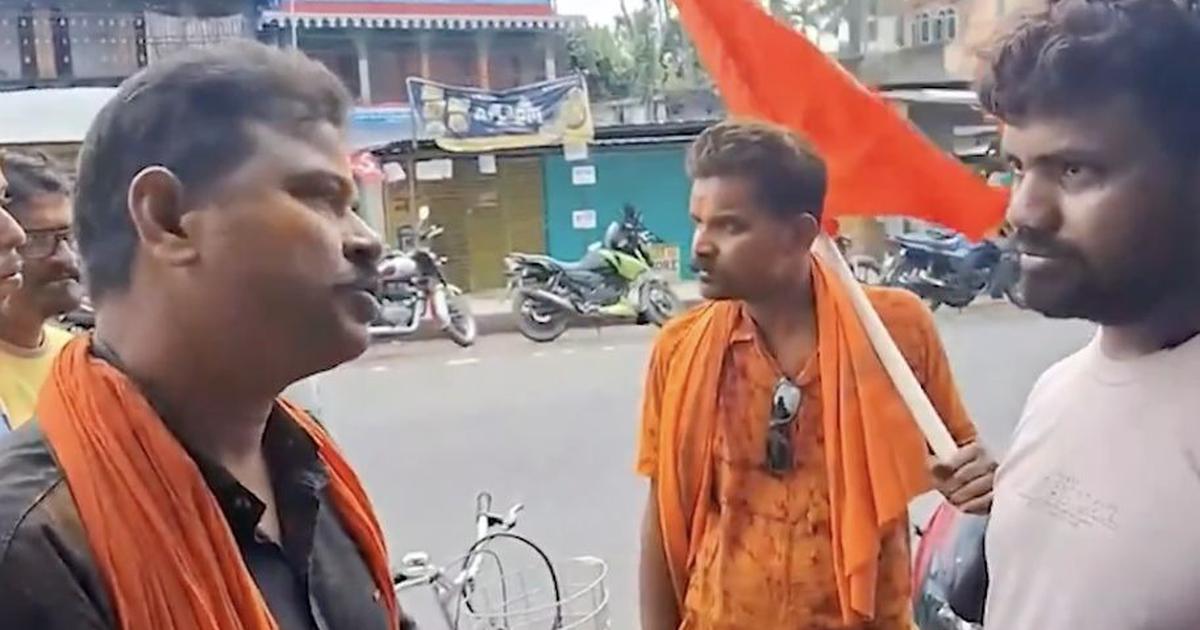
Moreover, tensions escalated in Bongaon, another locality in North 24 Parganas, where BJP workers reportedly confronted the staff of a biryani shop situated near a temple, demanding that they relocate their business. This incident was captured in a video that has since circulated widely on social media, further amplifying fears of communal discord as the BJP consolidates its power in the region. Activists and local leaders have voiced their concerns, asserting that such actions could lead to increased polarization within the community.
The BJP’s ascent in West Bengal signifies much more than just a political victory; it reflects broader ideological battles playing out across the nation. For years, the BJP has campaigned on a platform of Hindutva, which often positions itself against the perceived appeasement of minority communities by previous administrations. This election victory has emboldened the party’s supporters, but it also raises questions about the future of communal harmony in a state known for its diverse cultural fabric.
As the political dynamics evolve, residents and leaders alike are urging for calm and dialogue to prevent further incidents. They emphasize the need for unity in a state that has historically thrived on its multiculturalism. Observers are closely watching how the BJP will navigate its governance in a region where communal sentiment remains a sensitive issue, and whether it can balance its political ambitions with the socio-cultural realities of West Bengal.