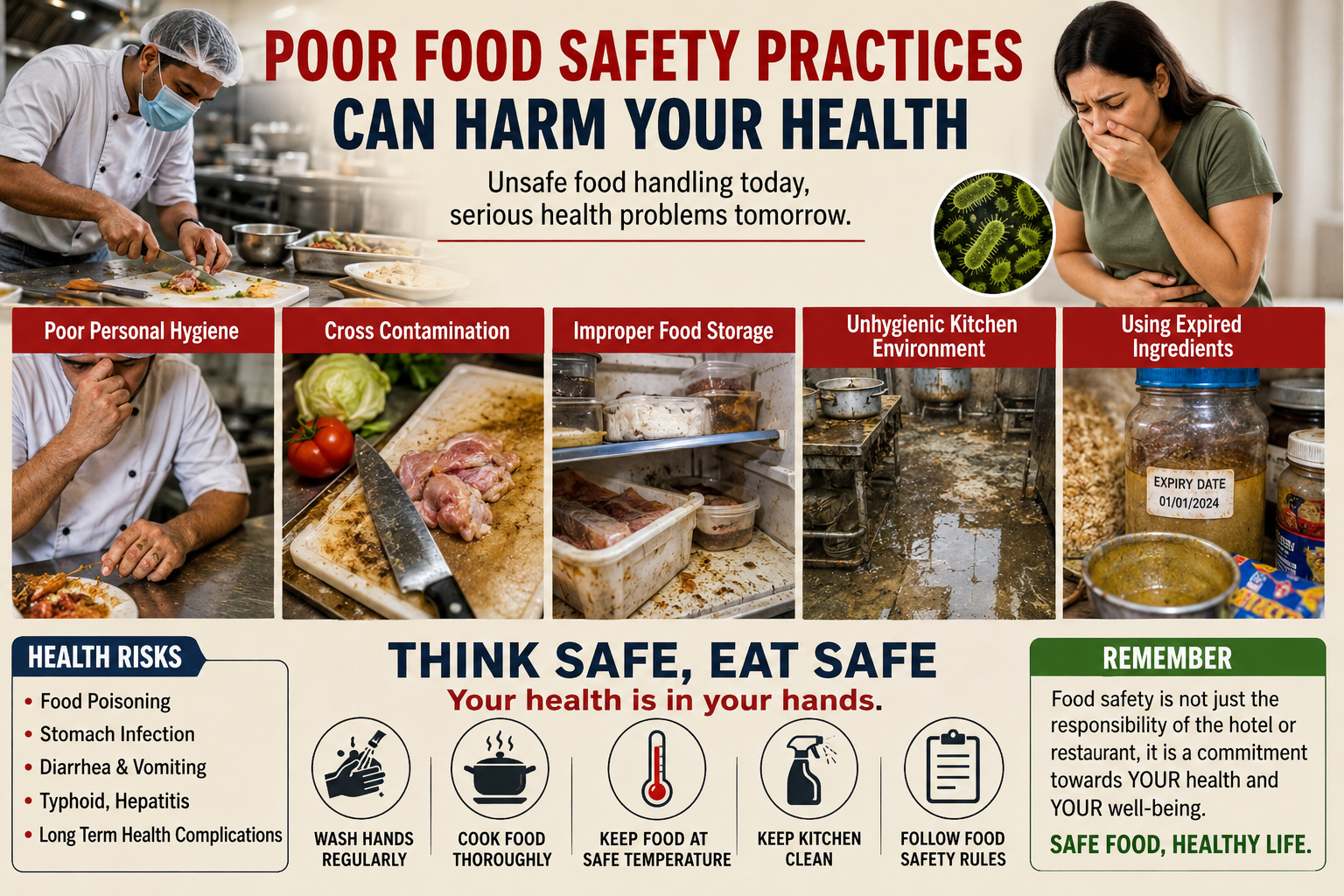
Food safety is a critical responsibility for every hotel, restaurant, catering service, and food establishment. Customers expect that the food they consume is prepared, stored, and served under hygienic conditions. Unfortunately, failure to follow basic food safety precautions continues to be a major concern in many establishments, posing serious health risks to the public.
Poor food handling practices can lead to contamination by harmful bacteria, viruses, parasites, and toxins. Common violations include improper hand washing by food handlers, inadequate cleaning and sanitization of utensils and kitchen equipment, improper storage of raw and cooked food, use of expired ingredients, and failure to maintain appropriate food temperatures.
One of the most common causes of foodborne illness is cross-contamination, where harmful microorganisms from raw food are transferred to cooked or ready-to-eat food. This can occur when the same cutting boards, knives, or preparation surfaces are used without proper cleaning. Similarly, storing food at unsafe temperatures allows bacteria to multiply rapidly, increasing the risk of food poisoning.
The health consequences of consuming contaminated food can range from mild stomach discomfort to severe illnesses such as food poisoning, gastroenteritis, typhoid, hepatitis, and other infectious diseases. Children, pregnant women, elderly individuals, and people with weakened immune systems are particularly vulnerable and may suffer serious complications requiring hospitalization.
Apart from the health impact on consumers, poor food safety practices can severely damage the reputation and business operations of hotels and restaurants. Food safety violations can result in customer complaints, legal action, penalties from regulatory authorities, closure of establishments, and loss of customer confidence.
To ensure public health and safety, food establishments must implement strict food safety measures, including:
Maintaining personal hygiene and regular hand washing.
Conducting periodic medical examinations of food handlers.
Proper cleaning and sanitization of kitchen areas and equipment.
Safe storage and handling of raw and cooked food.
Monitoring food temperatures during cooking, storage, and serving.
Using fresh and approved ingredients.
Providing regular food safety training to all employees.
Conducting routine internal inspections and audits.
Food safety is not merely a regulatory requirement; it is a moral responsibility. Every hotel and restaurant must recognize that negligence in food safety can have serious consequences for customers and society. By adopting and maintaining proper food safety standards, establishments can protect public health, enhance customer trust, and contribute to a safer dining experience for everyone.
Safe food today means a healthier society tomorrow.
n addition to the responsibility of hotels and restaurants, the Food Safety Department and regulatory authorities must conduct regular inspections and audits of food establishments to ensure compliance with food safety standards. Periodic inspections help identify unhygienic conditions, improper food handling practices, use of expired products, and violations of food safety regulations before they pose a threat to public health. Strict monitoring, surprise inspections, and prompt corrective actions against violators are essential to protect consumers and maintain confidence in the food service industry. Regular inspections not only encourage compliance but also promote a culture of food safety and accountability among food business operators.