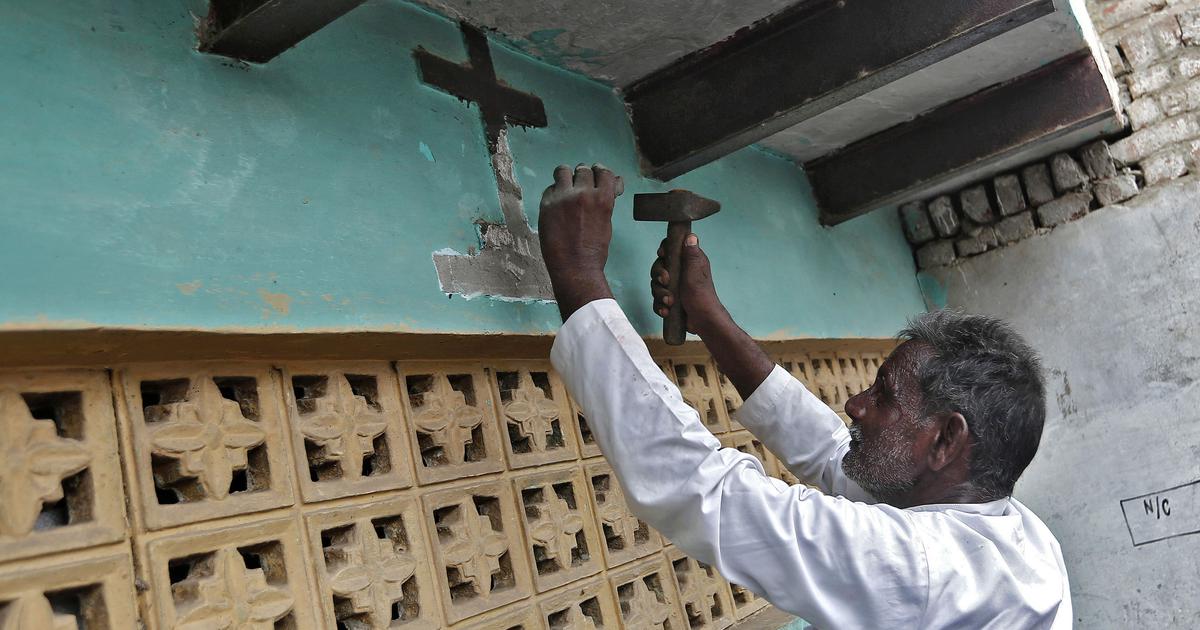
In post-independence India, the Constitution was envisioned as a beacon of hope, promising every citizen the right to freely practice, propagate, and choose their faith. This promise emerged from a tumultuous backdrop of communal strife during the partition of India in 1947, where debates in the Constituent Assembly were marked by intense discussions on safeguarding religious liberties. However, despite these noble intentions, the reality has often betrayed the spirit of this freedom.
One of the most significant contradictions arises from the anti-conversion laws that have been enacted at various levels across the country. These laws not only infringe upon the fundamental right to religious freedom but have also raised questions about the Constitution’s commitment to equality. Specifically, they disproportionately impact marginalized communities, particularly Dalits, who have historically faced discrimination within Hindu society.
As outlined in the Constitution (Scheduled Castes) Order of 1950, individuals from Scheduled Castes—primarily those practicing Hinduism, Buddhism, and Sikhism—are afforded certain reservations in government jobs and educational institutions. However, if a Dalit individual opts to convert to Christianity or Islam, they effectively lose these benefits. This disqualification has been upheld by the Supreme Court of India, which stated in March 2026 that the conversion results in an immediate cessation of Scheduled Caste status.
The court did, however, provide a glimmer of hope by suggesting that this status could be restored should the individual choose to revert to their original faith, contingent upon acceptance by their caste community. This aspect of the ruling has been characterized as somewhat redundant, as it reinforces the notion that one’s religious identity is intrinsically tied to social privileges, rather than individual conscience.
The implications of these laws extend beyond mere legalities; they signify a broader societal issue wherein the freedom to choose one’s faith is entangled with social and economic status. For many Dalits, converting to a different faith is not just a spiritual journey but also a quest for dignity and equality. Yet, the threat of losing crucial social benefits acts as a deterrent, compelling them to weigh their spiritual aspirations against material necessities.
Moreover, the context of these anti-conversion laws often intertwines with political narratives that seek to marginalize minority religions. The argument presented by proponents of these laws often revolves around the idea of protecting social harmony, yet they inadvertently contribute to a climate of fear for those contemplating conversion. The state, instead of safeguarding individual rights, seems to be preserving antiquated structures of caste-based discrimination.
This ongoing struggle for religious freedom invites a critical examination of the legal frameworks that govern it. It also underscores the need for a collective advocacy for a more inclusive understanding of religious rights—one that transcends legislative boundaries and prioritizes the individual’s right to choose a faith without the fear of losing social support.
As India continues to grapple with its identity in a diverse society, the dialogue surrounding religious freedom and anti-conversion laws must evolve. It is imperative that all citizens, regardless of their caste or creed, are afforded the fundamental right to choose their spiritual path freely, reflecting the true essence of India’s constitutional promise.