




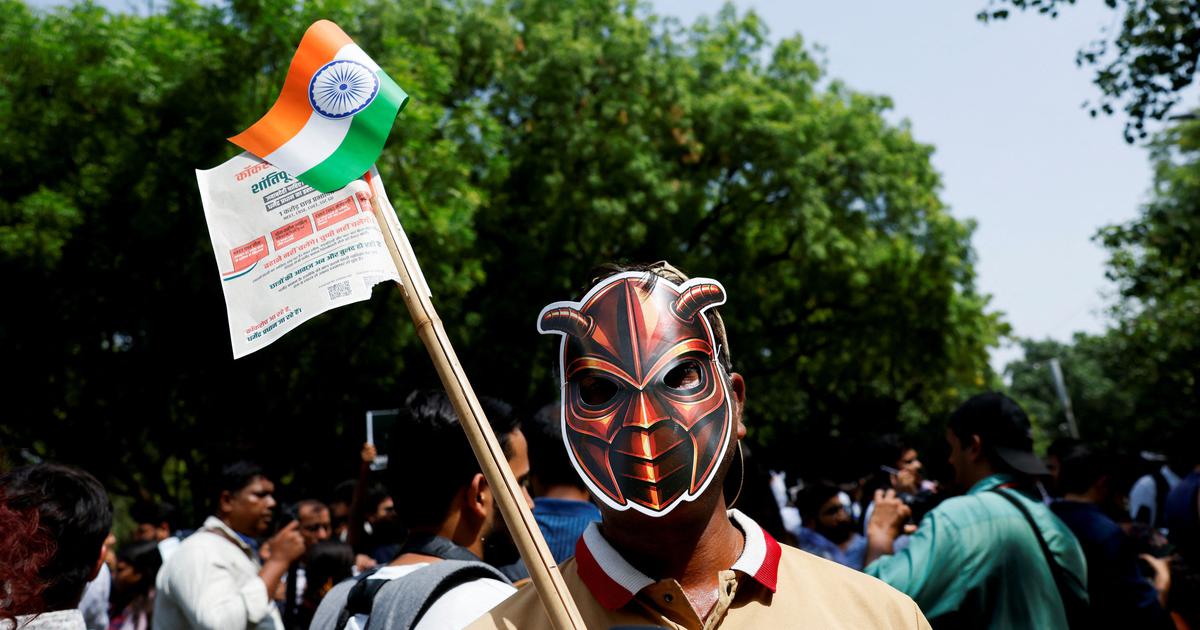
In an unprecedented turn of events, a unique protest movement dubbed the ‘Cockroach Janata Party’ took to the streets of New Delhi on June 7, as hundreds donned cockroach masks to voice their grievances. This peculiar demonstration, which coincided with a punishing summer heatwave, is more than a mere spectacle; it’s a symbol of a burgeoning Gen Z activism that has emerged in response to pressing issues like unemployment and education system failures in India.
The origins of this movement can be traced back to a flippant remark by India’s Chief Justice, who likened jobless youth to cockroaches. This offhand comment inadvertently sparked a satirical online campaign that rapidly gained traction, amassing a staggering 19 million followers on Instagram within just a week. This surge in online support has alarmed the ruling Bharatiya Janata Party (BJP), prompting the government to block the movement’s social media presence in a bid to contain its influence.
Leading the charge is a Boston University student who returned to India specifically for this protest. His demands are clear and pointed: the resignation of the Education Minister, whose tenure has been marred by controversies including examination paper leaks and widespread misgrading. The frustrations of a generation that feels increasingly marginalized and disenfranchised are palpable, and the Cockroach Janata Party has tapped into this sentiment with an unorthodox yet compelling narrative.
While the protest showcased a lighthearted approach to serious issues, it also served as a stark reminder of the challenges faced by the youth in India today. Many young Indians are grappling with joblessness and disillusionment with the education system, which has often failed to meet their expectations. The Cockroach Janata Party serves as a unifying force for these feelings of frustration, offering a platform for young voices to demand accountability from those in power.
As this movement gains momentum, it poses a significant challenge to established political parties, particularly the BJP, which has long dominated the Indian political landscape. The novelty and creativity of the Cockroach Janata Party could resonate with a younger electorate that is increasingly disenchanted with traditional political structures. The emergence of online movements like this suggests a shift towards a new kind of activism, where satire and social media become tools for political engagement and change.


