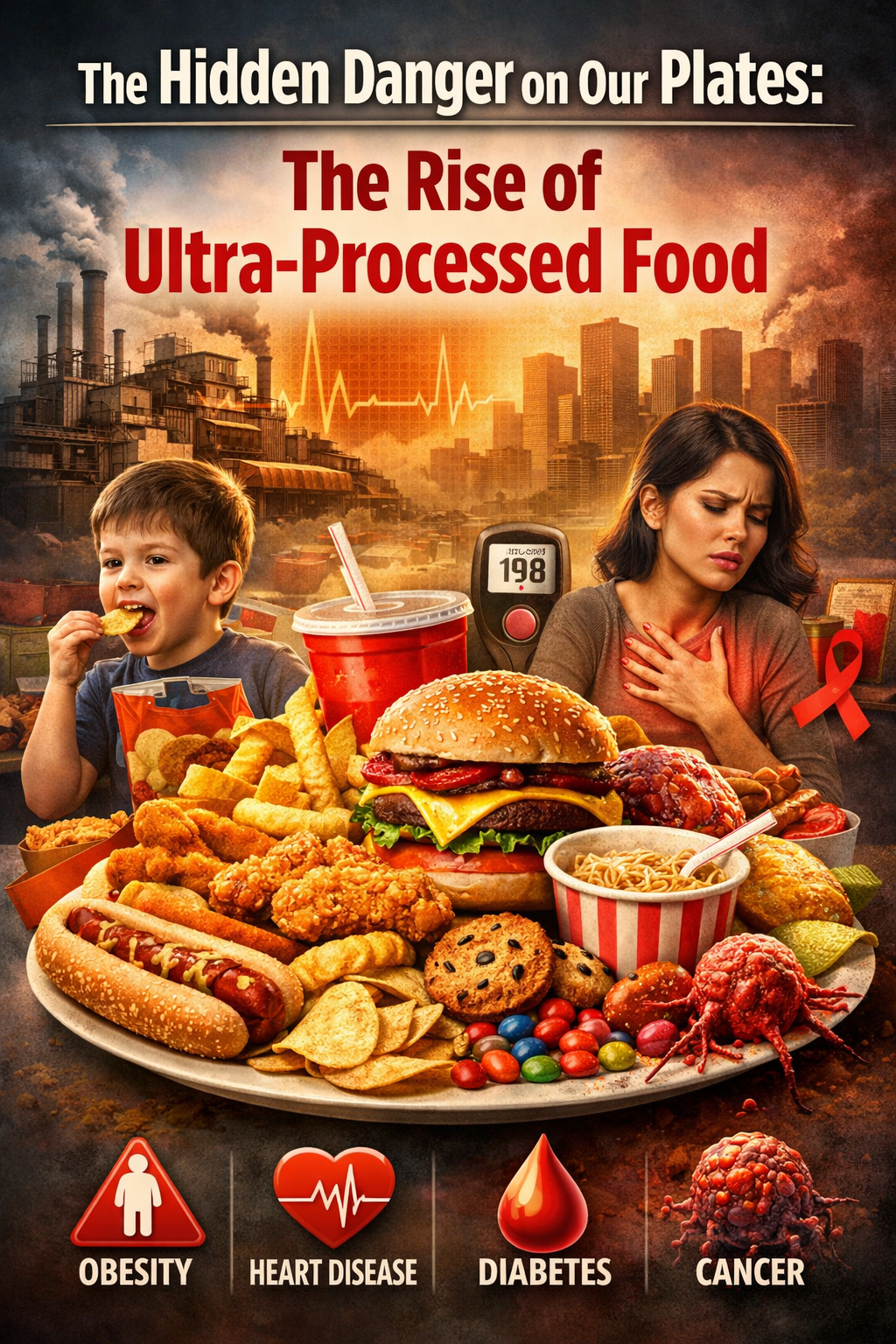
In today’s fast-paced world, convenience often dictates our food choices more than nutrition or tradition. From instant noodles and packaged snacks to sugary beverages and frozen meals, ultra-processed foods have quietly become a daily staple for millions of people across the globe. In rapidly urbanizing regions, especially in countries like India, these foods are no longer occasional indulgences—they are part of everyday life. However, behind their attractive packaging, long shelf life, and irresistible taste lies a growing public health concern that is becoming increasingly difficult to ignore.
What Are Ultra-Processed Foods?
Ultra-processed foods are not simply “processed” in the traditional sense of cooking or preserving. They are industrial formulations made largely from substances extracted from foods—such as refined oils, sugars, starches, and proteins—or even synthesized in laboratories. These products typically contain additives like preservatives, artificial flavors, colorings, sweeteners, and emulsifiers that are designed to enhance taste, improve texture, and extend shelf life.
Unlike minimally processed foods such as fresh vegetables, fruits, grains, or even traditionally prepared items, ultra-processed foods often bear little resemblance to their original ingredients. Common examples include chips, soft drinks, packaged biscuits, instant noodles, ready-to-eat meals, sugary cereals, and processed meats like sausages and nuggets.
Why Are They So Popular?
The widespread popularity of ultra-processed foods is no coincidence. Food companies invest heavily in research and development to create products that are “hyper-palatable”—engineered to hit the perfect combination of sugar, salt, and fat that makes them highly appealing and sometimes even addictive. These foods are designed to stimulate cravings, encouraging people to eat more than they normally would.
In addition, aggressive marketing strategies play a major role. Bright packaging, celebrity endorsements, and targeted advertising—especially through digital platforms—make these products highly attractive, particularly to young consumers. Their affordability and easy availability further contribute to their dominance in the market.
In busy metropolitan areas like Mumbai, where long working hours and commuting leave little time for cooking, ultra-processed foods provide a quick and convenient solution. For many households, especially dual-income families, ready-to-eat meals and packaged snacks offer a practical alternative to traditional home-cooked food. However, this convenience often comes at the cost of long-term health.
Health Risks on the Rise
A growing body of scientific research has linked high consumption of ultra-processed foods to a wide range of serious health issues, including obesity, type 2 diabetes, cardiovascular diseases, high blood pressure, and certain cancers.
One of the main reasons for these risks is the nutritional imbalance found in such foods. They are typically high in added sugars, unhealthy fats, and sodium, while being low in essential nutrients such as fiber, vitamins, and minerals. This imbalance can disrupt the body’s metabolism, leading to weight gain and increasing the risk of chronic diseases.
Moreover, some studies suggest that the additives, preservatives, and chemical compounds used in ultra-processed foods may contribute to inflammation, oxidative stress, and hormonal disruption—all of which are factors linked to the development of cancer. Highly processed meats, sugary beverages, and foods containing artificial additives have been increasingly examined for their potential role in raising cancer risk when consumed frequently over long periods.
That said, it is important to be precise: ultra-processed foods are not the single main cause of cancer. Cancer is a complex disease influenced by multiple factors, including genetics, tobacco use, alcohol consumption, environmental exposure, physical inactivity, and overall diet. However, poor dietary patterns—especially those dominated by ultra-processed foods—are now considered a significant contributing risk factor in modern lifestyles.
Impact on Children and Youth
Children and adolescents are among the most vulnerable to the influence of ultra-processed foods. With their colorful packaging, cartoon characters, and appealing flavors, these products are specifically designed to attract young consumers. Advertising campaigns often target children through television, social media, and even school environments.
As a result, many children are consuming higher amounts of sugary snacks, soft drinks, and processed meals than ever before. This has led to a concerning rise in childhood obesity and related health problems, including early-onset diabetes and poor cardiovascular health.
In addition to physical health issues, excessive consumption of ultra-processed foods can also affect cognitive development and academic performance. Diets high in sugar and low in essential nutrients have been linked to reduced concentration, mood swings, and behavioral problems in children.
Economic and Cultural Impact
The rise of ultra-processed foods is not only a health issue but also a cultural and economic one. Traditional diets, which were once rich in locally sourced ingredients and home-cooked meals, are gradually being replaced by packaged and industrially produced foods. This shift is leading to the erosion of culinary traditions and local food knowledge that have been passed down through generations.
In countries like India and Nepal, where food is deeply connected to culture, festivals, and family life, this change represents a significant loss. The art of cooking traditional meals is slowly declining as convenience takes precedence over heritage.
At the same time, the increasing prevalence of diet-related diseases is placing a heavy burden on healthcare systems. Treating chronic illnesses such as diabetes, heart disease, and cancer requires long-term medical care, which can be financially draining for families and governments alike. The economic cost of poor dietary habits is therefore substantial and far-reaching.
The Way Forward
Addressing the growing impact of ultra-processed foods requires a collective effort from individuals, communities, governments, and the food industry. Awareness is the first and most crucial step. Consumers need to understand what they are eating and how it affects their health.
Simple lifestyle changes can make a significant difference. Choosing fresh, whole foods over packaged items, cooking meals at home, and incorporating more fruits, vegetables, and whole grains into daily diets are effective ways to reduce reliance on ultra-processed foods. Reading food labels and being mindful of ingredients can also help consumers make informed choices.
For children, parents and schools play a critical role in shaping healthy eating habits. Encouraging balanced diets and limiting the availability of junk food can help protect younger generations from long-term health issues.
Governments and health organizations also have an important responsibility. Implementing stricter regulations on food labeling, restricting misleading advertisements, and promoting public health campaigns can help create a healthier food environment.
Ultra-processed foods may offer convenience, taste, and affordability, but their long-term impact on health and society cannot be overlooked. While they are not the sole cause of diseases like cancer, their excessive consumption is increasingly recognized as a significant risk factor in modern lifestyles.
Making conscious and informed food choices, preserving traditional diets, and promoting healthier living habits are essential steps toward reducing disease risk. The shift back to natural, wholesome food is not just a lifestyle trend—it is a necessary move toward safeguarding public health for future generations.