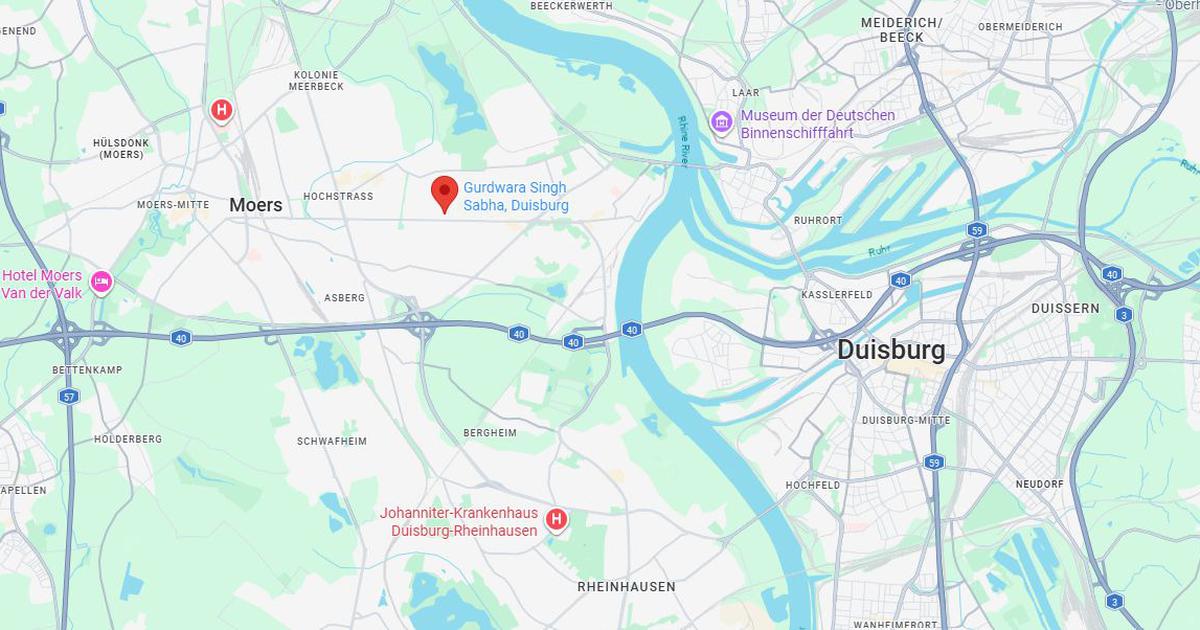
In a troubling incident that has sent shockwaves through the Sikh community in Germany, eleven individuals sustained injuries during a violent altercation at a gurdwara in Moers on Sunday. The incident, reported by various news outlets including India Today and the German publication Neue Ruhr Zeitung, involved over 40 participants, prompting police intervention to restore order.
The clash stemmed from deep-seated tensions surrounding the management and financial governance of the gurdwara, particularly regarding the election of a new board tasked with overseeing the religious site and its community assets. Disagreements about these issues have been brewing, culminating in this violent outbreak which not only disrupted the peace but also raised concerns within the broader Sikh diaspora in Germany and beyond.
Eyewitness accounts and videos circulating on social media depict a chaotic scene, with individuals wielding kirpans—a ceremonial sword symbolizing the protection of the weak—against one another. This shocking display of violence contradicted the very values that the kirpan represents, leading to widespread condemnation among community leaders. As tensions escalated, many attendees, estimated to be between 300 to 400 individuals, fled the premises in fear.
Sources indicate that the conflict may have been ignited by disputes over the management of religious offerings, known as Golak, that play a crucial role in sustaining gurdwara activities and community welfare. A video shared widely on social platforms captures one person lamenting that the altercation began due to disagreements involving the previous management, which had recently lost an election. This incident is a stark reminder of how communal strife can manifest even in spaces meant for peace and spiritual reflection.
As the dust settles on this incident, community leaders are calling for calm and unity, emphasizing the need for dialogue and reconciliation rather than violence. The Sikh community in Germany, which is known for its resilience and strong ties, is now faced with the challenge of addressing these internal conflicts constructively while preserving the sanctity of their religious spaces. The hope remains that this incident will serve as a wake-up call to address underlying issues and foster a spirit of cooperation among community members.
The clash at the gurdwara not only highlights the complexities of managing religious institutions abroad but also serves as an important lesson for diasporic communities navigating governance, identity, and belonging. As the investigation unfolds, the broader implications of this violence will likely resonate within Sikh communities worldwide, prompting discussions on how to prevent such incidents in the future.