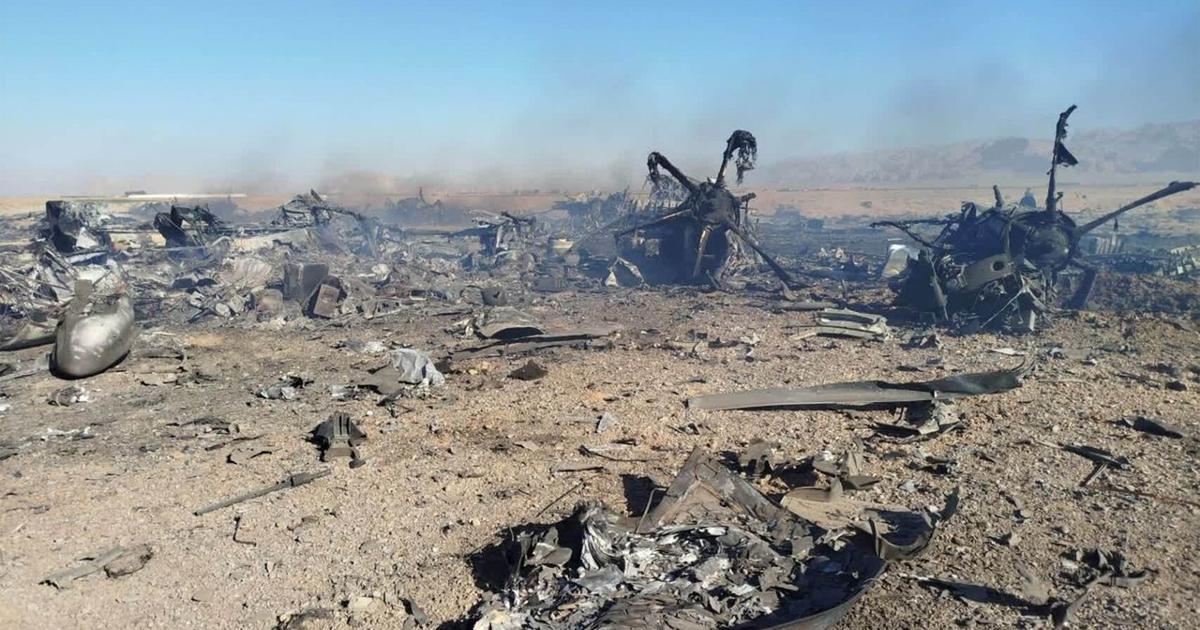
A recent analysis conducted by the US Congressional Research Service has revealed that the United States has lost or damaged at least 42 military aircraft during its ongoing conflict with Iran. This report, published on May 13, draws from various news sources and official statements from the US Department of War as well as military personnel.
According to the study, the losses include a variety of aircraft ranging from fighter jets to drones, with a notable mention of four F-15E Strike Eagle fighter jets. Disturbingly, three of these jets were reportedly downed in what the military called “friendly fire incidents” over Kuwait on March 2, while the fourth was shot down during combat operations in Iran on April 5. The brave crew members of this particular aircraft were successfully rescued from inside Iranian territory by US forces, highlighting the perilous nature of aerial combat in the region.
The scope of the aircraft losses extends beyond fighter jets. The report also highlights the loss of one F-35A Lightning II, a fifth-generation stealth fighter, and an A-10 Thunderbolt II, known for its ground attack capabilities. In addition, seven KC-135 Stratotankers, crucial for aerial refueling missions, were also included in the casualty list, along with one E-3 Sentry, which plays a pivotal role in airborne warning and control operations. Furthermore, two MC-130J Commando II special operations aircraft and 24 MQ-9 Reaper drones were reportedly lost, alongside one MQ-4C Triton drone and a HH-60W Jolly Green II helicopter.
The report emphasizes that these figures may change as a result of ongoing combat activities and the classification of information. The US Department of War has also prepared a cost estimate for the operations, but the exact figures remain undisclosed, leaving many questions about the financial implications of this prolonged conflict. As tensions remain high in the region, the military and strategic repercussions of such losses raise critical concerns about the future of US military engagements abroad.
This data sheds light on the complex, often dangerous landscape of military operations in the Middle East, where not only are lives at stake, but also significant resources are being utilized. For Indian readers, this situation serves as a reminder of the delicate balance that nations must navigate in geopolitical conflicts and the potential ramifications for global security.