In a noteworthy development, Presidents Donald Trump and Xi Jinping have openly acknowledged a significant transformation in the dynamics of US-China relations. This shift, which has been brewing for some time, suggests a new era of what Beijing terms as ‘constructive strategic stability,’ while US Secretary of State Marco Rubio refers to it as a ‘strategic stability point.’ For the first time in decades, the United States recognizes that China holds equal footing in both economic strength and military capability, a balance that has not been witnessed since the Cold War.
This emerging equilibrium has far-reaching implications, solidifying US-China ties as a foundational element of the global order and international security landscape. It signals a new deterrent reality wherein China can assertively defend its interests, particularly regarding Taiwan, thereby limiting unilateral actions by the United States in the region. While confrontations between these two heavyweights have seemingly subsided for now, this lull ushers in a period characterized by managed competition in the vast Indo-Pacific region.
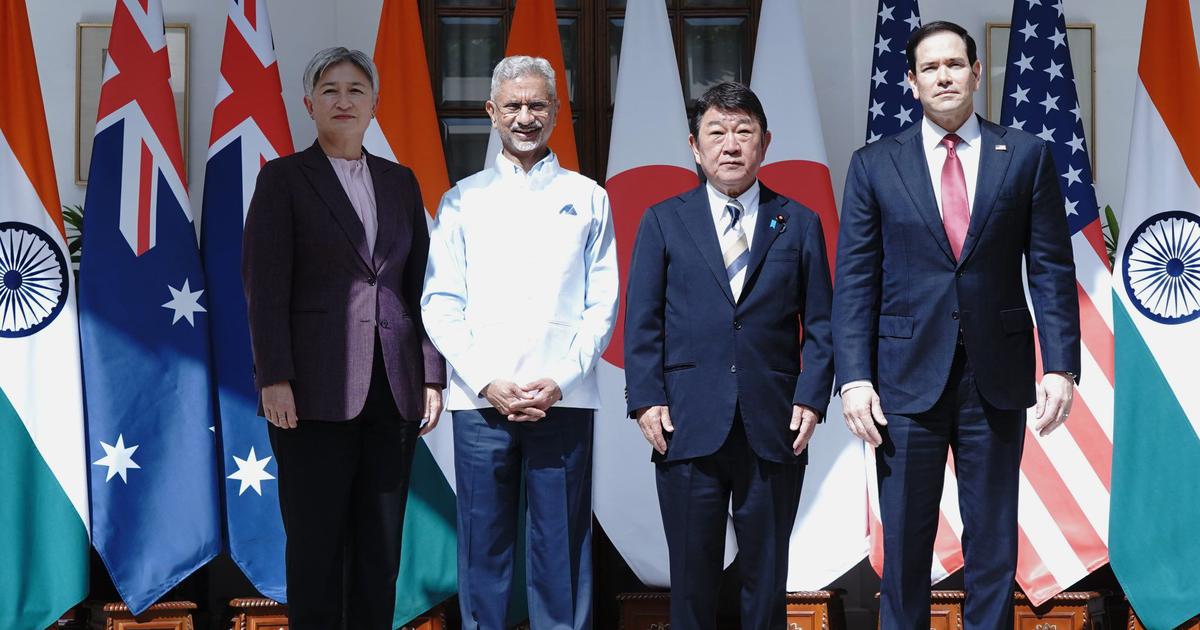
Against this backdrop, the Quadrilateral Security Dialogue (Quad), originally established in 2007 by Australia, India, Japan, and the United States to counterbalance China’s growing influence, appears to be relegated to a secondary role. In a recent meeting of Quad Foreign Ministers held in Delhi, Secretary of State Marco Rubio outlined a vision for the Quad members that emphasizes collaboration on critical mineral access, enhancement of US energy exports, and bolstering maritime surveillance and port infrastructure throughout the Indo-Pacific.
The redefined purpose of the Quad indicates a shift from its original mandate of countering Chinese power to more functional partnerships aimed at strategic resource management and regional stability. This change highlights the complexities of Indo-Pacific geopolitics as nations navigate their interests within a framework increasingly dominated by US-China relations. For India, this repositioning presents both challenges and opportunities as it seeks to maintain its sovereignty and strategic autonomy while engaging with its Quad partners.
As the situation develops, India must carefully assess its role within the Quad and its relationship with both the US and China. The balancing act requires a nuanced understanding of regional dynamics and the aspirations of all stakeholders involved. With the potential for significant geopolitical realignment, India stands at a crossroads that could shape its future role on the world stage.