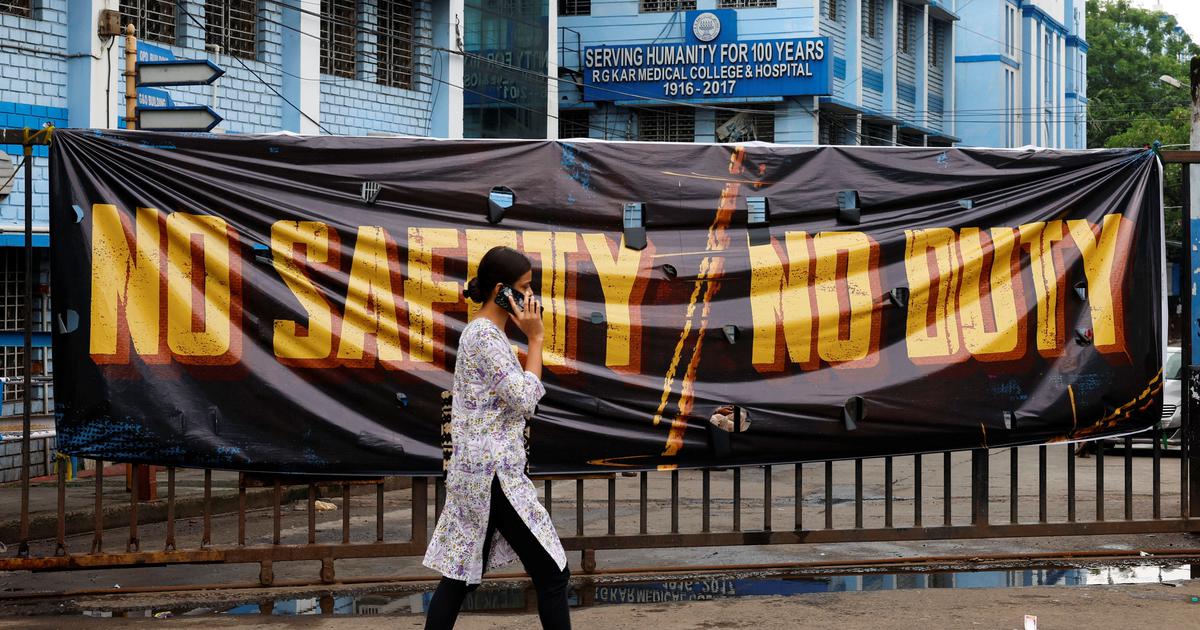
Since her days as a student at Kolkata’s prestigious Presidency University, Rimjhim Sinha has been an unwavering advocate for women’s rights and social justice. Her journey as an activist began in 2016, but she admits that her efforts had a limited reach, often connecting with merely a few hundred individuals at a time. However, the tides turned dramatically on August 14, 2024, when her call to women across West Bengal and beyond to participate in a ‘raat dakhal’ or ‘reclaim the night’ movement garnered an overwhelming response from lakhs of women. The reason behind this remarkable turnout still leaves Sinha in a state of disbelief.
The catalyst for this mobilization was the shocking rape and murder of a trainee doctor at the RG Kar Medical College and Hospital, an incident that sent shockwaves through Kolkata and stirred public outrage. The young woman was tragically attacked while on a night shift in the hospital, igniting a nationwide conversation about women’s safety and the systemic failures that allow such heinous acts to occur. Sinha’s call for action was not only a response to the crime but also a rebuttal to the former principal of RG Kar College, Sandip Ghosh, who controversially suggested that the victim bore some blame for being in a secluded area late at night.
In the wake of this tragedy, Sinha’s activism resonated deeply with women, some of whom felt a profound sense of solidarity with the victim and her grieving family. The outpouring of grief and anger became a rallying cry, filling the victim’s mother, Ratna Debnath, with hope. In a moment that exemplified the power of community and shared struggle, Debnath encouraged Sinha to organize another ‘raat dakhal’, expressing her wish to participate in the movement alongside other women. This sense of unity and purpose awakened a collective consciousness among women, many of whom began to question societal norms that often silence and victim-blame.
As the movement gained momentum, it sparked critical discussions around women’s safety in public spaces and the need for systemic change. Activists like Sinha stood at the forefront, challenging deeply rooted patriarchal attitudes and demanding accountability from institutions that are meant to protect citizens. The response to the ‘raat dakhal’ was a testament to the growing recognition of women’s rights as a crucial aspect of social justice in India. With the support of countless individuals, the movement has not only elevated the voices of the victim and her family but also highlighted the urgent need for reforms in law enforcement and societal attitudes toward gender violence.
Despite the challenges that lie ahead, Sinha remains committed to her cause. The journey from a student activist to a prominent figure in the women’s movement reflects not only her personal growth but also the shifting landscape of women’s rights in India. As the nation grapples with the implications of the RG Kar tragedy, it serves as a reminder of the ongoing struggle for justice and the imperative for society to uplift and empower women in every sphere. Sinha’s activism stands as a beacon of hope, inspiring others to join the fight for a safer, more equitable future.