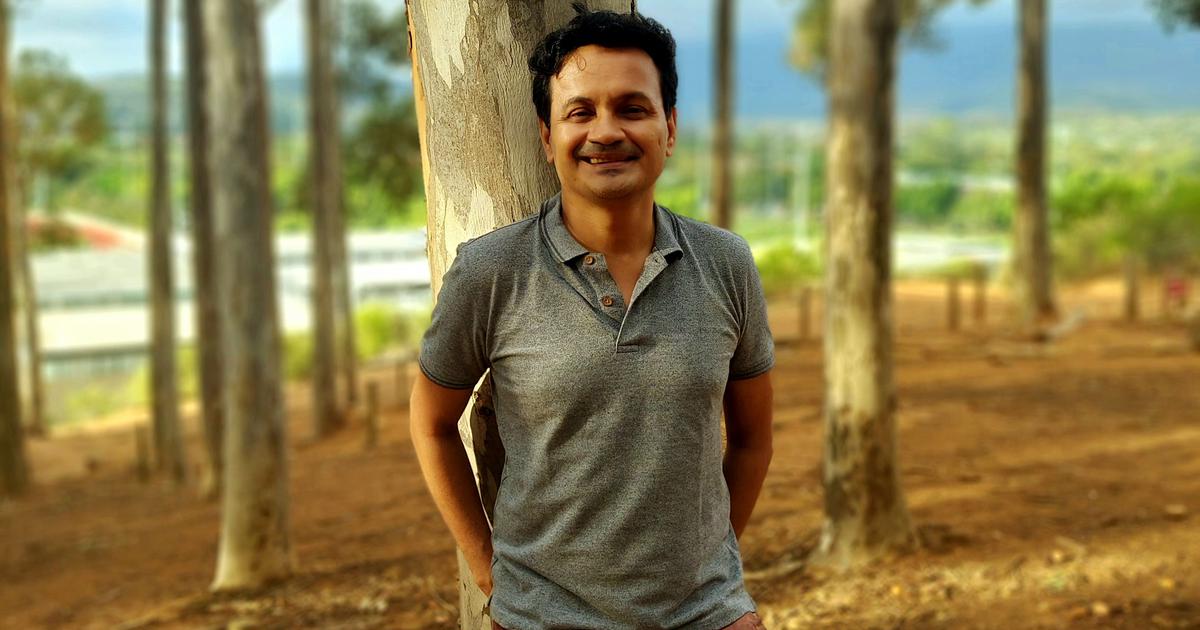
In a thought-provoking narrative, a writer and academic reflects on the intersection of artificial intelligence (AI) and human creativity, particularly in the context of the education sector. This discourse is particularly relevant in contemporary India, where technology is evolving at an unprecedented pace, raising questions about the future of creative disciplines.
Recently, I found myself reminiscing about a vivid experience at a boarding school in Ooty during late spring. The enchanting environment, reminiscent of a modern-day Hogwarts, was filled with the eager faces of around a hundred students, all absorbed in an atmosphere of palpable curiosity. The room was buzzing with discussions that danced around crucial topics such as mental health, motivation, and the daunting presence of AI—the invisible but omnipresent force that seems to overshadow the future of learning and creativity.
The students, who were not merely fans of Harry Potter but were grappling with real-world concerns, expressed fears about their place in a rapidly changing landscape dominated by technology. Questions like “Will my learning still be valued?” and “Are my skills even relevant anymore?” echoed in the air, reflecting a deep-seated anxiety about obsolescence in a world increasingly driven by AI.
Amid this atmosphere of uncertainty, I found myself wrestling with a question that, while seemingly disconnected, was intrinsically linked to the students’ fears: Can creative writing truly be taught? This inquiry has followed me throughout my two decades of experience teaching at various universities and during countless interactions at book fairs, literary festivals, and conferences. The age-old debate of whether art can be imparted in a structured setting remains as relevant today as ever.
During my time in that mystical Ooty hall, the essence of this question began to crystallize. It is not just about the mechanics of writing; it delves deeper into the human experience and the creative soul. As I conversed with these students, it became apparent that the fear of AI undermining human creativity stems from a misunderstanding of what creativity truly is. AI can generate text, suggest ideas, and even mimic styles, but can it truly grasp the nuances of human emotion, cultural context, and the spontaneous spark of inspiration that characterizes authentic creativity?
In an age where technology and creativity can coexist, what is needed is not a rejection of AI but an acceptance of its role as an enhancer rather than a replacement. The skills that define human creativity—empathy, intuition, and the ability to connect experiences—cannot be replicated by algorithms. Instead, they serve as a reminder of the unique qualities that distinguish human artistry, making it irreplaceable.
As we move forward, it is imperative for educational institutions to adapt and embrace these advancements while nurturing the creative potential of students. The challenge is to integrate AI into the educational framework in a way that inspires creativity rather than stifling it. This can be achieved by encouraging students to explore the possibilities of technology in their creative processes without losing sight of the intrinsic value of human expression.
Ultimately, the dialogue around AI and creativity should focus on collaboration, where technology serves as a tool to amplify human creativity rather than overshadow it. As we venture further into this technologically advanced era, let us not forget that creativity is an inherently human trait that thrives on the richness of experiences, emotions, and cultural depth—elements that AI cannot replicate.