




Tamil Nadu CM Vijay Steps Down from Tiruchi East Seat, Retains Perambur Amid Political Shift
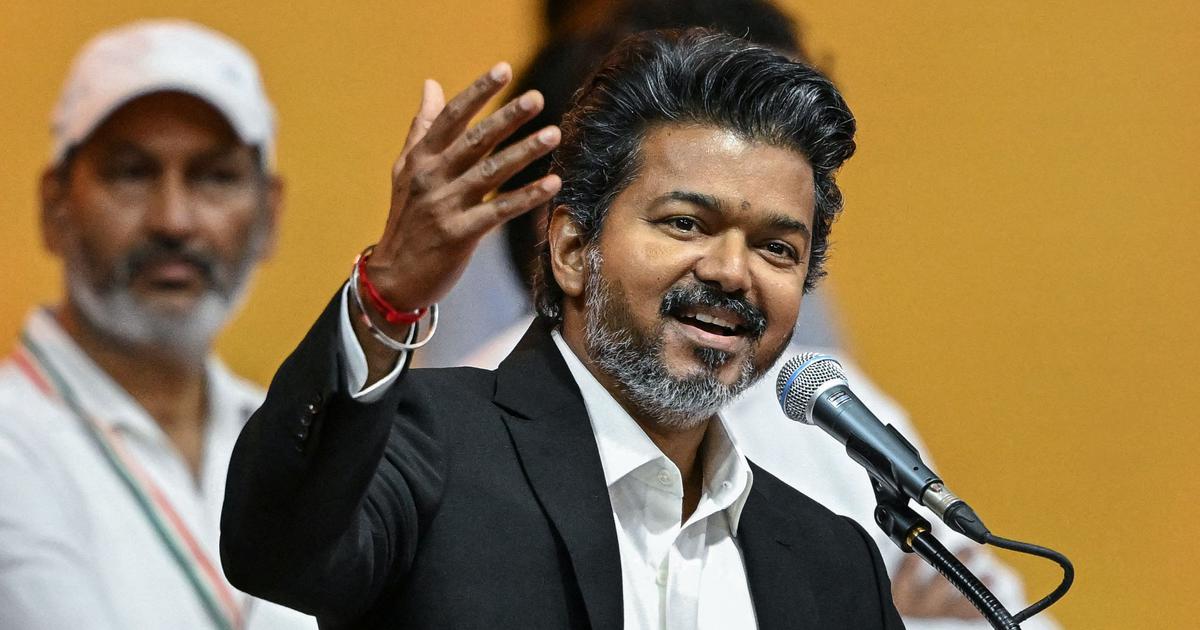
Tamil Nadu’s Chief Minister, Vijay, who recently made headlines for his dual victories in the Assembly elections, has officially resigned from his position as the elected representative of the Tiruchi East constituency. This resignation, announced on Sunday, paves the way for a crucial bye-election in Tiruchi East while he retains his seat in Perambur, located in northern Chennai.
The announcement comes on the heels of Vijay’s oath-taking ceremony earlier in the day, which was graced by notable political figures including Rahul Gandhi of the Congress party. This significant moment marks the beginning of a new era in Tamil Nadu’s political landscape, as Vijay’s party, the Tamilaga Vettri Kazhagam (TVK), has unseated the long-standing dominance of the Dravidian parties, the Dravida Munnetra Kazhagam (DMK) and the All India Anna Dravida Munnetra Kazhagam (AIADMK), for the first time in nearly sixty years.
In the recent elections held on May 4, the TVK emerged triumphantly as the single-largest party, securing 108 seats in the 234-member Assembly, though it fell short of the majority threshold of 118 seats. This victory has necessitated alliances with smaller parties to form a stable government. Following his resignation from Tiruchi East, the effective strength of the TVK now stands at 107, underscoring the importance of coalition politics in this new political landscape.
However, Vijay faces immediate challenges, as Tamil Nadu’s Governor Rajendra Arlekar has mandated that he seek a vote of confidence in the Assembly by May 13. This requirement underscores the precariousness of the newly formed government, as it must solidify its support base to avoid potential instability. The political arena in Tamil Nadu is now charged with anticipation as the TVK seeks to navigate its inaugural tenure.
The implications of this political shift are profound, signaling not just a change in leadership but a potential transformation in governance philosophy in Tamil Nadu. For decades, the state has oscillated between the two major Dravidian parties, often leading to a political stalemate. The rise of the TVK could herald a new chapter in the state’s history, with fresh policies and governance strategies aimed at addressing the aspirations of the electorate.

