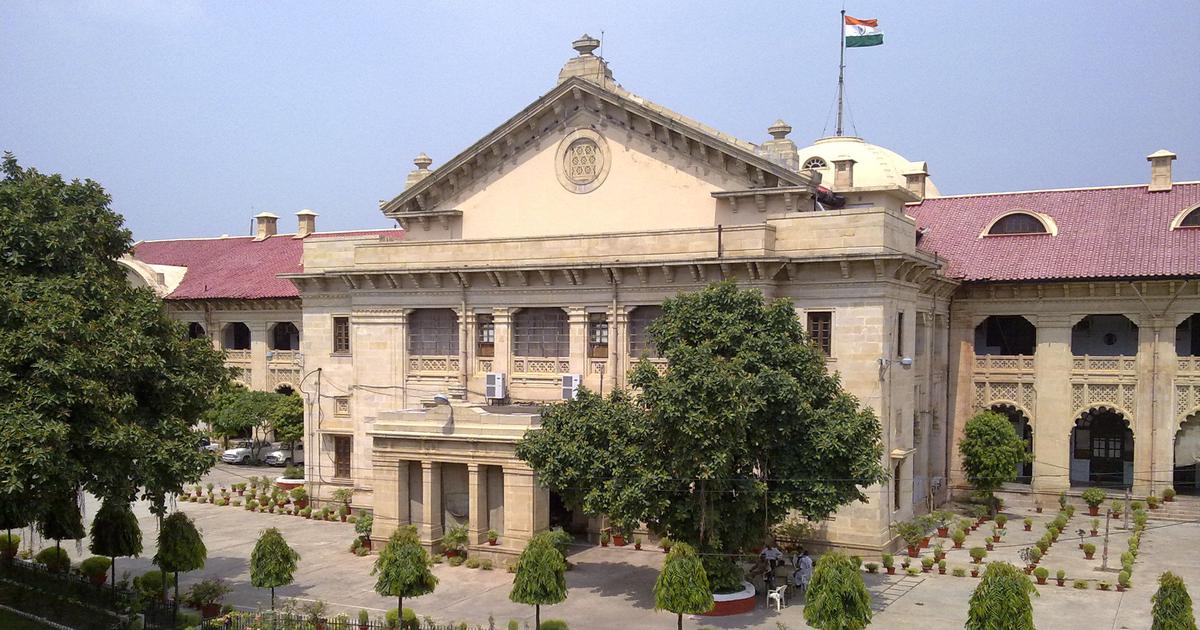
The Allahabad High Court has recently ruled against a petition filed by a man seeking permission to perform namaz on land he claimed as privately owned. The decision underscores the legal boundaries of religious practice in India, particularly when it intersects with public land usage.
The petitioner, identified as Aseen, argued that he had the right to offer prayers on a piece of land in Ikona village, located in Sambhal’s Gunnaur region, based on a gift deed he received in June 2023. However, the Uttar Pradesh government contended that the land in question was designated for public use and that Aseen lacked the legal documentation to support his claim.
In its judgment delivered on April 6, a bench consisting of Justices Saral Srivastava and Garima Prashad emphasized that the right to practice one’s faith is not absolute and must align with public order. The court stressed that exercising religious rights should not infringe upon the rights of others, thereby reinforcing the principle that individual freedoms are balanced by communal responsibilities.
Aseen’s petition highlighted a broader issue concerning religious freedoms in India, where court rulings have often grappled with the nuances of private versus public land use. His counsel pointed to four previous court orders issued earlier this year, which had established that no additional permissions were needed for religious gatherings on private property in Uttar Pradesh. However, the current ruling indicates a shift when public land is involved, suggesting a need for clarity in such legal matters.
The ruling has sparked discussions among legal experts and community leaders, who recognize the significance of the court’s stance in maintaining social harmony. In a diverse society like India, where multiple religions coexist, the delicate balance between individual rights and public order remains a contentious yet crucial aspect of governance.