Celebrating Bibhutibhushan Bandopadhyay: A Literary Legacy That Challenges Colonial Narratives
Bibhutibhushan Bandopadhyay is a name that resonates even with those who may not have delved deeply into Bengali literature. His iconic novel, Pather Panchali, has left an indelible mark on Indian culture, transcending literature to influence cinema profoundly. Renowned filmmaker Satyajit Ray was profoundly inspired by Bandopadhyay’s work, choosing Pather Panchali as the cornerstone of his illustrious directorial career, which began in 1955 with the film adaptation.
The genesis of Pather Panchali traces back to 1925 when Bandopadhyay was employed at Khelat Ghosh’s Pathuriaghata Raajbari. It was during his tenure there that he began to draw inspiration for what would become his seminal work. Initially, he had only a handful of short stories published in various Bengali magazines, yet these early steps paved the way for a literary journey that would take three years to fully unfold.
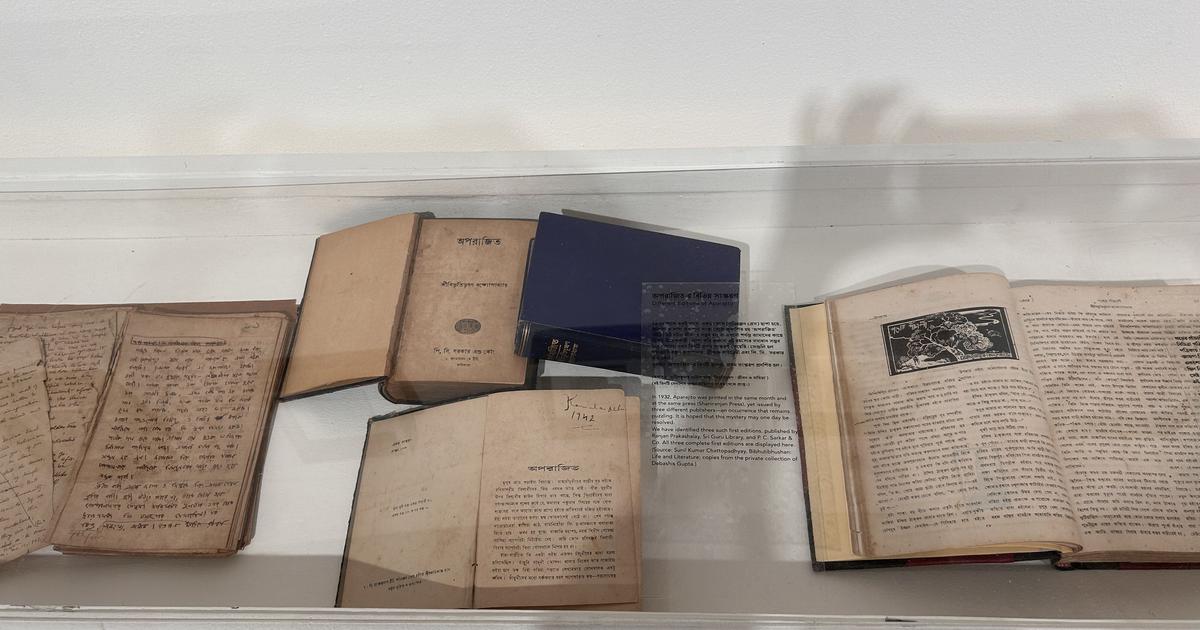
The novel first appeared in serialized form in the 1928 edition of the Bengali periodical, Bichitra, before being released as a complete volume by Ranjan Prakashanalay in 1929. It wasn’t until Ray’s film adaptation that Pather Panchali garnered widespread acclaim, both nationally and internationally, solidifying its status as a classic. As we approach 2026, which marks a century since Bandopadhyay embarked on this literary adventure, there is a renewed interest in his work and its cultural significance.
Last year, a poignant exhibition by Trinankur Banerjee, Bandopadhyay’s grandson, showcased merchandise inspired by the author’s oeuvre. The unexpected popularity of this exhibition serves as a testament to the enduring legacy of Bandopadhyay’s work. It resonated with audiences of various ages, revealing how his themes continue to speak to contemporary society.
Bandopadhyay’s writings often reflect a critical examination of the civilization and values inherited from colonial rulers. His nuanced storytelling and rich character development prompt readers to introspect about their own cultural identity and societal constructs. The upcoming centenary celebration not only honors the author but also invites us to engage with the complexities and contradictions of our historical narratives.