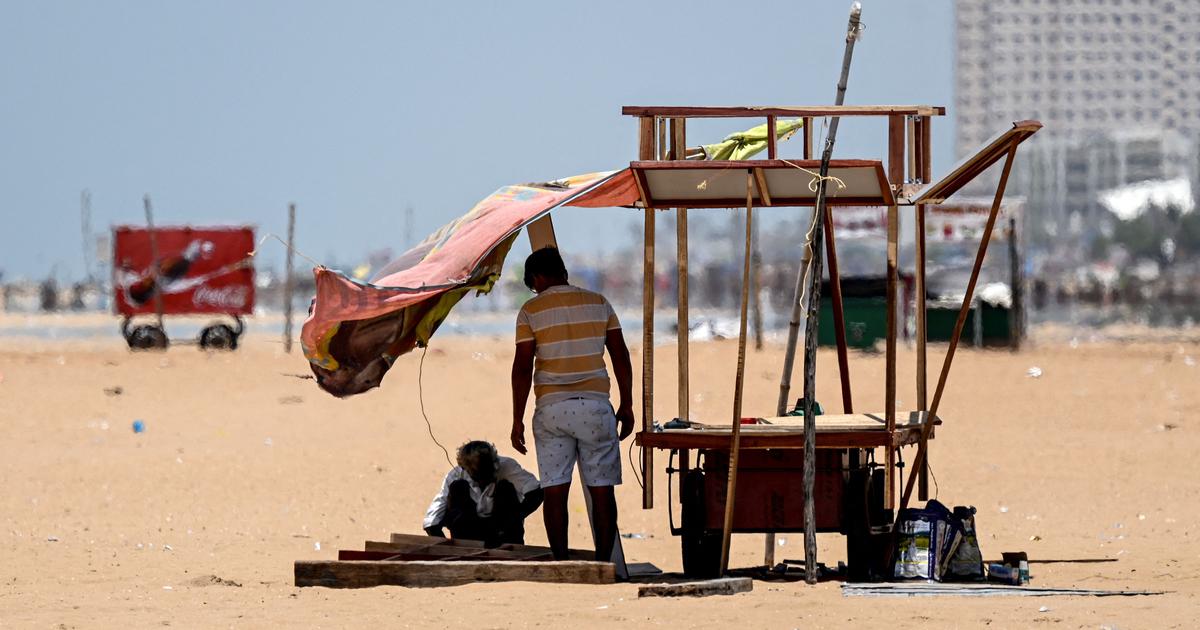
The coastal regions of India, particularly the areas stretching between Thiruvananthapuram and Kanyakumari, are currently grappling with a significant rise in humidity this summer, posing serious health risks to local fishermen. As temperatures soar, the intense humidity transforms the coastal air into a suffocating blanket that makes even the early morning hours unbearable for those who rely on the sea for their livelihood.
Veteran fisherman Mariyani Miyelpillai, aged 73, is a testament to the challenges faced by many in this profession. Every morning at 5 AM, he sets out to fish, but his return by 8 AM is less about the catch and more about escaping the sweltering heat. “I must head back before it becomes too hot to handle,” he admits. For Miyelpillai, the sea, which once provided a sense of freedom, has turned into a battleground against rising temperatures and humidity.
The situation is echoed by Tarsila Thresya, a 54-year-old fisherwoman who also feels the strain of increased heat. “I used to sell my fish until late in the evening, but now I find myself struggling to complete my work before the oppressive heat sets in,” she shares. Despite her efforts to shield herself with a towel, she finds little relief from the rising humidity that clings to her skin and makes her tasks even more daunting.
This summer marks a worrying trend for the southwestern Indian coast, where the combination of heatwaves and rising humidity levels is becoming increasingly pronounced. The humidity is not just a discomfort; it has serious implications for health and productivity. The moisture-laden air prevents sweat from evaporating, which is the body’s natural cooling mechanism. Consequently, fishermen like Miyelpillai and Thresya are left vulnerable to heat-related illnesses, and many are forced to shorten their working hours, impacting their earnings and livelihoods.
Experts suggest that this shift in weather patterns is linked to broader climate change phenomena, where increased global temperatures lead to more moisture in the atmosphere, especially in tropical regions. The pre-monsoon conditions that once heralded a welcome respite for these communities now pose a significant threat. As the coastal ecosystem faces these daunting challenges, it becomes essential for local authorities and communities to devise sustainable strategies to address both the immediate health risks and the long-term effects of climate change.