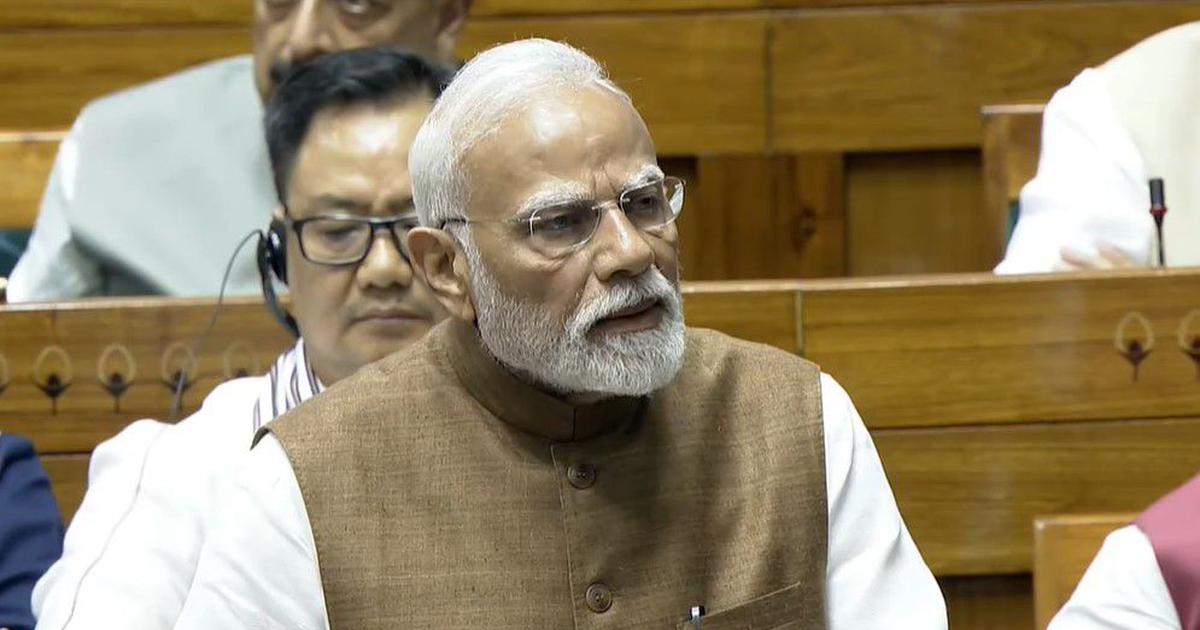
In a bid to address concerns over the upcoming delimitation of Lok Sabha constituencies, Prime Minister Narendra Modi expressed his commitment to ensuring fairness in the process. During a press conference, he stated that he could “guarantee” that no state would face injustice as a result of the delimitation, asserting that the representation of each state in the Lower House of Parliament would remain unchanged.
The remarks came during a day of significant parliamentary activity, where a vote was held on the proposed legislation related to the delimitation process. The outcome saw 251 Members of Parliament voting in favor, while 185 opposed the motion. Union Law Minister Arjun Ram Meghwal highlighted that the legislation aims to increase the strength of the Lok Sabha by 50%, a move that is expected to reshape the political landscape in India.
However, the opposition party Congress has raised alarms over the government’s intentions. They accuse the ruling party of attempting to implement delimitation through indirect means, questioning the underlying motives behind the bill. Such accusations suggest a potential strategy to manipulate constituency boundaries in favor of the ruling party, igniting a fierce political debate.
In another significant development, the Supreme Court of India has directed the Election Commission to issue a supplementary electoral roll in West Bengal. This decision comes as a relief for many voters whose appeals against deletions have been accepted by appellate tribunals. With the first phase of polling scheduled for April 23 and the second phase on April 29, these developments aim to ensure that all eligible voters are accounted for and able to participate in the upcoming elections.
The delimitation process is a sensitive issue in Indian politics, often intertwined with debates about representation and fair electoral practices. As the government moves forward with its plans, the implications of these changes will be closely monitored, not only by politicians but also by citizens who are keenly aware of their rights and representation.