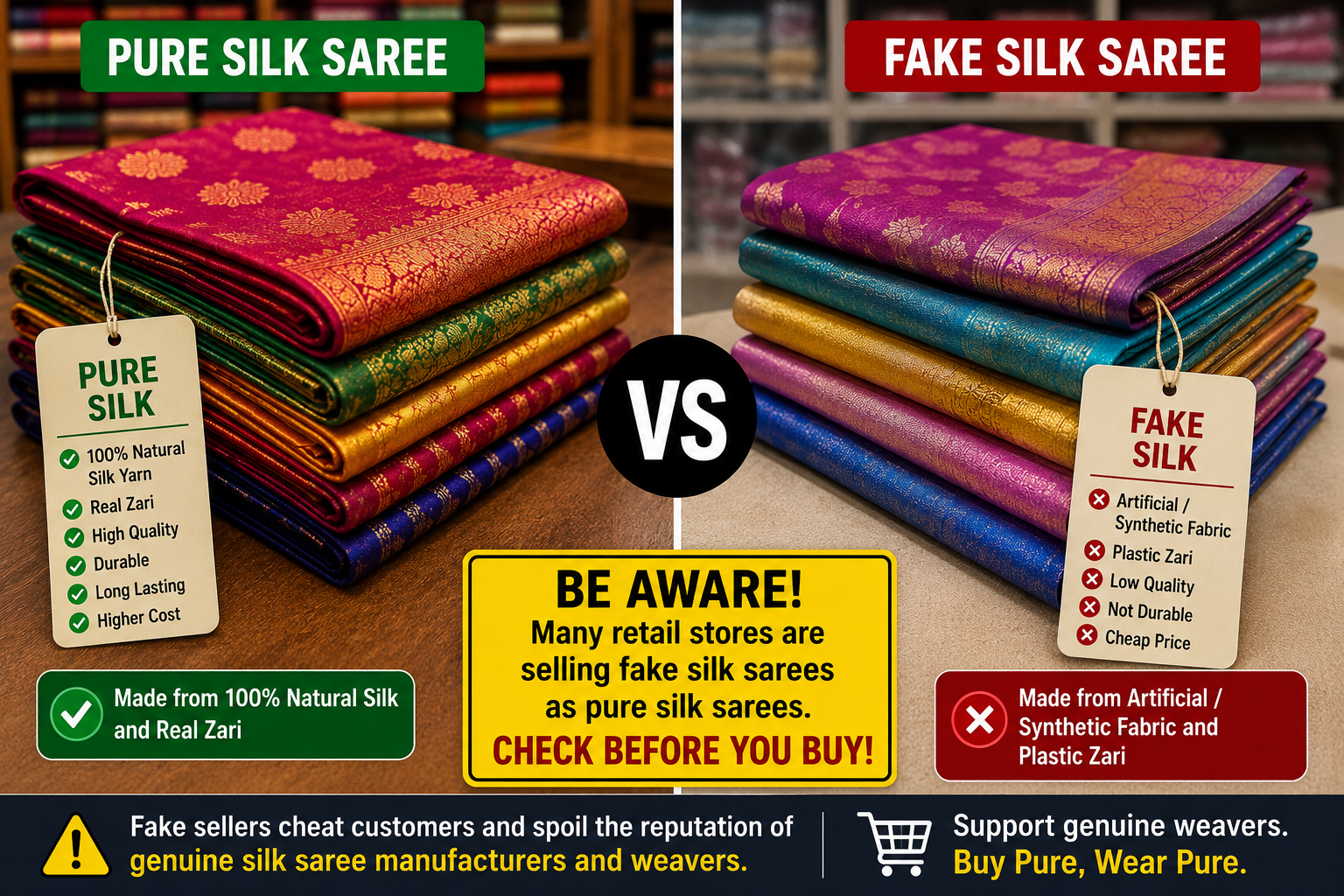
The increasing availability of imitation silk sarees marketed as silk products has become a concern among silk saree manufacturers and traditional weaving communities. Industry stakeholders say the trend may affect consumer confidence in authentic silk products and create challenges for genuine producers.
Pure silk saree production typically involves the use of silk yarn, traditional weaving techniques, skilled craftsmanship, and specialized materials, resulting in higher production costs compared to many synthetic alternatives.
According to manufacturers and industry representatives, some consumers may find it difficult to distinguish between authentic silk sarees and products made from synthetic or blended fabrics. They argue that this can affect purchasing decisions and create additional competition for traditional silk producers.
Industry stakeholders have called for greater consumer awareness, stronger quality certification mechanisms, and enhanced market monitoring to help customers make informed purchasing decisions.
Experts and manufacturers also emphasize the importance of supporting authentic silk weaving traditions, which provide livelihoods for many artisan families and contribute to India’s textile heritage.
Representatives from the sector have urged relevant authorities to examine the issue and consider measures that support transparency in product labeling and consumer protection within the textile market.