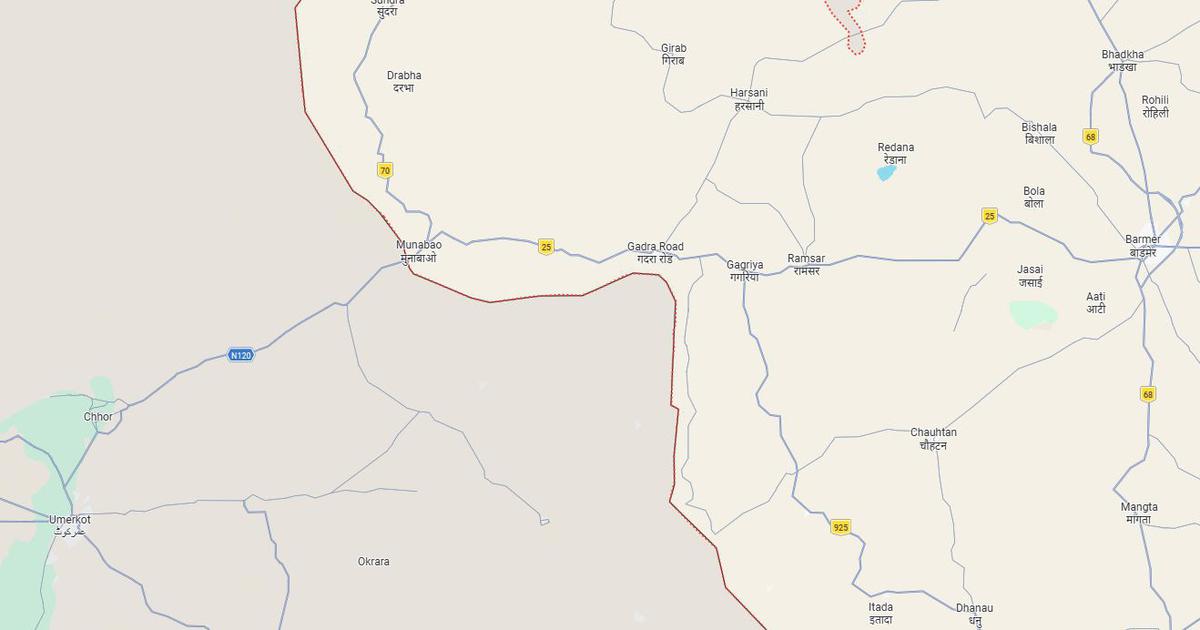
The recent demolition of mosques in Rajasthan and Uttar Pradesh has ignited significant political controversy, raising questions about the implications of such actions on communal harmony and historical preservation. The situation unfolded dramatically in Malana village of Barmer district, where a mosque was bulldozed on a Thursday as part of an extensive drive aimed at eradicating alleged illegal structures near India’s border with Pakistan.
Union Home Minister Amit Shah had previously instructed district authorities during a meeting in Bikaner to enforce stricter measures for border security, including the removal of encroachments within a 15-kilometer radius of the border. Following these directives, local officials in Barmer conducted a survey to pinpoint unauthorized constructions, leading to the mosque’s demolition. The administration defended its decision by asserting that the mosque was built on land designated for grazing, raising concerns among local residents and religious leaders.
Maulvi Hasam Khan, who oversees the mosque, contested the government’s claims, pointing out that the mosque was established only two years ago, while a madrasa had been operating on the same site since 2009. He further stated that the land had been classified as residential when the madrasa was constructed, and that it had been issued a lease deed by the gram panchayat, suggesting that the demolition may have been unjustified.
In response to the demolitions, Congress leader Ashok Gehlot criticized the ruling Bharatiya Janata Party (BJP) government, accusing it of systematically targeting historical religious sites that have stood for decades. This incident not only highlights the tensions surrounding property rights and land use but also casts a shadow over the broader socio-political landscape in which such actions are perceived as part of a larger agenda.
The mosque demolition in Barmer is not an isolated incident. Similar actions have been reported in Uttar Pradesh, exacerbating feelings of disenfranchisement within certain communities. Critics argue that these demolitions reflect a trend of politicizing religious identity and history for electoral gains, especially ahead of upcoming state elections.
The uproar surrounding these demolitions underscores the need for a balanced approach to urban planning and religious tolerance. As India navigates its diverse cultural landscape, it is essential to engage in dialogue that respects historical legacies while addressing contemporary societal needs. The ramifications of the mosque demolitions will likely resonate far beyond the immediate locations, prompting national discussions about religious freedom, land rights, and the preservation of communal harmony.