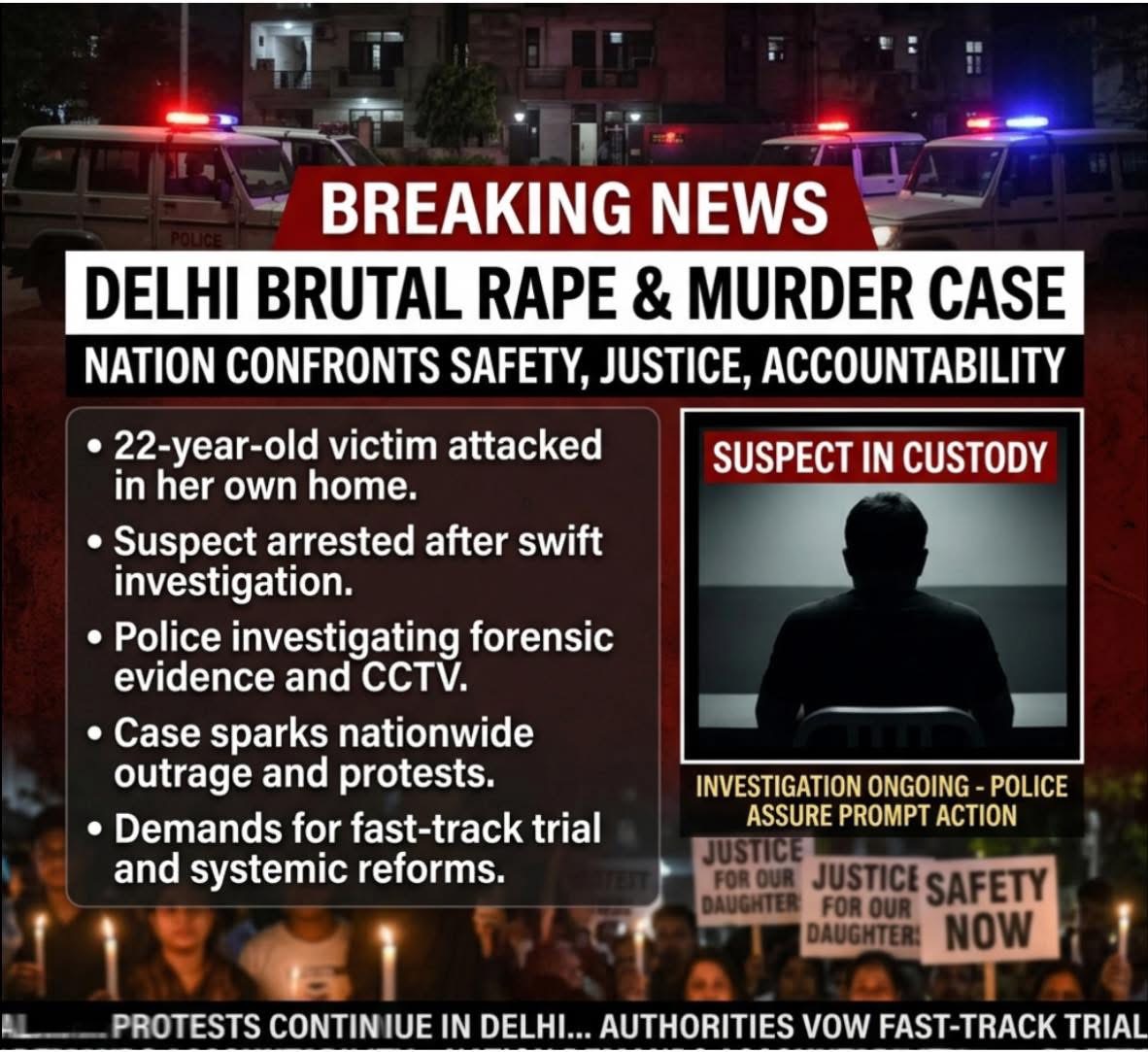
Delhi Brutal Rape & Murder Case: A Nation Confronts Safety, Justice, and Accountability
A deeply disturbing crime in New Delhi has triggered nationwide outrage after a 22-year-old woman—reported to be the daughter of a senior tax official—was allegedly raped and murdered inside her own home. The case has reignited urgent conversations about women’s safety, policing, and the pace of justice in India.
🧾 What Happened
According to initial police reports, the victim was found dead in her residence under circumstances that pointed to sexual assault and homicide. Investigators say the accused had access to the premises, and early evidence suggests the crime took place within the home—an aspect that has intensified public anxiety, as it challenges the assumption that private spaces are inherently safe.
The suspect was taken into custody following a swift investigation that relied on local surveillance inputs, call records, and witness statements. Authorities have indicated that forensic examination and post-mortem findings are central to building the case.
⚖️ Investigation and Arrest
Police officials state that the accused was apprehended within a short time frame. During questioning, reports indicate a lack of remorse, with statements that appeared to shift blame onto the victim. Investigators are examining the nature of the relationship between the accused and the victim, possible prior contact, and any signs of premeditation.
Key lines of inquiry include:
* Forensic evidence from the crime scene
* Digital footprints and communication history
* Entry/exit timelines from CCTV in the vicinity
* Testimonies from neighbors and acquaintances
Authorities have assured that a charge sheet will be filed promptly, aiming for a fast-track trial.
📢 Public Outrage and Response
News of the crime spread rapidly, sparking protests and strong reactions across social media. Civil society groups, students, and women’s organizations have called for:
* Swift and transparent prosecution
* Stronger safeguards for women at home and in public
* Accountability in cases involving security lapses
Public sentiment reflects both grief and anger, with many demanding systemic reforms rather than one-off responses.
🛡️ The Larger Issue: Women’s Safety
This case has once again highlighted persistent concerns:
* Safety within homes: Crimes by known persons or with access to private spaces
* Urban vulnerability: Even in well-connected localities, response and prevention gaps exist
* Trust deficit: Families increasingly worry about safety despite basic precautions
Experts emphasize that solutions must go beyond policing to include community vigilance, better building security protocols, and awareness around personal safety measures.
⚖️ Legal Framework and Due Process
Under Indian law, charges related to rape and murder carry severe penalties, including life imprisonment or, in the most egregious cases, capital punishment. While public anger is understandable, legal experts stress the importance of due process—a thorough investigation, fair trial, and evidence-based conviction—to ensure justice that stands up in court.
🔍 What Happens Next
* Completion of forensic reports and consolidation of evidence
* Filing of the charge sheet within statutory timelines
* Court proceedings, possibly in a fast-track court
* Continued monitoring by higher authorities due to public sensitivity
🧠 A Moment for Reflection
Beyond the immediate horror of the crime, this incident has become a flashpoint for a broader national conversation: How can India make both public and private spaces safer for women? Sustainable change will require coordinated efforts—law enforcement efficiency, judicial speed, urban planning, and societal attitudes.