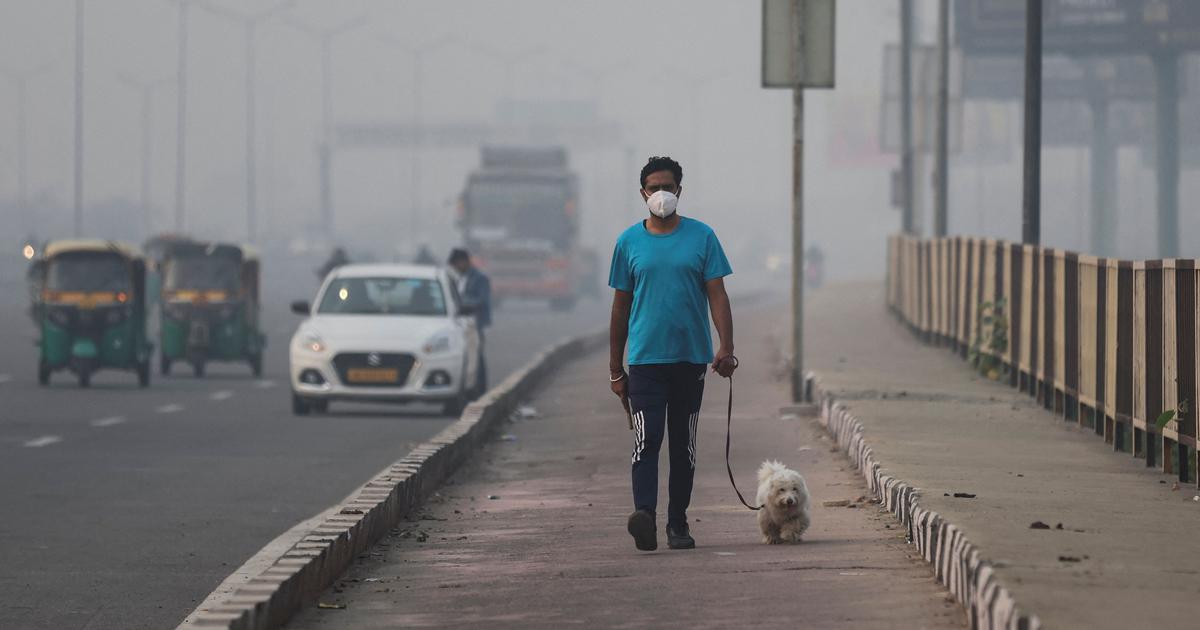
In response to alarming levels of air pollution, the Commission for Air Quality Management has implemented Stage I measures of the Graded Response Action Plan (GRAP) across the National Capital Region (NCR). This decision came after air quality indices indicated a drop into the ‘poor’ category, prompting urgent action to mitigate further deterioration.
The GRAP is designed to implement a series of escalating anti-pollution strategies based on the region’s air quality readings. The first stage includes important interventions such as mechanical road sweeping and water sprinkling to minimize dust emissions. Additionally, certain construction and demolition activities are put on hold to prevent any further contribution to the pollution crisis.
As per the Sameer application, which provides real-time updates from the Central Pollution Control Board, the average Air Quality Index (AQI) in Delhi registered at 241 on Friday morning—a clear indication that residents are experiencing severely compromised air quality. In neighboring areas, Noida reported an AQI of 275, while Greater Noida and Ghaziabad saw readings of 322 and 329, respectively, placing them firmly in the ‘poor’ category as well.
Moreover, Haryana’s Gurugram recorded an AQI of 243, aligning with the troubling trend observed in Delhi, while Faridabad stood slightly better at 178. The situation has worsened compared to Thursday, when Delhi’s AQI was measured at 226, still within the ‘poor’ classification. The AQI scale is significant, with values between 0-50 denoting ‘good’ air quality, 51-100 signifying ‘satisfactory’, and 101-200 indicating ‘moderate’ conditions.
This marked degradation in air quality raises serious health concerns for millions living in the NCR, particularly vulnerable groups such as children, the elderly, and those with pre-existing respiratory conditions. As local residents brace themselves for the health implications of poor air quality, authorities stress the importance of community compliance with the GRAP measures to combat this pressing issue.