




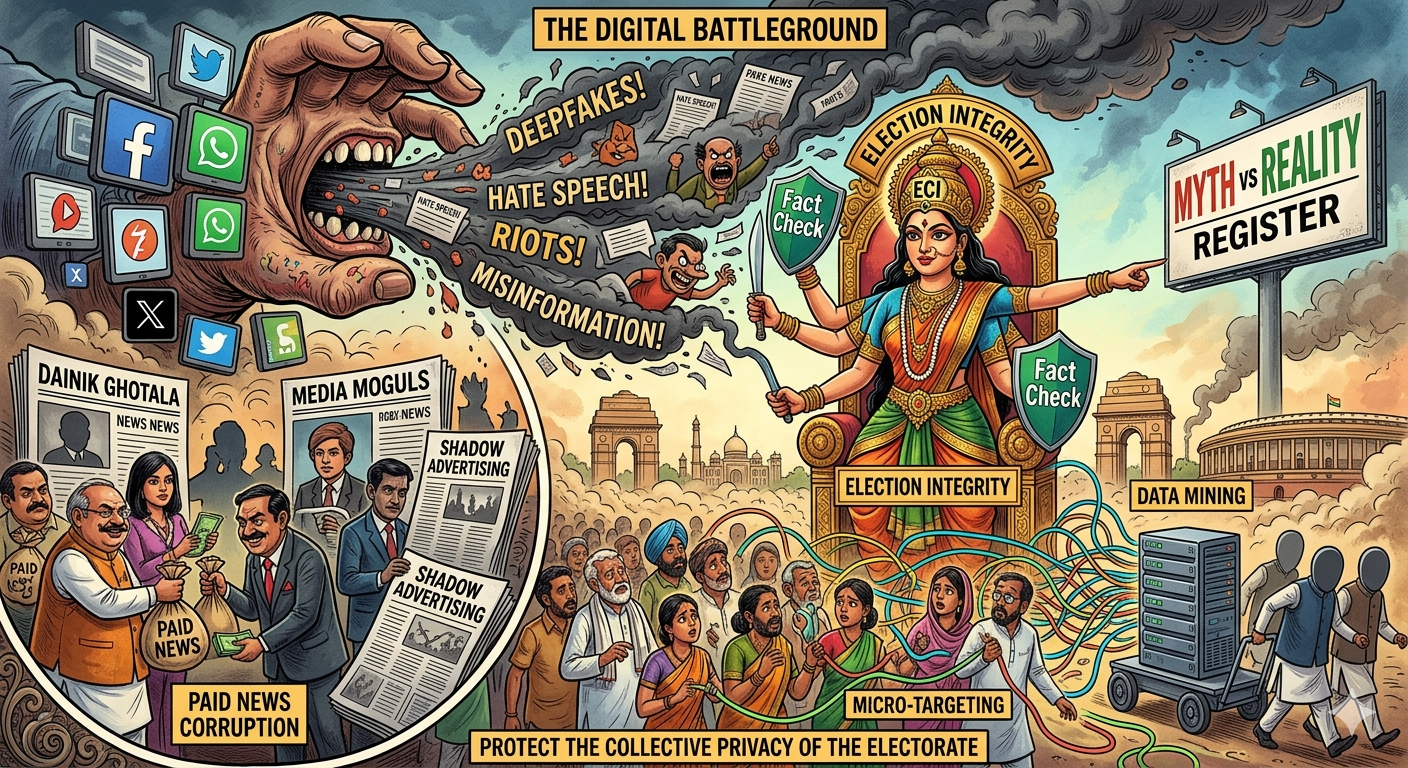
India’s elections, among the largest democratic exercises in the world, are increasingly influenced by digital platforms and online communication. With widespread smartphone usage and affordable internet access, political communication has rapidly shifted from traditional rallies and print campaigns to social media platforms and digital networks.
While this digital transformation has expanded access to information and political participation, it has also created new challenges related to misinformation, paid news, and data-driven political campaigning. Researchers and media experts have raised concerns about how these developments may affect public opinion, electoral transparency, and democratic institutions.
Digital Misinformation and Its Impact
Experts note that misinformation during elections can spread rapidly through social media, messaging applications, and online video platforms. In some cases, false or misleading information is intentionally created and circulated to influence voter perception or create confusion among the public.
Researchers generally categorize misleading information into two broad forms:
- Disinformation – Deliberately fabricated or manipulated information shared with the intention to mislead audiences.
- Misinformation – Incorrect or misleading information shared by individuals who may believe the content to be genuine.
In recent years, concerns have also increased regarding the use of edited videos, manipulated images, and AI-generated content during election periods. Analysts warn that such content can influence public debate and contribute to political polarization if not addressed quickly.
Paid News and Media Ethics
Another issue frequently discussed in the Indian media landscape is “paid news,” where promotional political content may appear in the format of regular news reporting. The Press Council of India has previously defined paid news as news or analysis appearing in media for consideration in cash or kind.
Media analysts argue that this practice can affect transparency by making it difficult for readers and viewers to distinguish between independent journalism and sponsored political messaging.
Some commonly discussed concerns include:
- Political advertorials presented as editorial reporting
- Financial relationships between media organizations and corporate or political entities
- Unequal coverage of political candidates and parties
Media experts emphasize the importance of maintaining editorial independence and transparency, particularly during election periods when public trust in information is critical.
Data-Driven Campaigning and Micro-Targeting
Modern political campaigns increasingly rely on digital analytics and targeted communication strategies. Experts say that voter data collected through online activity, apps, and social media behavior can be used to deliver highly customized political messages to specific demographic groups.
Supporters of digital campaigning argue that targeted outreach improves communication efficiency and voter engagement. However, privacy advocates and researchers have expressed concerns about data protection, online profiling, and the ethical use of personal information in political campaigns.
These debates have intensified globally as governments and regulators examine how digital technologies influence electoral behavior and public discourse.
Role of Democratic Institutions
Institutions such as the Election Commission of India continue to play an important role in maintaining election transparency and public trust. Over the years, election authorities and regulatory bodies have introduced measures to monitor campaign spending, regulate political advertising, and address online misinformation.
Observers believe that stronger coordination between election authorities, technology platforms, media organizations, and civil society groups may help improve transparency and accountability in the digital information ecosystem.
Conclusion
India’s rapidly evolving digital environment has transformed political communication and voter engagement in significant ways. While technology has expanded democratic participation and information access, it has also introduced complex challenges related to misinformation, media ethics, and data privacy.
Experts suggest that protecting election integrity in the digital age will require balanced regulation, responsible media practices, greater digital literacy, and continued public awareness. As digital platforms become increasingly central to political discourse, maintaining transparency and public trust remains essential for the health of democratic institutions.

