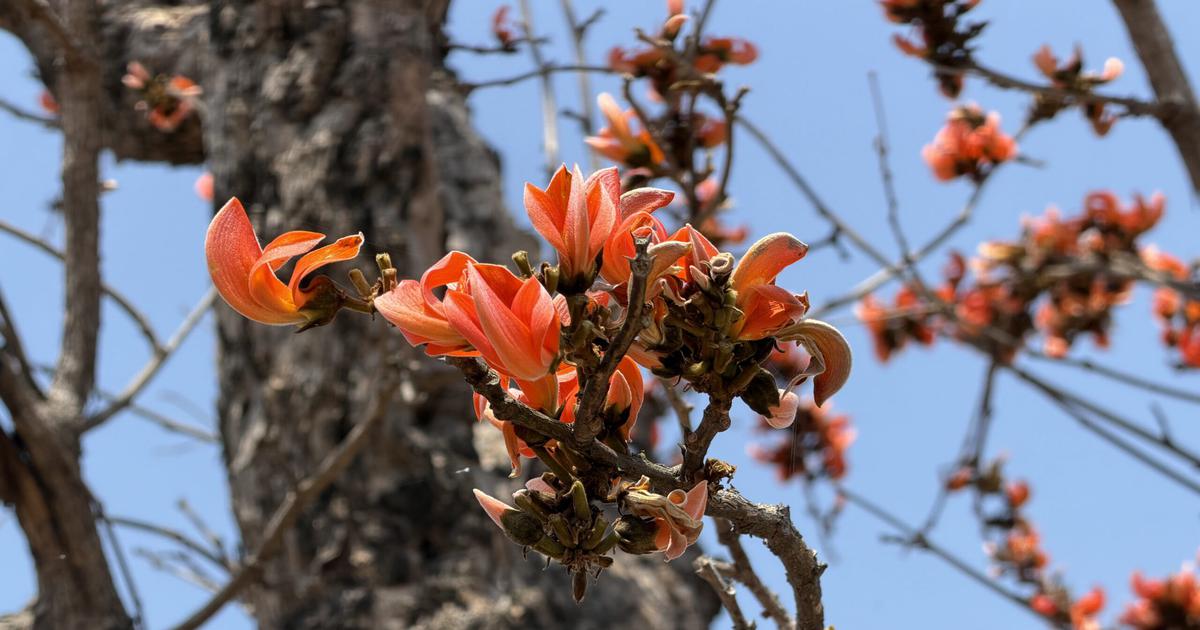
In the heart of Jharkhand’s Palamu district, the palash tree, revered for its vibrant blossoms, is not just a symbol of beauty; it is a lifeline for many families. Sarita Devi, a 40-year-old resident of Kundri village, articulates an age-old belief: “If the palash flowers bloom fully, it signifies a bountiful summer and ample rainfall.” For generations, this tree has served as a natural barometer for the local community, deeply intertwined with their agricultural practices and economic well-being.
The palash tree, known for its striking orange flowers, is also a vital source of lac—a natural resin harvested from the insect Kerria lacca, which thrives on these trees. Lac farming has historically been a significant source of income for many rural families in the region, including Sarita’s. Every year, as the seasons shift, so does the rhythm of life in Kundri. Residents eagerly await the blooming of the palash, which signals the optimal time to cultivate and harvest lac.
Sarita recalls her years of dedication at the Kundri lac farm, recognized as one of Asia’s largest lac plantations. “We were involved in every aspect of lac farming—from the initial grafting of lac-bearing twigs to the eventual harvest,” she shares. The meticulous process, which includes tying twigs to the palash branches and carefully collecting the resin, has not only sustained Sarita’s family but also generations before her. The community has relied on this craft, which flourishes twice a year, coinciding with the rainy season and summer, offering them a rhythm of hope and sustenance.
However, the increasing disappearance of palash forests poses a formidable threat to this traditional way of life. Deforestation, often driven by agricultural expansion and urban development, has led to a significant decline in the number of palash trees. As these vital trees vanish, so too does the community’s ability to predict weather patterns and sustain their livelihoods through lac production.
The impact of this environmental degradation reverberates beyond economic concerns. For many, the palash tree holds cultural significance, symbolizing resilience and connection to the land. The locals not only depend on it for their livelihood but also for their cultural identity, which is intricately tied to the natural world around them. As the palash forests dwindle, the very fabric of their community faces existential threats.
With the traditional knowledge of weather prediction through the palash flower fading, farmers find themselves grappling with unpredictability in their harvests. This uncertainty extends to food security and overall community welfare, prompting urgent calls for conservation efforts. Environmentalists advocate for reforestation and sustainable practices to protect these trees and ensure that future generations can continue to rely on the palash for both economic and cultural sustenance.
The situation in Kundri village serves as a stark reminder of the delicate balance between nature and human life. The palash tree is not merely a plant; it is a symbol of hope, tradition, and community resilience. As its presence dwindles, so too does the promise of a vibrant future for the people of this region.