The Evolution of Indian Railways: How India’s Lifeline Became a Modern Engine of National Growth
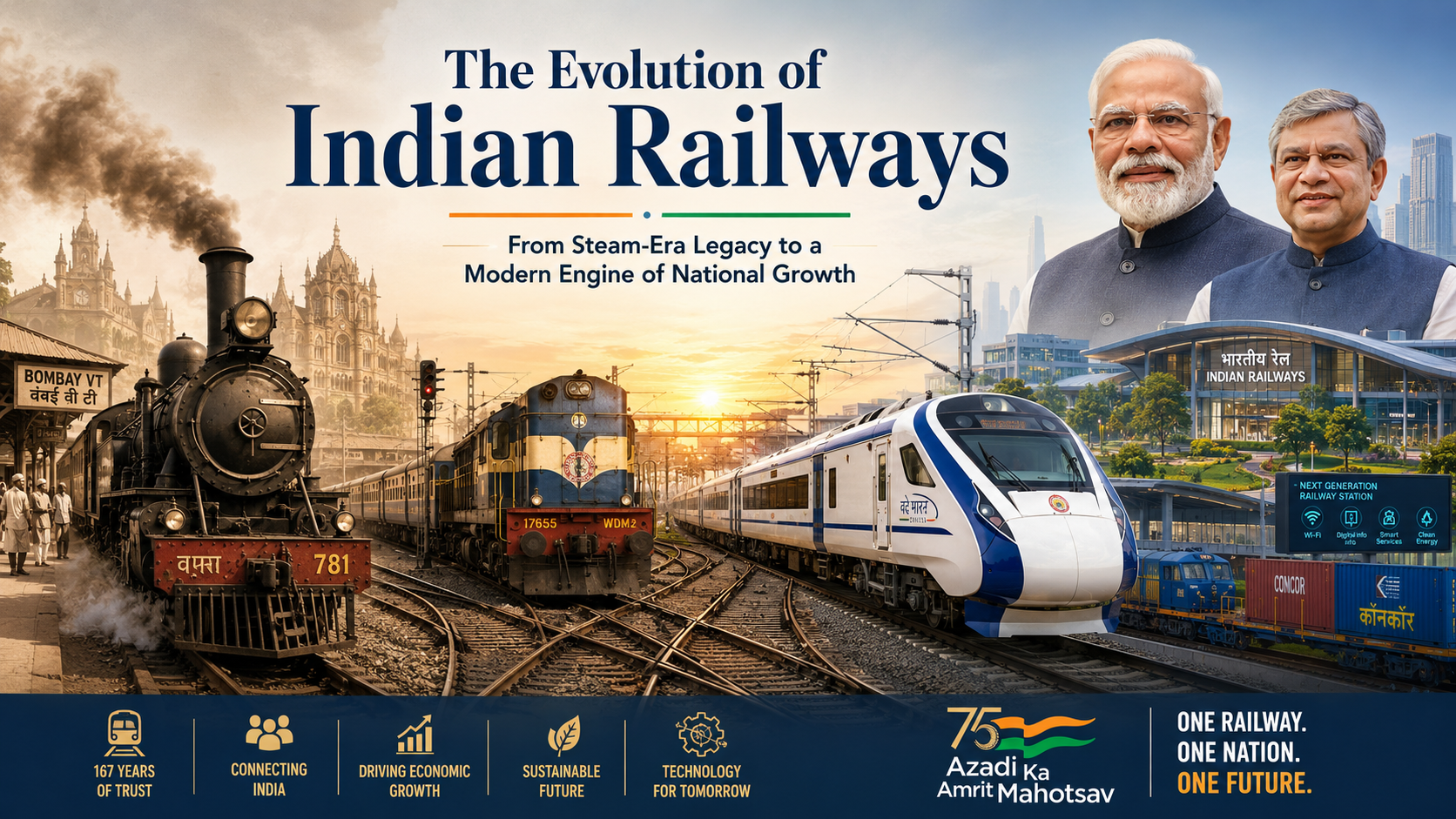
Indian Railways has long been regarded as the lifeline of the nation, connecting people, businesses, and regions across the country. From its humble beginnings in the 19th century to its transformation into one of the world’s largest railway networks, Indian Railways has played a significant role in India’s economic, social, and infrastructural development.
Over the decades, the railway network has expanded considerably, improving connectivity between urban centers, rural communities, industrial hubs, and ports. Today, Indian Railways serves millions of passengers daily and transports large volumes of freight, making it a critical component of the country’s transportation system.
In recent years, modernization initiatives have accelerated across the railway sector. The introduction of semi-high-speed trains, modernization of railway stations, enhanced passenger amenities, digital ticketing systems, and improved safety measures have contributed to a more efficient travel experience. Projects aimed at electrification and infrastructure upgrades have also helped improve operational efficiency and sustainability.
The expansion of dedicated freight corridors and logistics infrastructure is expected to strengthen supply chains and support industrial growth. These developments are designed to reduce transportation costs, improve freight movement, and enhance economic competitiveness.
Technology has become an increasingly important part of railway operations. Digital platforms, real-time monitoring systems, automated signaling technologies, and data-driven management practices are being adopted to improve safety, reliability, and service delivery.
Indian Railways also contributes significantly to employment generation and regional development. Railway projects often create opportunities for local industries, contractors, and workers while improving access to markets, education, healthcare, and other essential services.
Despite notable progress, challenges remain. Infrastructure maintenance, capacity expansion, safety enhancement, environmental sustainability, and service quality continue to require sustained attention and investment. Addressing these challenges will be important to ensuring that Indian Railways can meet the growing demands of a rapidly developing economy.
As India continues its journey toward greater economic growth and digital transformation, Indian Railways is expected to remain a vital pillar of national development. Its ongoing modernization efforts reflect a broader commitment to building a more connected, efficient, and sustainable transportation network for the future.