In contemporary India, few subjects ignite as much debate as the nation’s historical narrative. History has become a volatile arena where politics and ideology often intersect, particularly as the Bharatiya Janata Party (BJP) and its Hindutva supporters leverage interpretations of India’s medieval past to bolster their political agenda. This evolving landscape raises crucial questions about the nature of history and its implications for the present.
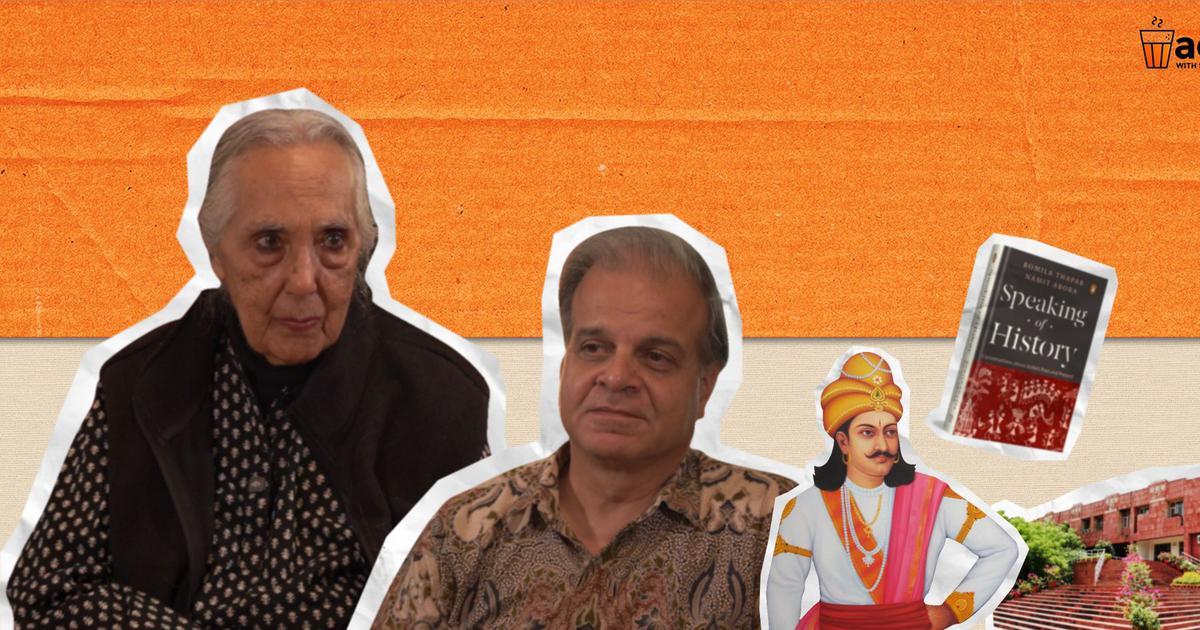
Renowned historian Romila Thapar, along with writer Namit Arora, sheds light on this tumultuous relationship between history and politics in their recent book, Speaking of History. This groundbreaking work aims to unravel the complexities of historical interpretation in modern India, dissecting the mechanisms of popular history and the pervasive narratives of conflict, particularly the Hindu-Muslim dichotomy that resonates strongly in today’s sociopolitical climate.
During a recent discussion at Scroll Adda, Thapar candidly reflected on the attacks she has faced from the Hindutva faction over the years. Despite the sustained criticism, she remains resolute, emphasizing that academic rigor and scholarly pursuit will ultimately triumph over transient political motivations. Her perspective highlights a significant tension between a politically driven interpretation of history and the more nuanced understanding that scholars strive for.
Thapar’s work poses an essential query: What does the perpetual conflict between Hindus and Muslims say about contemporary Indian society? It suggests that these narratives may reflect more about current political dynamics than they do about historical facts. This insight calls for a deeper engagement with history, one that transcends simplistic binaries and allows for a more comprehensive understanding of India’s past.
As India navigates its unique historical fabric, Thapar’s advocacy for a more academically grounded approach to history serves as a reminder of the importance of critical thought. The ongoing discourse around history not only shapes collective memory but also influences the national identity, making it crucial for scholars and the public alike to engage thoughtfully with the past.