Introduction
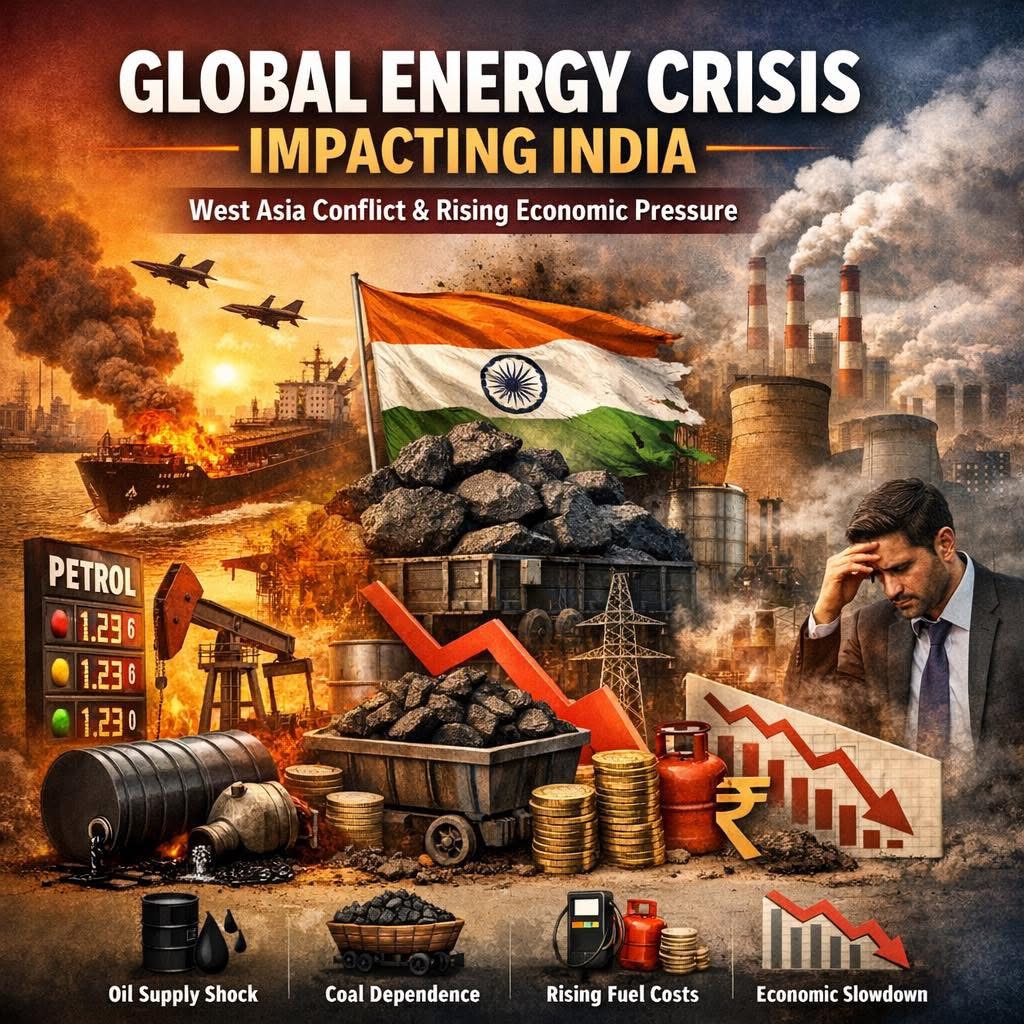
The ongoing tensions in West Asia, particularly involving Iran and the wider Gulf region, have led to increased volatility in global energy markets. As a key supplier of crude oil and liquefied natural gas (LNG), disruptions in this region have immediate global consequences.
For India—one of the world’s largest crude oil importers—these developments pose direct economic challenges, influencing fuel prices, inflation, and industrial growth.
Energy Supply Disruptions
The situation has particularly affected the Strait of Hormuz, a crucial global oil transit route through which a significant portion of the world’s oil supply passes.
Recent developments have led to:
- Disruptions in some LNG shipments from Gulf countries
- Constraints in oil production and export flows in certain areas
- Increased uncertainty in global energy supply chains
As a result, oil prices have shown upward pressure, impacting import-dependent economies.
🇮🇳 India’s Energy Response
In response to rising fuel costs and supply uncertainty, India has increased its reliance on coal-based power generation.
Key trends include:
- Greater use of coal by power plants to maintain electricity supply
- Rising demand in domestic coal auctions
- Industrial shift from LNG to coal in some sectors
While this approach supports short-term stability, it may increase environmental concerns over time.
Impact on Prices and Inflation
India imports a large share of its crude oil requirements, making it sensitive to global price fluctuations.
Possible effects include:
- Upward pressure on petrol and diesel prices
- Increased LPG and transportation costs
- Rising inflation due to higher logistics and production expenses
These factors contribute to broader cost increases across the economy.
Industrial and Economic Pressure
Industries are experiencing challenges due to:
- Higher energy input costs
- Supply chain uncertainties
- Pressure on profit margins
This may result in slower industrial growth, cautious investments, and financial strain in energy-dependent sectors.
Macroeconomic Outlook
While India’s economy remains relatively stable, external pressures may lead to:
- A widening trade deficit
- Currency pressure due to increased dollar demand
- Inflationary impact on households
- Moderation in economic growth momentum
Global assessments suggest that energy market instability could affect growth trends across Asia.
Global Implications
The impact extends beyond India:
- Oil prices remain volatile globally
- Aviation and shipping costs are rising
- Countries are reassessing energy security strategies
This indicates a broader phase of global economic uncertainty linked to energy markets.
Conclusion
The evolving situation in West Asia has created challenges for global energy stability, with India being particularly affected due to its import dependence.
While the country is not facing an immediate crisis, it is navigating a period of economic adjustment marked by rising costs and external uncertainties. The duration and intensity of these disruptions will play a key role in shaping future economic outcomes.