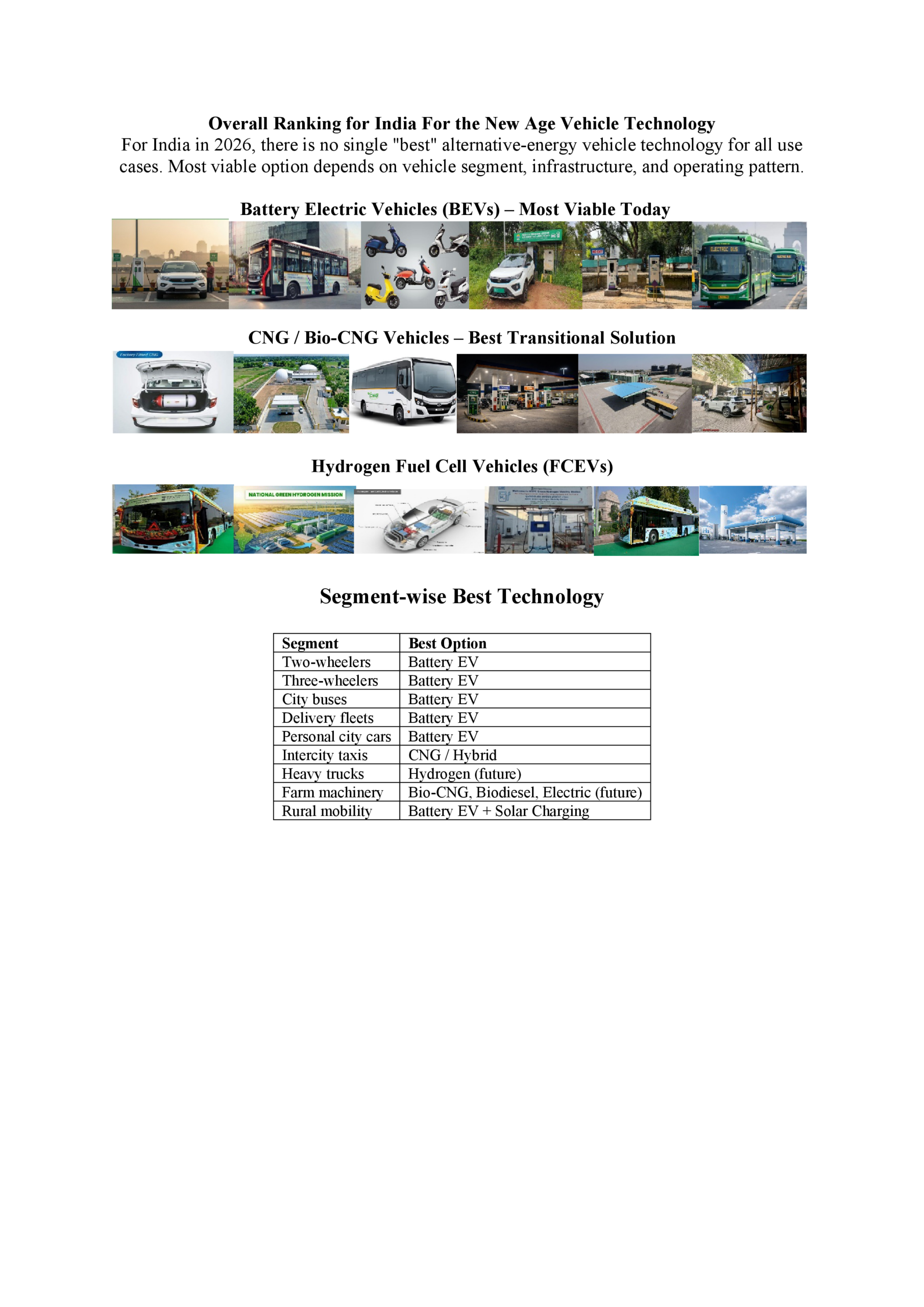
In 2026, India does not have a single “best” alternative energy vehicle technology for all use cases. The most viable option depends on the vehicle segment, infrastructure availability, and usage pattern.
1. Battery Electric Vehicles (BEVs) – Most Viable Today
Best for:
- Two-wheelers
- City cars
- Buses
- Last-mile delivery vehicles
Advantages:
- Lowest running cost
- High energy efficiency (70–90%)
- Rapidly expanding charging infrastructure
- Strong government policy support
- Zero tailpipe emissions
Challenges:
- Charging time limitations
- Battery replacement costs
- Dependence on charging infrastructure
India status: Currently the leading alternative fuel technology in adoption.
2. CNG / Bio-CNG Vehicles – Transitional Solution
Best for:
- Taxis
- Commercial fleets
- Urban transport
Advantages:
- Lower emissions than petrol and diesel
- Established infrastructure
- Lower fuel cost
Challenges:
- Still partly fossil-fuel dependent (except Bio-CNG)
- Lower engine power output
- Storage tank space requirements
3. Ethanol (E20/E85 / Flex-Fuel Vehicles)
Best for:
- Existing ICE vehicle ecosystem
- Agricultural economies
Advantages:
- Uses domestic agricultural feedstocks
- Supports rural economy and farmers
- Minimal changes to existing infrastructure
Challenges:
- Lower energy density than petrol
- Water and land-use considerations
India’s ethanol blending program is expanding rapidly.
4. Hydrogen Fuel Cell Vehicles (FCEVs)
Best for:
- Heavy-duty trucks
- Long-distance buses
- Industrial transport
Advantages:
- Fast refuelling
- Long driving range
- Zero tailpipe emissions
Challenges:
- High cost
- Limited infrastructure
- Green hydrogen ecosystem still developing
India is investing in this sector through the National Green Hydrogen Mission.
5. Hybrid Vehicles
Examples: Toyota Kirloskar Motor, Maruti Suzuki models
Advantages:
- No charging anxiety
- Better fuel efficiency than ICE vehicles
- Mature and reliable technology
Challenges:
- Still dependent on fossil fuels
- Higher cost than conventional vehicles
Future Outlook (2026–2047)
India’s most practical multi-path transition is likely to include:
- Battery EVs for urban mobility
- Bio-CNG and ethanol for rural and agricultural sectors
- Hydrogen for heavy transport and industrial use
- Solar-integrated EV charging infrastructure
This diversified approach aligns with India’s goals of energy security, reduced oil imports, and lower emissions.
Startup Opportunity Insight
EV retrofitting, solar-powered charging stations, and battery-swapping networks for rural India represent promising and underdeveloped sectors. These align with sustainable mobility, smart infrastructure, and inclusive development goals.