




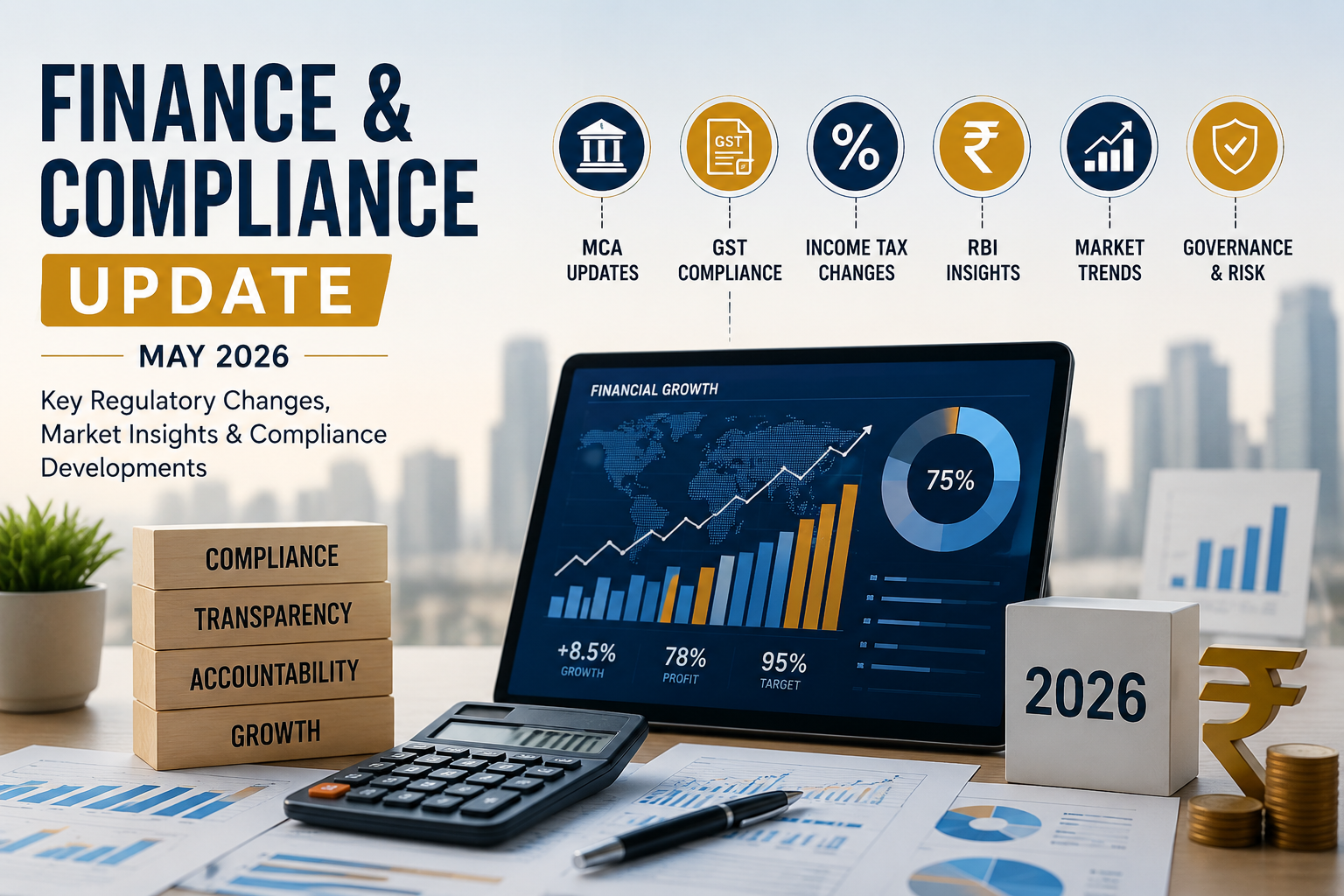
Recent developments in India’s financial and compliance ecosystem indicate an increasing regulatory focus on transparency, digitalization, and corporate governance. Government agencies and tax authorities are expanding the use of technology and data analytics in areas such as GST scrutiny, TDS reconciliation, fake invoicing detection, and income-tax assessments.
Businesses are also witnessing stricter compliance expectations relating to MSME payments, related-party transactions, audit documentation, and e-invoicing procedures.
On the corporate side, the Reserve Bank of India’s relatively cautious monetary approach and stable inflation trends have contributed to business confidence in several sectors. Industries such as infrastructure, manufacturing, fintech, and renewable energy continue to attract investor interest and policy attention.
Startups and SMEs are increasingly prioritizing stronger internal controls, virtual CFO services, automation-driven accounting systems, and real-time MIS reporting to improve financial discipline and investor confidence.
In this evolving environment, companies are being encouraged to focus on timely compliance, proper documentation, risk management, and effective financial planning to reduce litigation exposure and improve operational efficiency.
Industry experts note that strong governance practices are increasingly becoming an important factor for sustainable growth, investor trust, and long-term business credibility in India’s evolving economy.

