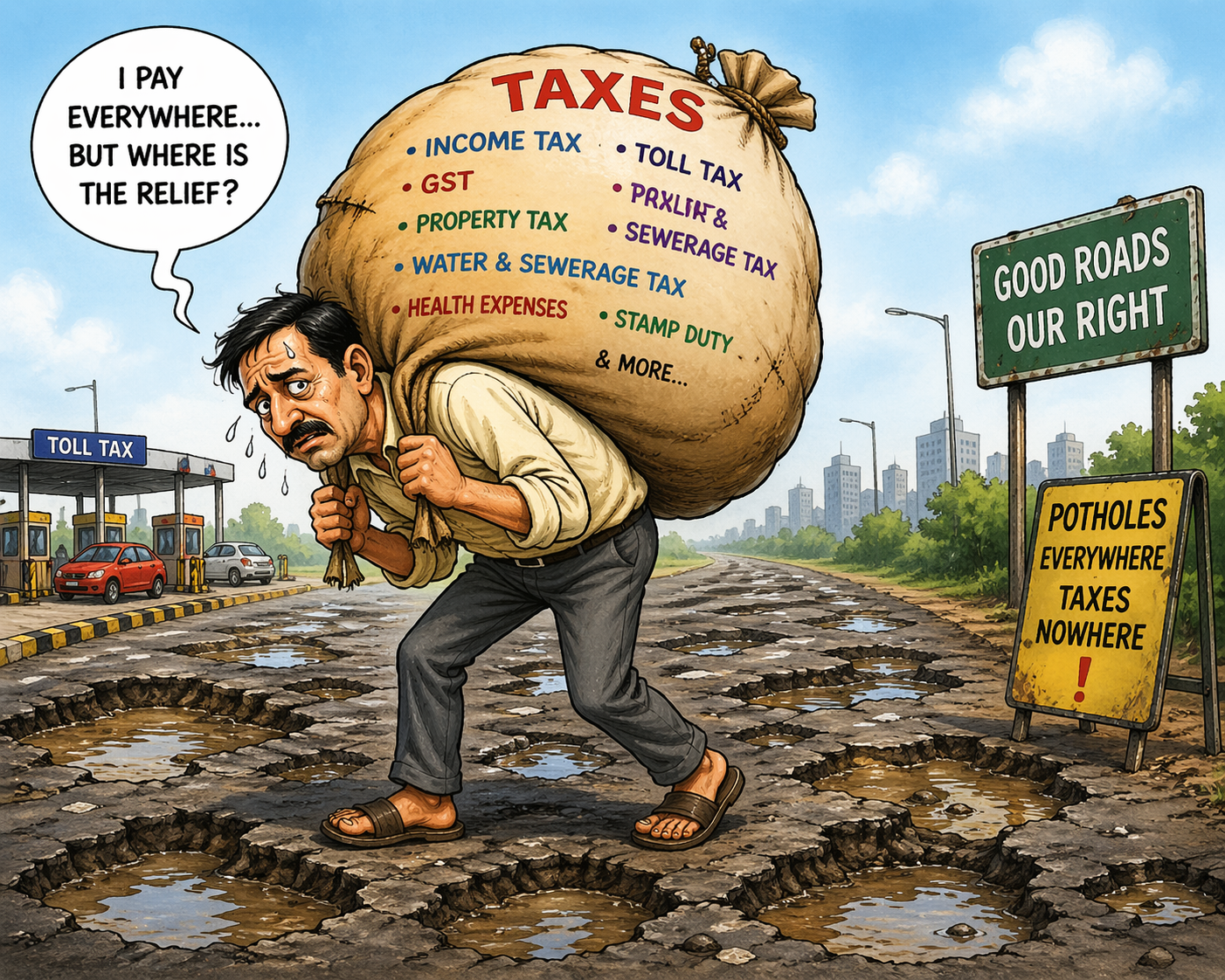
In recent years, many citizens have raised questions about the structure of taxation and the cumulative financial burden it creates. One commonly discussed issue is the requirement to pay toll tax despite already contributing through road tax as vehicle owners. While authorities state that toll collections are used to recover infrastructure costs and maintain highways under public-private partnership models, some commuters feel that the distinction between these taxes is not always clear.
Similar concerns are expressed regarding direct and indirect taxation. Individuals pay income tax on earnings and also contribute through Goods and Services Tax (GST) on consumption. For many, this creates a perception of being taxed at multiple stages of economic activity.
India’s taxation system has evolved over time. The first formal income tax was introduced in 1860 during British rule, primarily to address financial pressures following the 1857 uprising. Since then, the system has expanded significantly, incorporating various direct and indirect taxes to support governance and development.
Today, citizens contribute through multiple channels, including property tax, road tax, GST, and service-related charges. While each tax serves a specific purpose, the overall impact can feel substantial for individuals managing daily expenses such as healthcare, education, and housing.
Concerns have also been raised about infrastructure and enforcement systems. Technologies like CCTV-based traffic monitoring are intended to improve road safety and compliance. However, some commuters report inconsistencies in their functioning, such as signal delays or limited responsiveness in certain situations.
Experts suggest that improving transparency in tax utilization and strengthening public service delivery could help address these concerns. Clear communication about how tax revenues are used, along with visible improvements in infrastructure and services, may enhance public confidence.
Conclusion
As India continues to grow, balancing revenue generation with public satisfaction remains a key challenge. A transparent and accountable system that delivers tangible benefits can help ensure that taxation is viewed not as a burden, but as a contribution toward national development.