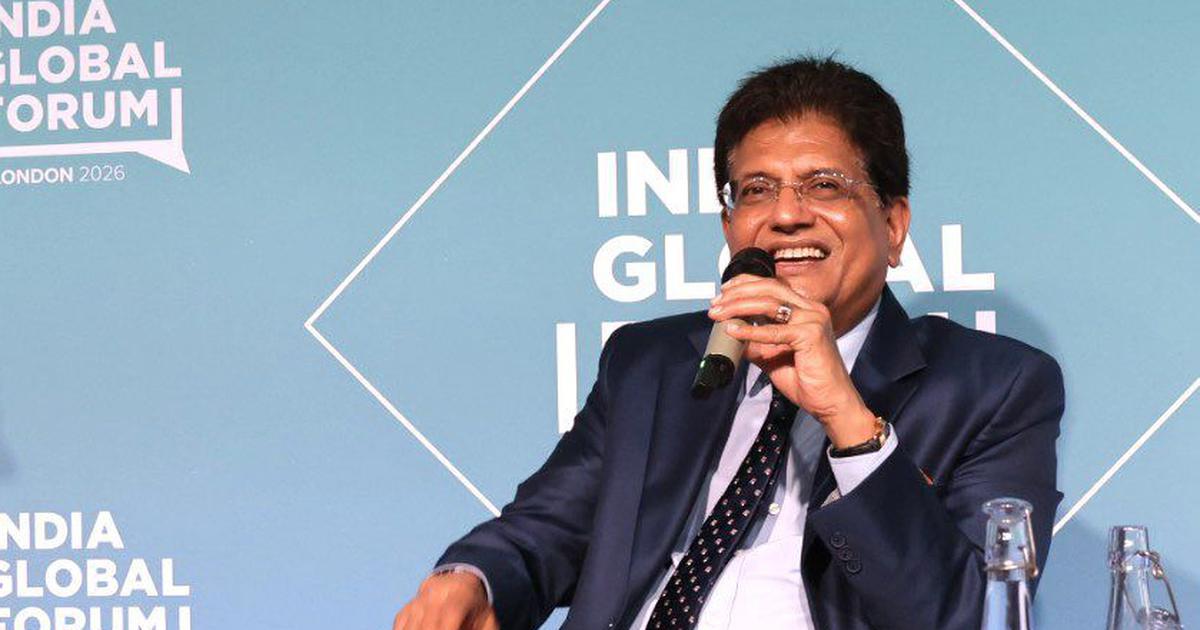
In a significant announcement made at the India Global Forum in London, Union Commerce Minister Piyush Goyal emphasized that the much-anticipated trade agreement between India and the United States will only come into effect when a clear tariff advantage is secured for India over its competitors. This statement sheds light on the intricate negotiations that have been in the works since both nations tentatively agreed to the deal back in February.
Goyal articulated that the implementation of the trade agreement hinges on establishing a competitive edge for India, particularly when compared to key countries like Vietnam, Thailand, the Philippines, Indonesia, Malaysia, China, Bangladesh, and Sri Lanka. “The day that happens, the deal is on,” Goyal asserted, underlining the importance of a favorable tariff structure for Indian exports.
One of the focal points of the ongoing discussions has been the significant reduction of tariffs, with a target to lower them from 50% to a more competitive 18%. Goyal noted that achieving this lower rate would place India at an advantageous position compared to many of its neighboring countries as well as other members of the ASEAN bloc, with the exception of Singapore. This strategic maneuver is seen as vital for enhancing India’s export capabilities and boosting its economy.
Moreover, Goyal highlighted the recent changes in the US tariff system, influenced by a Supreme Court ruling, alongside a pending temporary 10% tariff that is set to expire on July 24. These developments add another layer of complexity to the negotiations, necessitating further discussions and adjustments before the finalization of the trade deal.
The potential trade agreement is not merely a bilateral arrangement; it is perceived as a step toward strengthening economic ties between two of the world’s largest democracies. With India seeking to bolster its manufacturing sector and the US aiming to create more robust supply chains, the stakes are high. Both nations stand to gain significantly if they can navigate these tariff-related challenges successfully.