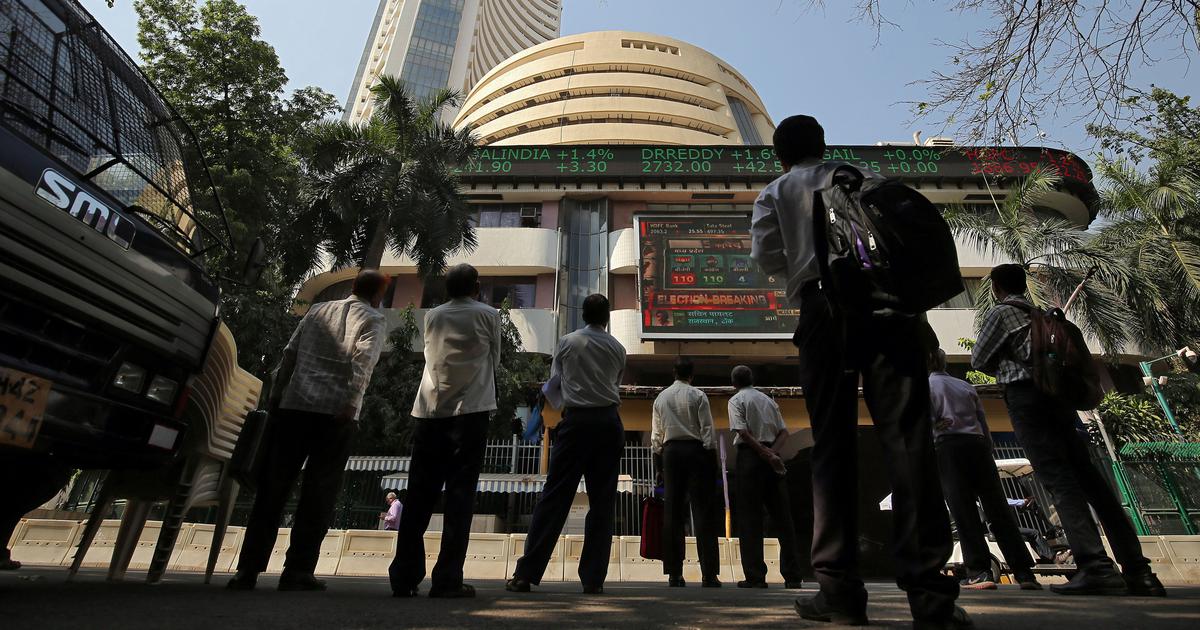
The Indian stock market experienced a steep decline on Monday, plummeting over 1.1% as global bond yields surged to unprecedented heights. Investors felt the brunt of this downturn, witnessing a staggering loss exceeding Rs 11 lakh crore within just the first hour of trading. By 9:50 AM, the benchmark Sensex was down by more than 950 points—or about 1.2%—while the Nifty index reflected a similar trend with a drop of 300 points.
This marked the second consecutive week of losses for the benchmark indices, as anxiety surrounding the economic ramifications of the ongoing conflict in West Asia continues to loom large. After a brief respite in April, following a significant drop in March, the market seems to have succumbed to renewed pressures.
Adding to the financial woes, the Indian rupee hit a record low of 96.2 against the US dollar, driven by soaring global oil prices and the economic turbulence resulting from the West Asian crisis. The previous low was recorded at 96.14 just a few days ago. The Indian currency has now been labeled as the worst-performing currency in Asia for 2026, suffering a 5.5% depreciation since the onset of the conflict on February 28. Notably, this marked the fifth consecutive trading session where the rupee reached a record low, amplifying concerns among investors and consumers alike.
The situation has been exacerbated by the rising cost of crude oil, with benchmark Brent crude prices climbing by 1.7% to settle at $111 per barrel. This increase is particularly alarming, given that Brent was priced at $78 per barrel just a day before the outbreak of hostilities. With India relying on imports for approximately 88% of its crude oil requirements, the implications of these price hikes are profound, impacting everything from inflation to the overall economic stability.
As the conflict in West Asia continues to unfold, the Indian market is likely to face further volatility. Analysts predict that without significant interventions or a resolution to the geopolitical tensions, both the stock market and the rupee could face more turbulent times ahead. Investors are now keenly watching global developments, as any shifts could influence the domestic economic landscape in the coming weeks.