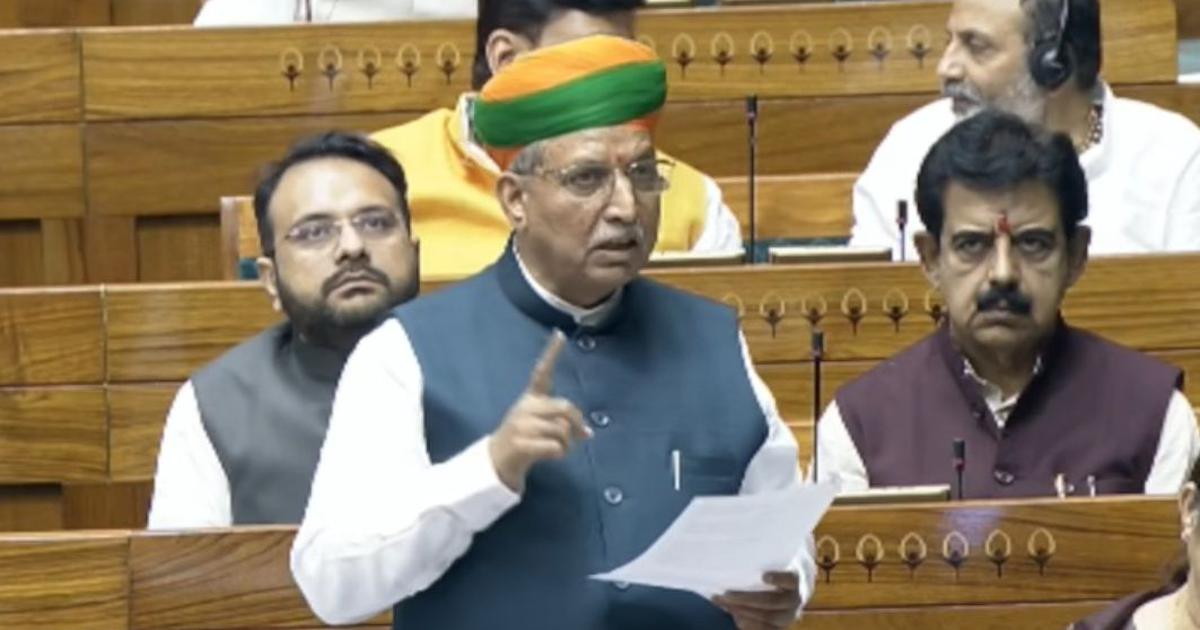
In a significant development during the Lok Sabha’s special session, Union Law Minister Arjun Ram Meghwal announced that the Centre’s proposed legislation aims to boost the strength of the Lower House to 815 seats, representing a 50% increase. This restructuring, he affirmed, would guarantee that no state would lose its representation in Parliament. Moreover, he highlighted that a substantial 272 of these seats—about one-third—would be specifically reserved for women.
The introduction of three critical bills on redrawing electoral boundaries, paired with the expedited implementation of women’s reservations in Parliament and state Assemblies, marks a pivotal moment in Indian legislative history. The bills, which were introduced earlier that day, include the 2026 Constitution One Hundred and Thirty-First Amendment Bill, the 2026 Delimitation Bill, and the 2026 Union Territories Laws Amendment Bill, with Meghwal and Union Home Minister Amit Shah leading the charge on their presentation.
During the Lok Sabha proceedings, the introduction of these bills was met with considerable interest. A division of votes revealed that of the members present, 251 supported the bills while 185 opposed them, illustrating a clear but contested consensus on the proposed changes. The discussions were further energized by objections from the opposition, particularly Congress MP Gaurav Gogoi, who raised concerns about the government’s motives. He accused the ruling party of attempting to conflate women’s reservations with the delimitation process, suggesting that their true intention was to alter electoral boundaries rather than genuinely promote gender equity in representation.
Gogoi’s assertions reflect a broader sentiment among some opposition members who fear that the government’s approach could undermine the spirit of women’s reservation intended to empower female participation in politics. The contention around these bills highlights the ongoing debate in India about electoral fairness and representation, especially as discussions about gender equality gain momentum in the public sphere.
As the government pushes forward with its legislative agenda, the implications of these bills are expected to resonate deeply within the political landscape. With a substantial increase in parliamentary seats on the horizon, the ability to balance representation with effective governance will be crucial as India navigates its complex socio-political dynamics. The outcome of this session may very well influence the trajectory of future electoral reforms and the role of women in Indian politics.