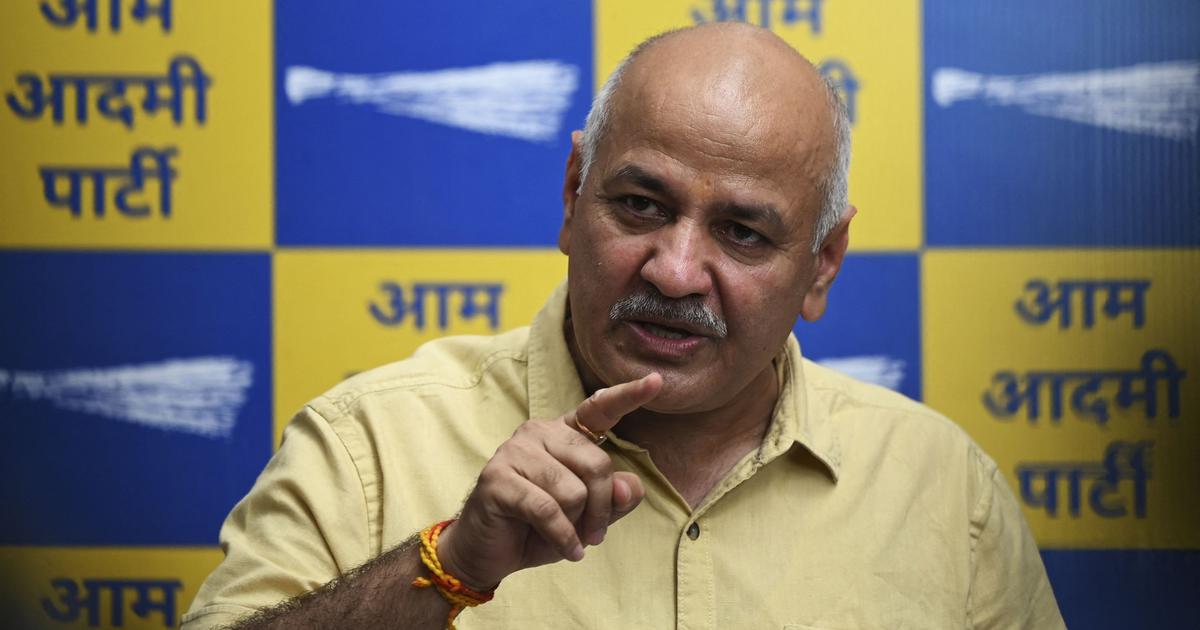
In a significant turn of events in the ongoing liquor policy case, Aam Aadmi Party (AAP) leader Manish Sisodia announced on Tuesday that he will not be appearing before the Delhi High Court, neither in person nor through legal representation. This decision follows a similar declaration made by AAP’s national convenor and Delhi Chief Minister Arvind Kejriwal, who also opted out of appearing before Justice Swarana Kanta Sharma in the same proceedings.
The case has garnered substantial attention as it centers around the Central Bureau of Investigation’s (CBI) appeal against a prior trial court ruling that had absolved Sisodia, Kejriwal, and several others from the charges related to the liquor policy. Justice Sharma is currently tasked with adjudicating this appeal, amid concerns raised by the accused regarding her impartiality.
In April, Justice Sharma dismissed a motion from Kejriwal, Sisodia, and others requesting her to recuse herself from the case. They cited her attendance at an event organized by a group associated with the Rashtriya Swayamsevak Sangh (RSS), the ideological parent of the ruling Bharatiya Janata Party (BJP), which has led to allegations of bias in her judicial conduct. Kejriwal further asserted that Justice Sharma has consistently ruled in favor of the CBI and the Enforcement Directorate in relation to this high-profile case.
In a letter addressed to the judge, Sisodia expressed that his concerns regarding her neutrality remain unaddressed. He conveyed his agreement with Kejriwal’s stance, emphasizing that this decision was made out of deep respect for the ongoing judicial process and the principles of justice. This move reflects a growing tension between the AAP leaders and the judicial proceedings surrounding the liquor policy.
The liquor policy case has not only put the spotlight on AAP leaders but has also raised broader questions regarding the functioning of investigative agencies and the independence of the judiciary in India. As the legal battles continue, the political ramifications are likely to unfold, impacting both public perception and the future of the party in Delhi.