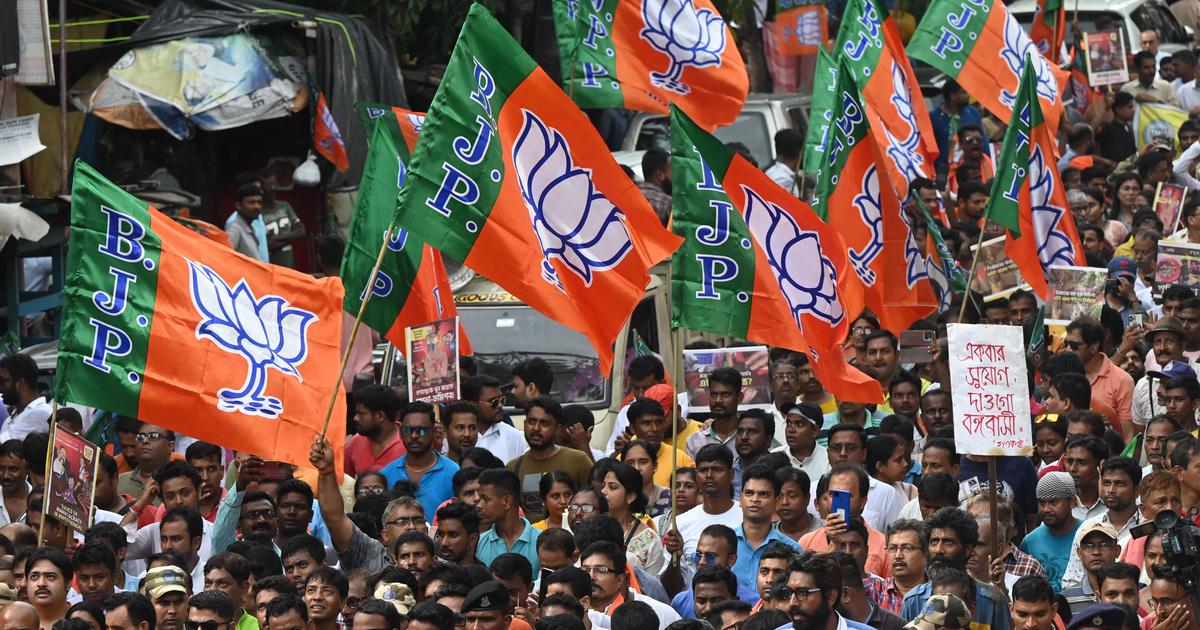
In a significant political turn, Ratna Debnath, the mother of a Kolkata doctor who was tragically raped and murdered, has emerged victorious as a Bharatiya Janata Party (BJP) candidate in the Panihati constituency during the recent West Bengal Assembly elections. This victory marks a notable shift in a region that has been a stronghold for the Trinamool Congress (TMC) since 2011.
Debnath secured her win by an impressive margin of over 28,000 votes against Tirthankar Ghosh, the TMC candidate. The constituency had been under the representation of Nirmal Ghosh, a TMC leader, until he was replaced by his son for the upcoming 2026 elections. Debnath’s win is not just a personal achievement; it resonates deeply with the widespread desire for justice and safety for women in West Bengal.
Following her electoral success, an emotional Debnath stated, “My daughter is no longer just mine. The whole world is looking at Panihati.” Her poignant words reflect the collective grief and anger felt across the state in the wake of her daughter’s murder. The late doctor, who was only 31 years old, was found dead in the state-run RG Kar Medical College and Hospital on August 9, 2024, a case that ignited massive protests and demands for justice across the country.
Debnath’s campaign was fueled by a personal mission. She had previously expressed her intent to contest the elections primarily to secure justice for her daughter and advocate for women’s safety in West Bengal. “This is a fight for justice, and it will not stop here. I will continue as long as I live,” she declared. Her commitment to this cause struck a chord with the electorate, evidencing how personal tragedies can transform into potent political movements.
Furthermore, the gruesome nature of the crime, which culminated in the conviction of Sanjoy Roy for the rape and murder of the doctor, has left a lasting impact on the community and beyond. Roy received a life sentence in January 2025, but the legal proceedings remain open as the Calcutta High Court is currently deliberating on an appeal filed in February 2025. Such high-profile cases have heightened public scrutiny regarding the safety of women and the effectiveness of law enforcement in addressing gender-based violence.
As the BJP aims to expand its influence in West Bengal, Debnath’s victory symbolizes an intersection of personal loss and a broader call for reform. It underscores the potential for grassroots movements to effect change in the political landscape, especially in a state where women’s safety remains a critical issue. Her journey from a grieving mother to an elected representative is not only inspirational but could serve as a catalyst for systemic change in how society addresses gender violence.