Artifical Intellegence
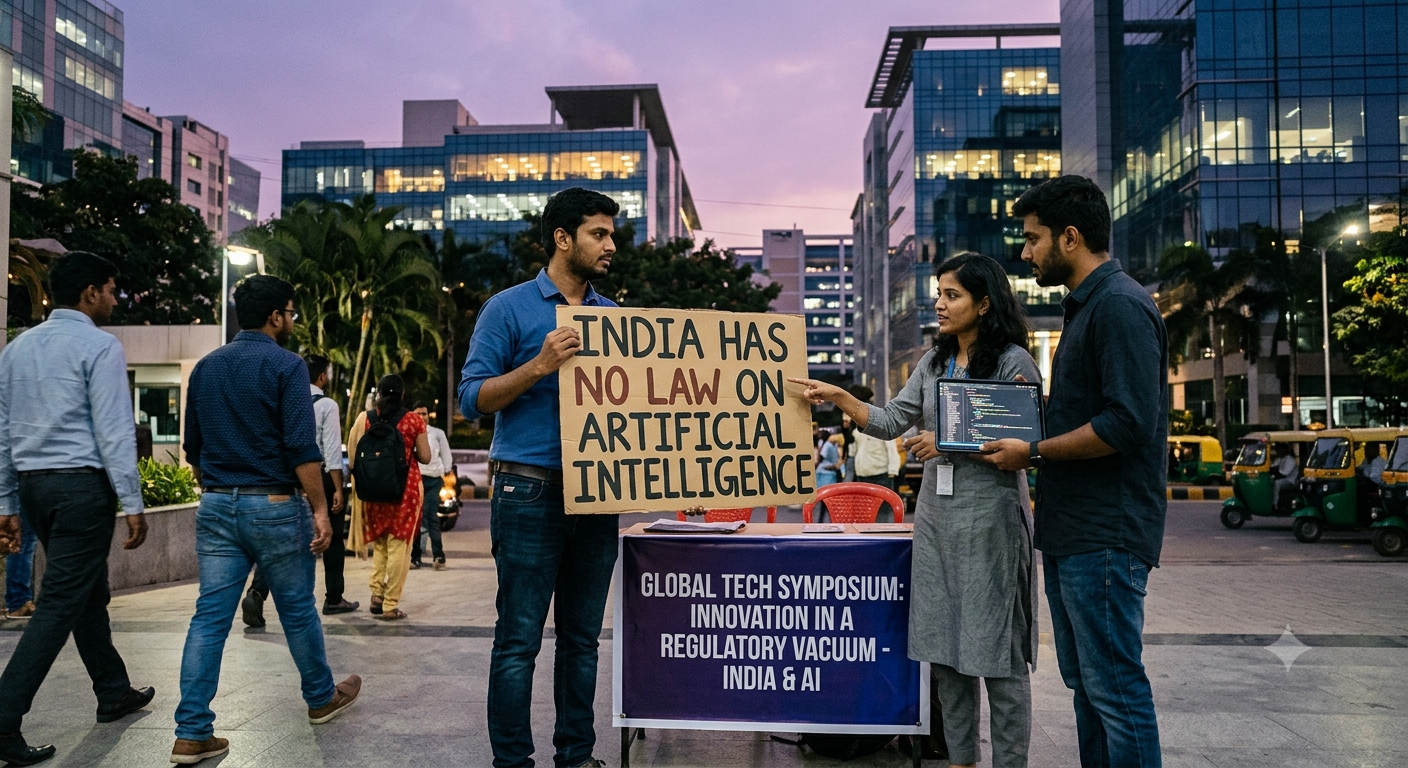
The Law That Isn’t There: Why India May Need a Dedicated Artificial Intelligence Act
By VISHAL V. KALE
Advocate and Arbitrator
Artificial intelligence has moved rapidly from research laboratories into areas of everyday life in India. AI-based systems are increasingly being used in recruitment, financial services, traffic management, content creation and digital communication. This expansion has raised questions about accountability, privacy, transparency, bias and responsibility when automated systems cause harm.
India does not currently have a single, dedicated parliamentary statute governing artificial intelligence across all sectors. However, this does not mean that AI operates outside the law. Existing frameworks, including the Information Technology Act, 2000 and the Information Technology Rules, impose obligations that can apply to computer resources and intermediaries using AI technologies. The government has also introduced specific regulatory measures relating to synthetic content.
The Global Regulatory Approach
Different jurisdictions have adopted different approaches to AI regulation. The European Union has established a dedicated risk-based framework through the EU AI Act. China has introduced regulations covering areas including recommendation algorithms, deep synthesis and generative AI. In the United States, AI governance involves a combination of federal measures, sector-specific rules and state legislation.
India has so far followed a more distributed approach rather than adopting one comprehensive AI statute. MeitY has been developing AI governance mechanisms, while existing technology and data-protection laws continue to apply to relevant activities. MeitY has also constituted an AI Governance and Economic Group as part of its broader AI governance work.
What Existing Indian Laws Can and Cannot Address
The Information Technology Act, 2000 is technology-neutral in several respects. MeitY has stated that its provisions and the IT Rules can apply to computer resources using artificial intelligence and that existing obligations can cover unlawful or misleading content generated or amplified through AI systems.
At the same time, existing laws were not designed specifically around every issue raised by modern AI systems, including model accountability, automated decision-making, testing for algorithmic bias, explainability, responsibility across AI supply chains and the governance of highly capable models. These issues raise questions about whether additional sector-specific or comprehensive legislation may eventually be required.
The Digital Personal Data Protection framework addresses the processing and protection of personal data, but AI systems can raise additional questions concerning the use of personal information in training, automated decision-making and accountability for model outputs. Copyright law similarly raises unresolved questions around the relationship between protected works, AI training and machine-generated outputs.
Supreme Court Cases Highlight the Need for Human Verification
The Supreme Court has recently dealt with cases involving the use of AI-generated legal material. In Pooja Ramesh Singh v. Jammu and Kashmir Bank Ltd., decided on July 2, 2026, the Court considered the use of AI-generated and hallucinated case citations by courts and tribunals. The Court's official case summary records that six AI-generated citations were found to be non-existent or wrongly attributed.
The Court also emphasised the consequences of relying on fabricated legal material in judicial decision-making and issued directions concerning the use of such material by members of the Bar.
In Vijay Ghanshyam Gadiya v. Union of India, decided on September 2, 2026, the Supreme Court dealt with a ₹425-crore customs penalty in proceedings where AI-generated material had been relied upon in the adjudication order. The Court set aside the order and directed that the proceedings be considered afresh. The judgment also stressed that AI may assist decision-making but cannot replace the adjudicatory role of a human decision-maker.
Privacy and Constitutional Safeguards
The Supreme Court's decision in Justice K.S. Puttaswamy (Retd.) v. Union of India established privacy as a fundamental right under the Constitution. The judgment continues to provide an important constitutional framework for considering state action involving personal data and surveillance.
As AI systems become more capable of analysing large amounts of personal information, questions concerning privacy, proportionality, transparency and accountability are likely to become increasingly important.
India's Emerging AI Regulatory Framework
India's regulatory framework is also evolving. The government has introduced measures dealing specifically with synthetically generated information under the IT Rules. The 2026 amendments define certain forms of realistic AI-generated or AI-altered audio-visual material and establish obligations relating to identification and handling of such content.
These developments indicate that India is not without legal mechanisms for dealing with AI-related risks. The broader question is whether existing laws and sector-specific rules will be sufficient as AI becomes more deeply integrated into finance, healthcare, employment, education, public administration and other areas.
The Case for a Dedicated AI Law
A dedicated AI law could potentially provide greater clarity on issues such as risk classification, liability, safety testing, transparency, human oversight, algorithmic accountability and remedies for individuals affected by automated systems. Any such framework would also need to balance innovation, economic development, privacy and individual rights.
For India, the policy challenge is therefore not simply whether to regulate artificial intelligence, but how existing laws should interact with any future AI-specific legislation.
Artificial intelligence can assist human decision-making, but responsibility for the consequences of its use cannot automatically be transferred to the technology itself. As AI systems become more capable, the need for clear rules on accountability, verification and human oversight is likely to remain an important subject for Parliament, regulators and the courts.
VISHAL KALE
Legal Journalism