Nepal Flood Disaster: Hundreds Dead and Many Still Missing After Catastrophic Flash Flood.
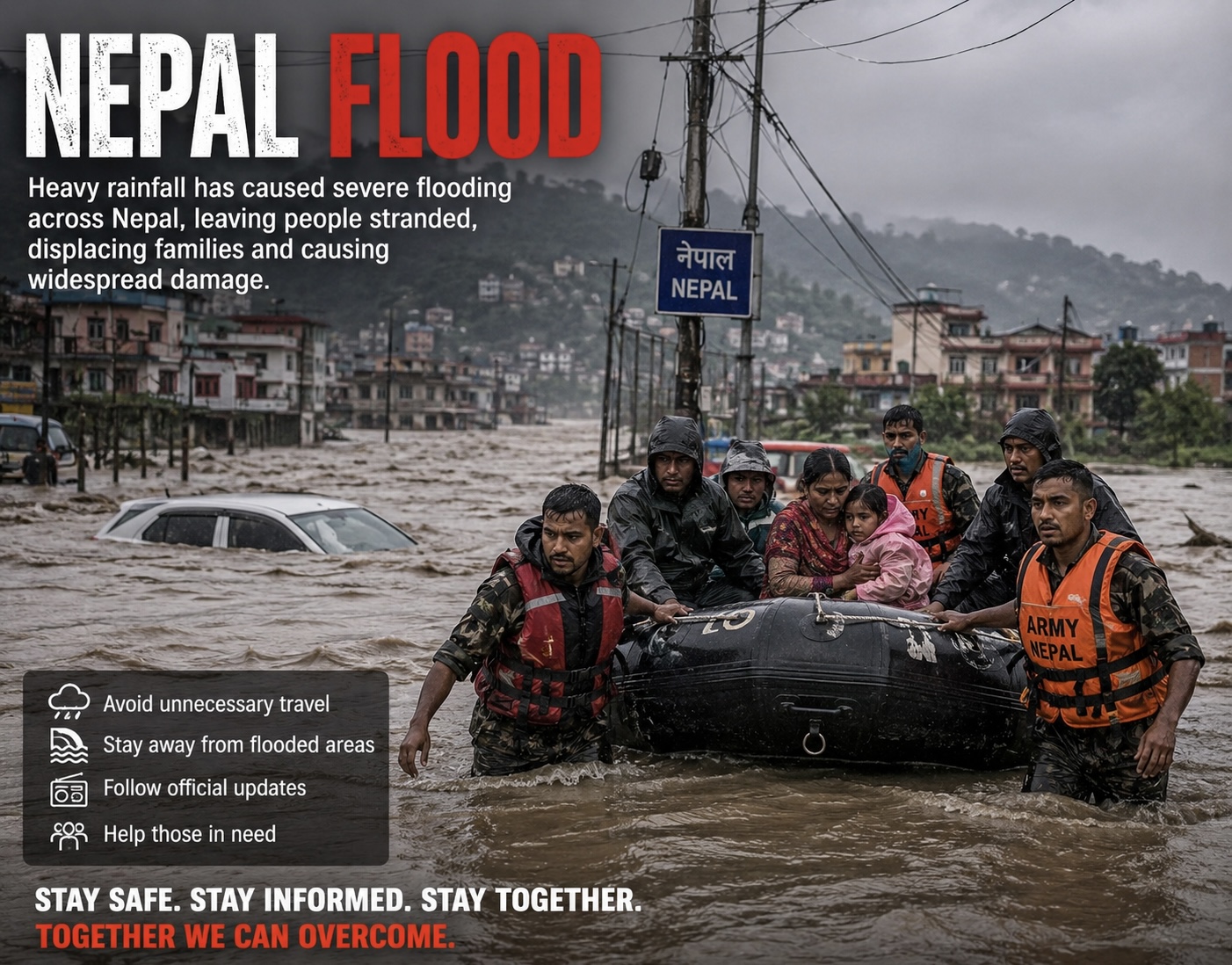
A catastrophic flash flood along the Nepal-China border has caused widespread devastation, killing hundreds of people and leaving many more missing as rescue teams continue searching through heavily damaged mountain communities.
The disaster struck on August 26 after a massive ice and rock collapse in the Himalayan region triggered a powerful surge of water, mud and debris. The flood swept through areas along the Bhote Koshi and Trishuli river systems, destroying homes, roads, bridges and critical infrastructure.
Authorities have launched large-scale rescue and relief operations, but damaged roads, communication failures and difficult weather conditions have made access to several affected areas extremely challenging. Helicopters and emergency personnel have been deployed to locate survivors and evacuate stranded residents.
The disaster has also affected foreign tourists and pilgrims travelling through the Himalayan region, with a significant number reported missing. Concerns remain high that the casualty figures could change as rescue teams reach isolated locations and continue recovery operations.
Experts say the tragedy highlights the growing dangers faced by Himalayan communities from glacier-related disasters. Rising temperatures and accelerating glacier melt are increasing the risk of ice collapses, landslides and sudden floods in the region, raising concerns about the need for stronger monitoring and early-warning systems.
Nepalese authorities, emergency services and international agencies are continuing relief efforts as thousands of people face the aftermath of one of the region's most devastating recent natural disasters.
Rescue operations remain underway, and authorities are expected to release updated information as the situation develops.
India has expressed solidarity with Nepal following the devastating floods and said it stands ready to support its neighbouring country during the crisis. Indian authorities have conveyed their willingness to provide humanitarian assistance and support rescue and relief efforts as needed. India has also remained in contact with Nepalese authorities regarding the safety of people affected by the disaster, including those stranded in remote Himalayan areas.
India’s support could include emergency supplies, medical assistance, rescue equipment and logistical support, depending on Nepal’s requirements. The two neighbouring countries are expected to continue coordinating closely as rescue teams search for missing people and relief operations reach communities cut off by the floods.