"BRICS 2026: India at the Centre of a Changing World Order"
By
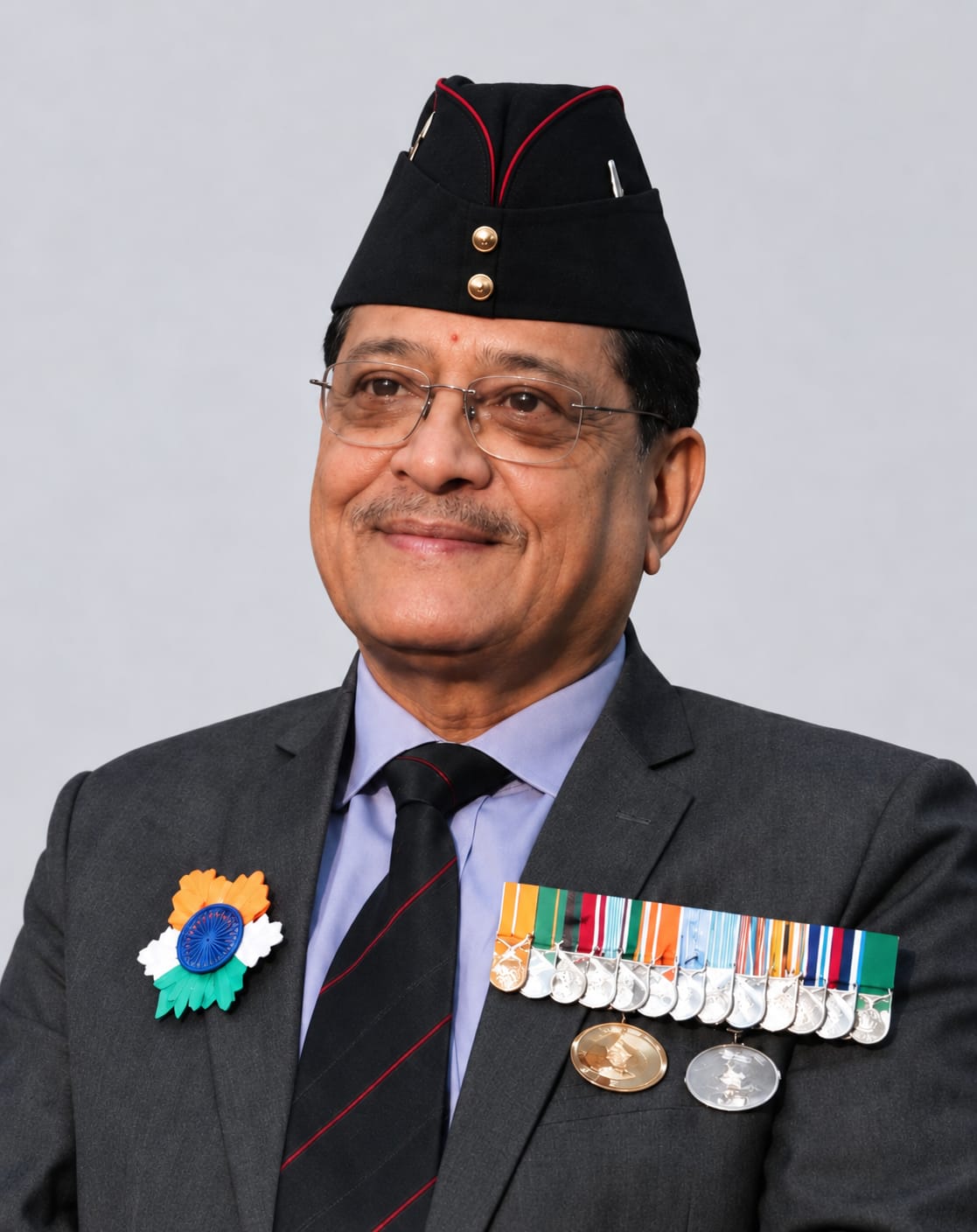
Col (Dr.) Ashwani Kumar, MiD, VSM (Retd)
Can India convert strategic autonomy into strategic power and global leadership?
The 18th BRICS Summit in New Delhi on 12 - 13 September 2026 is more than another international summit. It is a test of India's ability to convert its growing economic, diplomatic, technological and military capabilities into strategic influence.
BRICS now comprises 11 countries - Brazil, Russia, India, China, South Africa, Egypt, Ethiopia, Iran, UAE, Indonesia and Saudi Arabia. Collectively, they represent about 49.5% of the world's population, 40% of global GDP and 26% of global trade. India is chairing BRICS for the fourth time, in its twentieth year, under the theme “Building for Resilience, Innovation, Cooperation and Sustainability.”
India has therefore assumed leadership at a particularly important moment. The world is experiencing geopolitical conflicts, economic fragmentation, supply-chain disruptions, technological competition and growing rivalry among major powers. The question is not whether BRICS will replace the existing international order. It will not.
The more important question is, Can India use BRICS to help shape a more balanced, multipolar and representative international system and in the process strengthen its own position as a leading global power?
India's Opportunity: From Participant to Shaper.
India should ensure that BRICS does not become an anti-American or anti-Western bloc. Its real value lies in providing a platform where countries with different political systems and strategic interests can cooperate on issues of common concern.
This approach is already visible in India's chairmanship. More than 350 meetings and high-level engagements have been conducted across over 25 Indian cities, covering the political-security, economic-financial and cultural/people-to-people pillars.
The New Delhi Declaration is particularly significant because BRICS members have been able to reach consensus despite major differences including over the conflict in West Asia. The declaration calls for restraint and resolution of disputes through dialogue and diplomacy.
For India, the ability to build consensus among competing powers may itself be the greatest diplomatic achievement.
India should make BRICS a bridge between power centres, not another power block. The Future Role of BRICS Members and India's Advantage. Every member brings a different strategic asset.
Russia remains important for India's energy security, defence cooperation, nuclear energy, space and strategic stability. India, however, must progressively diversify while preserving this longstanding relationship.
China is simultaneously BRICS's largest economic power and India's principal long-term strategic challenge. India must cooperate with China where interests converge while firmly protecting its sovereignty and security.
Brazil provides BRICS with a major Latin American pillar, with opportunities in agriculture, food security, biofuels, minerals and pharmaceuticals.
South Africa gives BRICS a strong African voice and can become a gateway for Indian investment and trade across the continent.
Egypt brings the strategic importance of the Suez Canal, maritime connectivity, logistics and links with Africa and the Middle East.
Ethiopia offers opportunities in agriculture, infrastructure, pharmaceuticals, education and digital development in East Africa.
Iran is strategically important for energy, connectivity with Central Asia and India's Chabahar corridor. At the same time, India must encourage dialogue and de-escalation in West Asia.
UAE and Saudi Arabia bring enormous importance in energy, finance, investment, logistics and infrastructure. They can help connect India with the Gulf, Africa and Europe.
Indonesia provides a critical Southeast Asian and maritime dimension and strengthens India's engagement with ASEAN and the wider Indo-Pacific.
Thus, BRICS can become an enormous network of markets, resources, technology, energy, connectivity and diplomatic influence for India.
What India Should Gain from BRICS.
India's objectives should be practical.
First, BRICS should open larger and more diversified markets for Indian manufacturing, agriculture, pharmaceuticals, engineering, automobiles and services.
Second, India should strengthen supply-chain resilience, particularly in critical minerals, electronics, semiconductors, pharmaceuticals and strategic technologies.
Third, India should use BRICS to expand digital cooperation and cross-border payments. The current focus is not on creating a common BRICS currency but on making payments faster, safer and more efficient through cooperation among national systems and greater use of local currencies.
Fourth, India should use BRICS to promote cooperation in AI, quantum technology, advanced computing, biotechnology, space and semiconductors.
Fifth, India should continue pressing for greater representation of the Global South in institutions such as the UN Security Council, IMF and World Bank.
The objective should be clear, BRICS must produce practical outcomes, not merely political declarations.
The Soldier's Perspective: Strategic Autonomy Requires Strategic Power.
Having spent a substantial part of my professional life in uniform, in India and abroad, I believe there is one fundamental strategic reality that we must never lose sight of:
Diplomacy is strongest when backed by national power.
A soldier looks at international relations somewhat differently. For him, peace is not the absence of military capability. Peace is the outcome of credible deterrence, political wisdom and preparedness.
India's strategic autonomy therefore cannot rest only on diplomacy. It must be supported by a strong economy, technological superiority and a military capable of defending national interests under all circumstances.
The future battlefield will not be confined to the traditional domains of land, sea and air. It will extend into space, cyber, the electromagnetic spectrum, artificial intelligence, drones, autonomous systems, precision weapons and information warfare.
India must therefore build an integrated, network-centric and technologically superior military.
The lesson is simple:
Strategic autonomy without strategic capability is only strategic aspiration.
China: The Most Important Strategic Test, No discussion of India's strategic future can avoid China.
The current India-China relationship contains both competition and opportunities for stabilisation. President Xi Jinping's visit to India for the BRICS Summit, the first in seven years has created an opportunity for the two countries to address the border, trade and wider bilateral relationship.
There have also been recent efforts to improve border management. At the 25th round of Special Representatives' talks in August 2026, India and China agreed on additional military communication channels and meeting points, while reaffirming the objective of a fair, reasonable and mutually acceptable boundary settlement.
These are positive developments. But a soldier must remain realistic.
The fundamental boundary question remains unresolved. The military infrastructure and strategic competition have not disappeared. The experience of the 2020 confrontation demonstrated how quickly mistrust can turn into a serious military crisis.
Therefore, India's China policy should be based on peace through strength.
What should India seek?
First, stabilisation.
There must be no repeat of violent confrontation on the LAC. Communication between commanders, hotlines, patrolling arrangements and verification mechanisms must be strengthened.
Second, de-escalation.
Military deployments can eventually be reduced when genuine confidence and verifiable arrangements exist.
Third, a final boundary settlement.
The long-term objective must remain a fair, reasonable and mutually acceptable settlement through patient negotiations.
Fourth, military preparedness.
Until the boundary issue is resolved, India must maintain the capability to defend every inch of its territory.
Fifth, economic and technological resilience.
The China challenge is not purely military. It encompasses critical technologies, telecommunications, supply chains, cyber security, infrastructure and economic dependence.
The answer is therefore neither permanent confrontation nor premature normalisation.
Cooperate where interests converge, compete where they diverge, deter where necessary and compromise on nothing concerning India's sovereignty and national security.
India should not seek confrontation with China. It should seek a stable, peaceful and mutually respectful relationship. But such peace must be based on reciprocity, verification and respect for sovereignty.
The objective should not be to make China an enemy.
The objective should be to ensure that China cannot make India strategically vulnerable.
BRICS and India's Military-Security Future
BRICS should not become a NATO-like military alliance. But security cooperation within BRICS can be useful in areas such as counter-terrorism, cyber security, maritime security, disaster response, space security and emerging technologies.
For India, the maritime dimension is particularly important. India's trade and energy security depend heavily on safe sea lanes. With BRICS members stretching across the Indian Ocean, Gulf, Red Sea, Southeast Asia and the Atlantic, there is enormous scope for cooperation in maritime safety, logistics and connectivity.
Similarly, India should use BRICS to promote cooperation in AI-enabled defence technologies, drones and counter-drone systems, cyber security, satellite applications and advanced manufacturing.
Defence self-reliance must also move beyond simply replacing imports.
India should progress from:
Importer → Manufacturer → Technology Developer → Defence Exporter.
That journey will strengthen both India's military power and its diplomatic influence.
India's Strategic Autonomy: The Real Meaning
Strategic autonomy does not mean maintaining equal distance from every major power.
It means having the freedom to make decisions according to India's national interest.
India will need the United States for technology, investment and strategic cooperation; Russia for important defence, energy and strategic partnerships; Europe for trade and technology; the Gulf for energy and investment; Japan and other Indo-Pacific partners for connectivity and maritime security; and China for engagement on trade, borders and global issues.
There is no contradiction in this.
India's strength lies precisely in its ability to maintain multiple partnerships without becoming subordinate to any one power.
Strategic autonomy is not the freedom to say no to everyone. It is the capability to say yes or no according to India's national interest.
From Strategic Autonomy to Strategic Power
BRICS provides India with a platform.
India's economy provides leverage.
Technology provides the edge.
Diplomacy provides influence.
And military power provides the freedom to exercise strategic choices.
India's ambition, therefore, should not merely be to have a seat at every international table.
It should be to become a country whose presence changes the conversation at that table.
The success of India's BRICS chairmanship should ultimately be judged by whether it leaves behind stronger institutions, better economic connectivity, greater Global South cooperation, improved technological partnerships and a more balanced international order.
But there is another, equally important measure: whether India emerges from this exercise with greater confidence in its own comprehensive national power.
Conclusion
BRICS 2026 is an opportunity for India to demonstrate a new model of leadership—confident, independent, inclusive and responsible.
India should neither turn BRICS into an anti-Western coalition nor allow it to become China-centric. It should instead build BRICS into a practical platform for economic growth, technological cooperation, energy security, Global South representation and diplomatic dialogue.
At the same time, India must remember that international influence ultimately rests on comprehensive national power.
As a soldier, I would put it simply:
A strong military alone cannot make a nation powerful. But without credible military strength, a nation's strategic autonomy can never be fully secure.
India must therefore pursue peace, but prepare for conflict; seek cooperation, but protect its interests; engage China, but remain militarily prepared; and build partnerships, while retaining independent decision-making.
That is how strategic autonomy can evolve into strategic power.
And that, ultimately, is how India can move from being an important participant in the emerging world order to becoming one of the countries that helps shape it.
Author's Note
Having spent a substantial part of my professional life in uniform, I have viewed national security and international relations from the perspective that diplomacy, economic strength, technological capability and military preparedness are mutually reinforcing elements of national power. This article reflects my personal assessment of India's evolving strategic role and the opportunities presented by BRICS.
Disclaimer:
The views expressed in this article are those of the author in his personal capacity and are intended for informed public discussion. They do not represent the official position of the Government of India, the Indian Armed Forces, or any organisation with which the author may have been associated. The article is an independent strategic assessment based on publicly available information.