Cashless India: Dream or Reality?
There is an important distinction that needs to be made in the MDR debate.
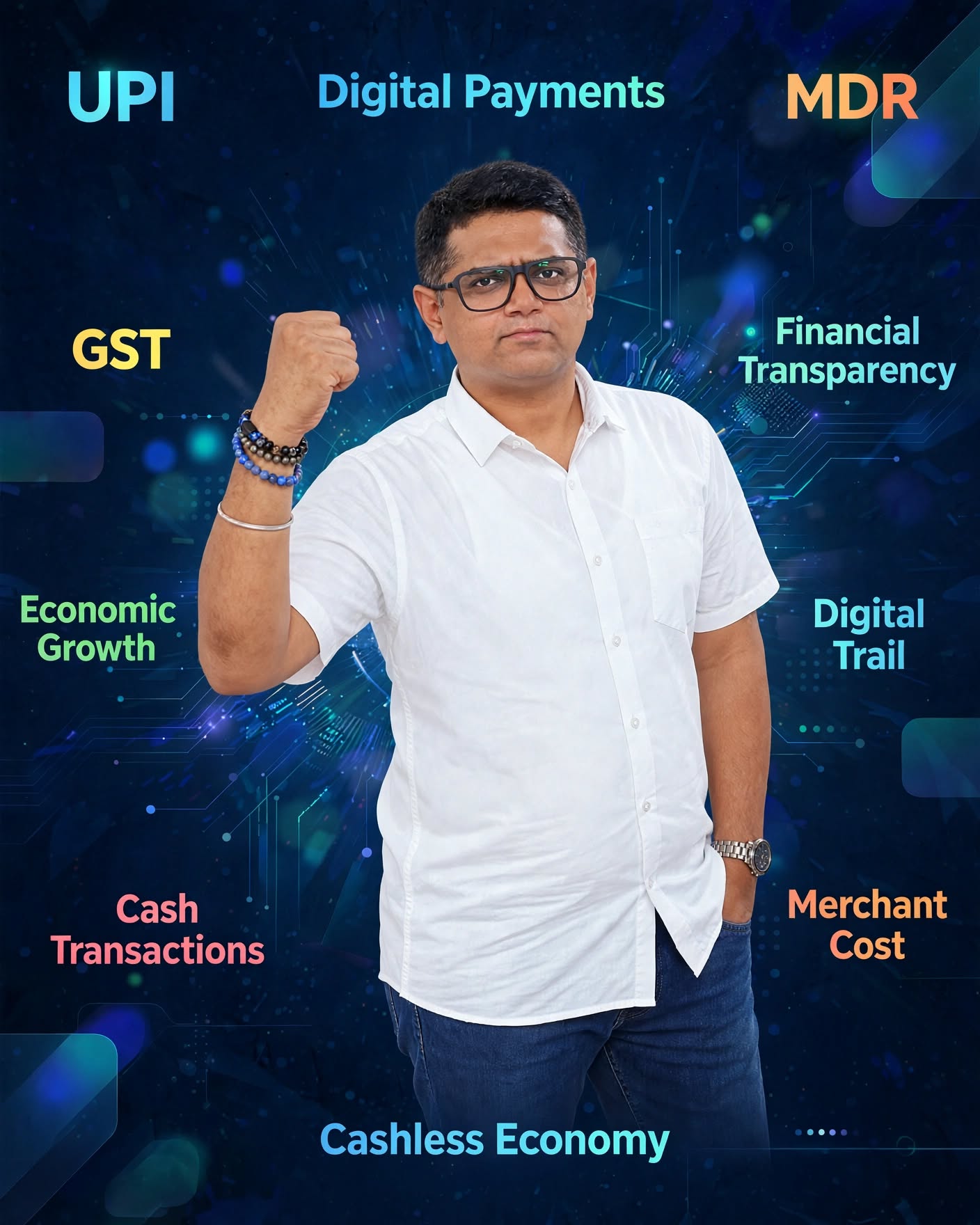
MDR is not a tax on the UPI transaction. It is a fee associated with processing certain digital transactions and is distributed among stakeholders in the payment ecosystem — including banks, payment service providers and UPI application providers.
However, there is another element that deserves attention: where MDR is charged as a taxable service fee, GST is applicable on that fee. In other words, GST is not being charged on the entire UPI transaction value; it is applicable on the underlying service/fee. The Government has itself clarified that GST is levied on charges such as MDR.
Under the present framework, the customer is not supposed to be directly charged MDR. The cost is borne on the merchant side.
There is a reasonable policy argument for ensuring that the digital payment ecosystem has a sustainable mechanism to meet its processing, infrastructure and security costs.
But that brings us to the larger question:
What could be the behavioural impact of imposing a cost on merchants?
When UPI was introduced in 2016, it was seen as a major step towards a less-cash economy. Over the years, UPI has become an integral part of everyday commerce.
What happens if some merchants start feeling that accepting digital payments is becoming expensive?
What if businesses begin encouraging customers to pay in cash instead?
The customer may not be charged directly, but if a merchant says, "Cash only," the customer ultimately has to make a choice.
And if enough transactions move back towards cash, the consequences could extend beyond payment convenience.
A digital transaction creates a record and improves transaction visibility.
Think about:
• Wedding purchases
• Gold and jewellery purchases
• Fuel payments
• Weekly grocery shopping
• Restaurant bills
• Hotel bookings
• Electronics and appliances
• Furniture purchases
• Construction material
• Vehicle purchases and servicing
• Medical and pharmacy payments
• School and college fees
• Travel and ticket bookings
• Professional services
• Large retail purchases
• Real-estate-related payments
• Home renovation and contractor payments
• Events and catering
• Educational and coaching fees
If a meaningful portion of these transactions shifts back towards cash, we could see greater dependence on physical currency and potentially less visibility over economic activity.
Therefore, the debate should not simply be:
"MDR is a tax — YES or NO?"
The more important question is:
"How do we make digital payments economically sustainable without creating incentives for merchants or consumers to move back towards cash?"
India has spent years building a digital payment culture.
UPI succeeded because it was simple, instant and affordable.
The objective should therefore be to find a sustainable model that keeps digital payments attractive for both merchants and consumers.
Because the success of UPI isn't just about the number of transactions processed.
It is also about whether businesses and consumers continue to choose digital payments voluntarily.
That is the conversation worth having.