
Demonetisation - The Announced Cure and the Audited Outcome
Demonetisation: A Decade Later, What Do the Numbers Tell Us?
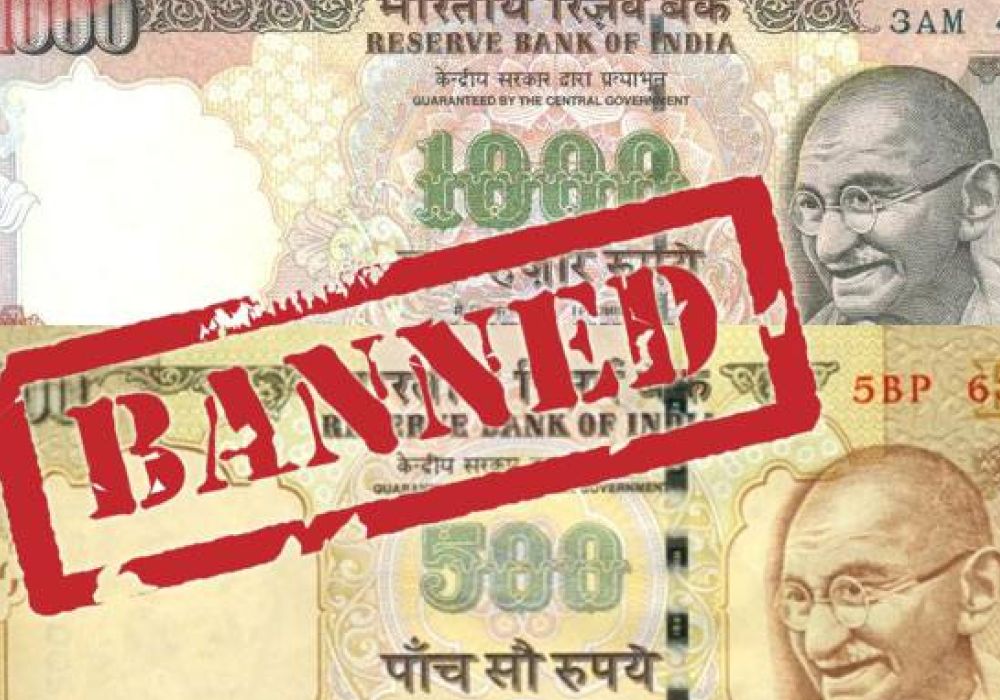
On the night of November 8, 2016, the Prime Minister addressed the nation and announced that ₹500 and ₹1,000 notes would cease to be legal tender from midnight, giving people a limited window to deposit or exchange the withdrawn currency.
The government cited several objectives for the decision, including tackling black money, counterfeit currency and terror financing, while also encouraging greater use of digital payments.
A decade later, data from the Reserve Bank of India (RBI) provides an important basis for assessing the impact of the exercise.
According to the RBI's annual report for 2017-18, approximately 99.3% of the specified banknotes withdrawn in 2016 were returned to the banking system. The figure prompted considerable debate about how much unaccounted cash was actually removed from circulation. However, the return of the notes alone does not establish how much black money was subsequently identified or recovered through other mechanisms.
The immediate economic disruption was significant. Cash-dependent sectors, including parts of the informal economy, small businesses, daily-wage employment and agricultural markets, faced difficulties during the transition because a large share of transactions depended on physical currency.
Economic growth also slowed in the quarters following the announcement. Economists and researchers have debated the extent to which demonetisation contributed to that slowdown, alongside other economic factors.
The impact was particularly visible in sectors and communities with limited access to formal banking and digital payment systems. Long queues outside banks and difficulties in accessing cash became a defining feature of the period.
Black Money and the Return of Currency
One of the central questions surrounding demonetisation was whether large amounts of unaccounted cash would fail to return to the banking system.
The RBI subsequently reported that almost all of the withdrawn currency had been returned. This outcome led to debate over whether the exercise achieved its objective of removing unaccounted cash from the financial system. At the same time, it is important to distinguish between physical cash and black money, since unaccounted wealth can also exist in assets, property, businesses and other forms rather than only as currency.
Impact on the Economy
The withdrawal of high-value currency created a temporary liquidity shortage across the economy. Informal businesses and workers who relied heavily on cash were among those most exposed to the disruption.
Studies and economic assessments have reached different conclusions about the scale and duration of the impact. While demonetisation has been identified as one factor behind the slowdown experienced during the period, other domestic and global economic conditions also influenced India's growth performance.
Terror Financing and Counterfeit Currency
Counterfeit currency and terror financing were also among the concerns cited by the government when announcing the decision.
Assessing the long-term impact on these areas requires comparison of official security, enforcement and counterfeit-currency data across different periods. Therefore, claims of a complete success or failure on these objectives should be made cautiously and with reference to specific government data.
Digital Payments and the Cashless Economy
Demonetisation accelerated public attention toward digital payments and formal financial transactions. The period that followed saw rapid expansion in digital payment methods, including UPI.
However, digital payments were already developing before November 2016, making it difficult to attribute the entire subsequent growth in digital transactions to demonetisation alone.
The Supreme Court's 2023 Verdict
Demonetisation also faced legal challenges. In January 2023, the Supreme Court, by a 4:1 majority, upheld the government's decision to withdraw the specified banknotes. Justice B.V. Nagarathna issued a dissenting opinion concerning the manner in which the decision-making process was carried out.
The majority judgment therefore remains an important part of the legal history of the 2016 decision, while the dissent highlighted a different view of the statutory process involved.
A Decade Later
Ten years after demonetisation, the policy remains one of India's most debated economic decisions. Its supporters point to increased formalisation, greater use of digital payments and changes in financial reporting, while critics have highlighted the disruption caused by the sudden withdrawal of currency and the fact that most of the withdrawn notes returned to the banking system.
The available data does not support reducing the entire debate to a single statistic. The RBI's currency-return figures are significant, but evaluating demonetisation also requires examining its effects on economic activity, tax compliance, formalisation, digital payments, counterfeit currency and financial inclusion.
Ultimately, the experience offers a broader lesson in economic policymaking: the success of a major policy intervention should be assessed not only by its stated objectives, but also by measurable outcomes, implementation costs and its impact on different sections of society.
Note: This article presents a retrospective analysis of publicly available information and does not claim that any single indicator independently establishes the overall success or failure of demonetisation.