FAKE TRAFFIC CHALLAN MESSAGE ON WHATSAPP LEADS TO ₹99,149 CYBER FRAUD IN VEJALPUR
Fake Traffic Challan Message on WhatsApp Leads to ₹99,149 Cyber Fraud in Vejalpur
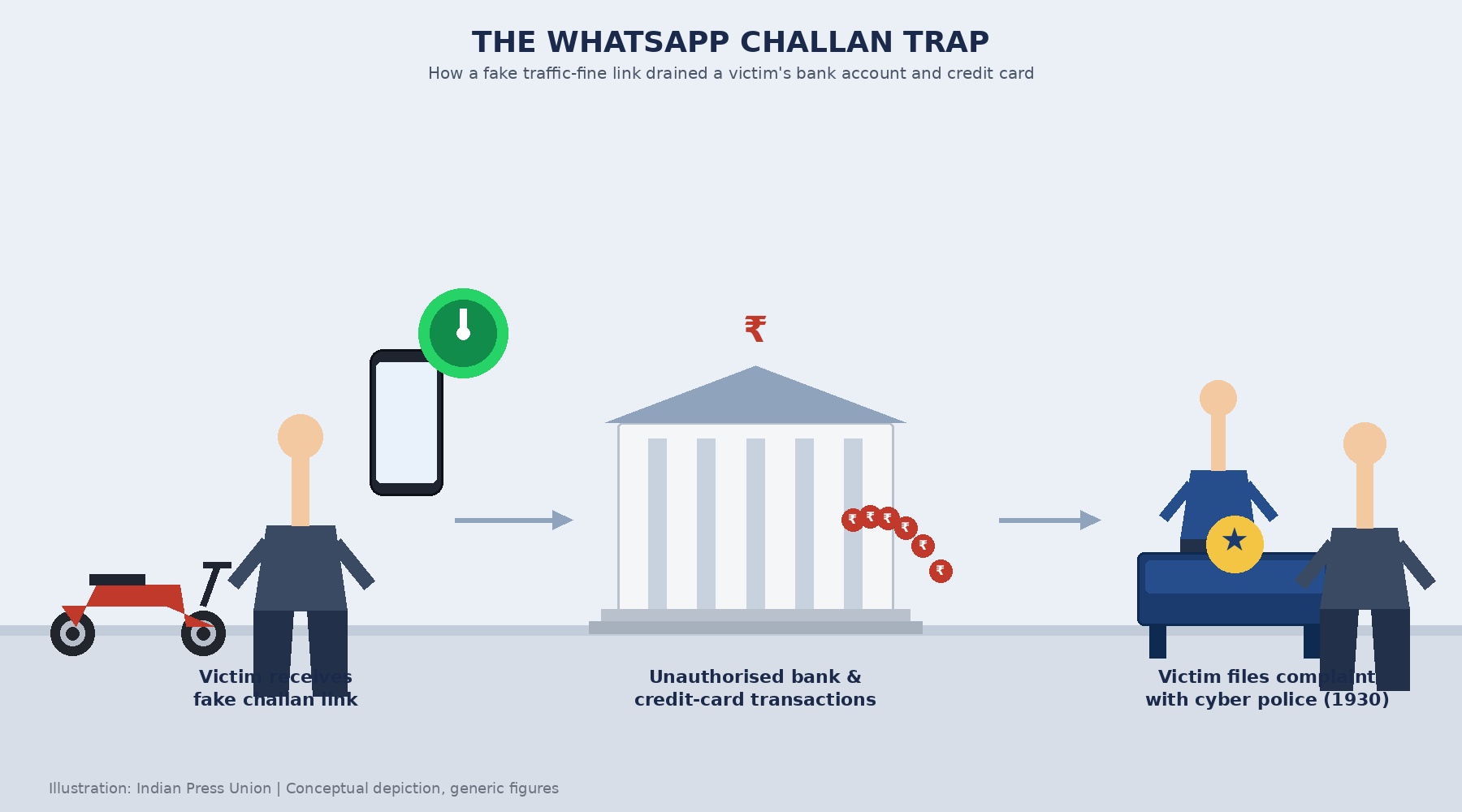
Ahmedabad, August 24, 2026: A 41-year-old sales assistant from Vejalpur allegedly lost ₹99,149 after receiving a fake traffic challan message on WhatsApp and clicking a link that led to the installation of a malicious application, according to police.
Fake Challan Message Sent on WhatsApp
According to the complaint, the incident began on August 6 when the complainant, Zubair Rafiqbhai Sheikh, received a WhatsApp message around 10:28 pm claiming that a ₹2,000 traffic challan had been issued against his Suzuki Burgman scooter.
The message contained a link that appeared to be related to the challan payment process. Believing it to be genuine, Sheikh clicked the link, following which an application was installed on his mobile phone.
₹1 Payment Request Preceded the Fraud
The application reportedly asked him to make a nominal payment of ₹1. Sheikh attempted the payment five times through UPI, but the transactions appeared unsuccessful. He later deleted the application and the WhatsApp message.
₹79,149 Withdrawn From Bank Account
Two days later, on August 8, Sheikh began receiving multiple OTP alerts on his phone. On checking his Bank of Baroda account, he found two unauthorised transactions of ₹50,000 and ₹29,149.
After discovering the suspected fraud, he immediately contacted the national cybercrime helpline 1930 and reported the incident.
Credit Card Transactions Also Detected
The complainant later discovered that his Axis Bank credit card had also been used without his authorisation. Two transactions of ₹10,000 each were recorded on August 22.
With the bank withdrawals and credit card transactions combined, the total reported loss stood at ₹99,149.
Vejalpur Police Begin Investigation
Vejalpur police have registered a case against an unidentified accused and initiated an investigation into the suspected cyber fraud.
Investigators are examining the WhatsApp message, mobile number, malicious link and financial transaction records to trace the digital trail and identify the person or persons involved.
Fake Challan Messages Raise Cybersecurity Concerns
The incident highlights the growing risk of cybercriminals using fake traffic challan messages to make fraudulent communications appear legitimate. Similar scams have involved malicious links and applications designed to obtain sensitive financial information. :contentReference[oaicite:1]{index=1}
Citizens are advised not to click on suspicious links received through messages and to verify traffic challan information through official government channels before making any payment.
Anyone who suspects that they have fallen victim to cyber fraud should report the incident immediately through the national cybercrime helpline 1930.