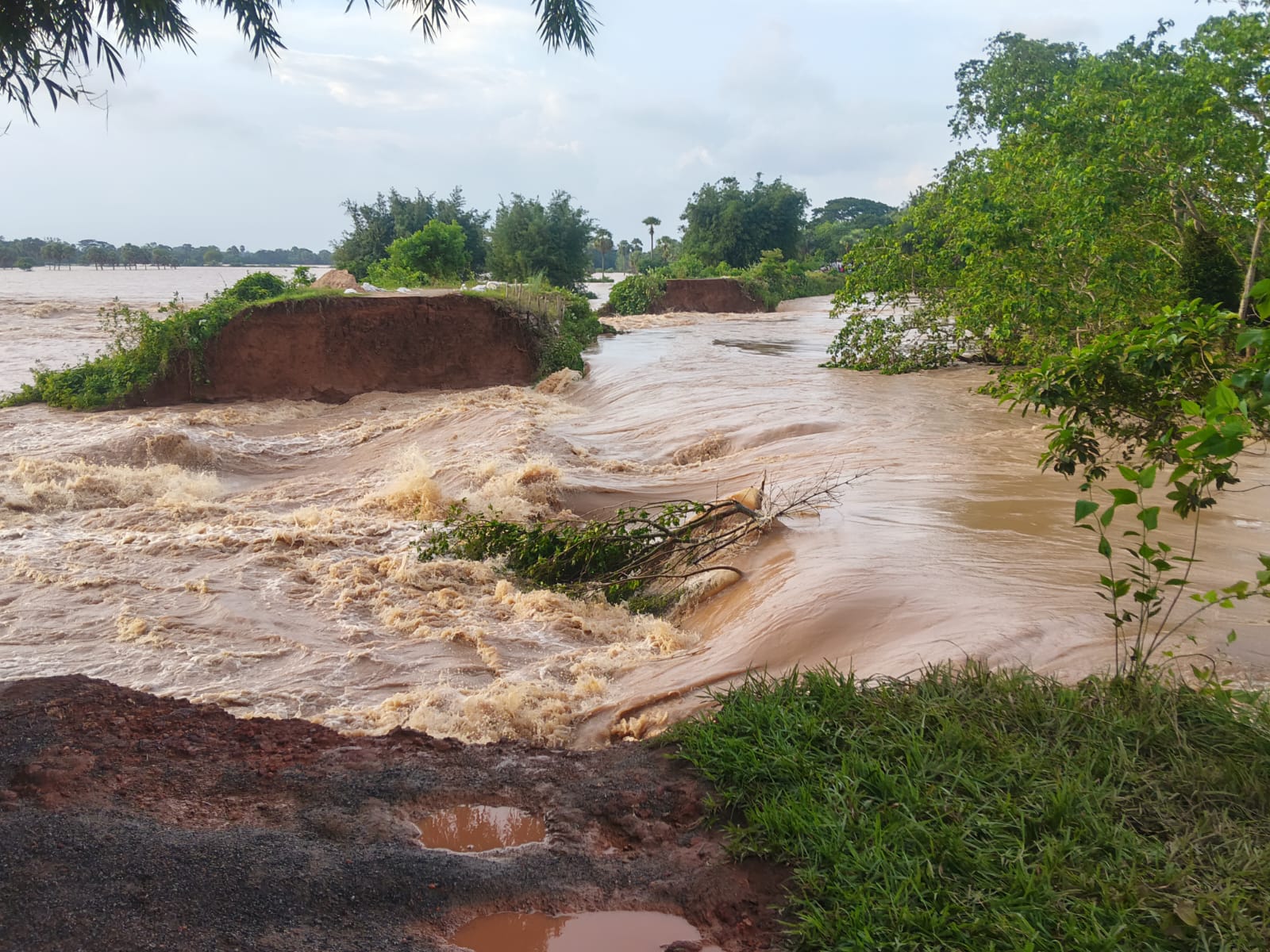
Floods are one of Odisha's biggest recurring challenges.
Odisha Flood Situation: Over 2 Lakh People Affected Across Six Districts
Bhubaneswar: Odisha is facing a fresh flood situation following several days of heavy rainfall and rising water levels in major rivers. More than 2 lakh people have reportedly been affected across six districts, including Mayurbhanj, Balasore, Bhadrak, Jajpur, Dhenkanal and Sambalpur.
According to the latest available information, the affected population is spread across 44 blocks and 748 villages. Balasore is among the worst-hit districts, with around 1.09 lakh people reportedly affected.
The situation has been attributed to rising water levels in rivers including the Baitarani, Salandi, Jalaka and Budhabalanga following heavy rainfall and a deep depression. The Salandi River has reportedly crossed the danger mark at Rajghat.
Nearly 28,000 people have reportedly been evacuated to relief camps as part of ongoing rescue and relief operations. Teams from the Odisha Disaster Rapid Action Force (ODRAF), National Disaster Response Force (NDRF) and Fire Services have been deployed in affected areas. In Balasore, around 125 relief camps are reportedly operational to provide shelter and essential assistance to displaced residents.
Why Odisha Remains Vulnerable to Floods
Odisha's geography makes several parts of the state vulnerable to flooding. Major river systems, including the Mahanadi, Baitarani, Brahmani and Subarnarekha, drain into the Bay of Bengal. Heavy rainfall in upstream regions can also increase water flow into rivers passing through the state.
The southwest monsoon and periodic weather systems can further intensify rainfall during the monsoon season. According to the figures provided, Odisha recorded 327.3 mm of rainfall in July compared with a normal average of 271.6 mm. These figures should be verified with the latest India Meteorological Department (IMD) data before publication.
Low-lying coastal areas are particularly vulnerable to inundation when river levels rise or embankments are breached, affecting villages, agricultural land, roads and other infrastructure.
Authorities are closely monitoring water levels in Hirakud and other reservoirs, while senior officials have reportedly been deputed to monitor the situation in the worst-affected districts.
Residents in flood-prone and low-lying areas have been advised to remain alert, follow evacuation instructions issued by local authorities and monitor official weather and flood advisories.
Source: Official government and disaster-management updates / IMD advisories
Editorial Note: The affected population, number of villages and blocks, evacuation figures, relief-camp numbers and river-level information are time-sensitive and should be cross-checked with the latest official updates immediately before publication.