Ganges Treaty at 30: India and Bangladesh Face Crucial Moment to Reshape Water-Sharing Agreement
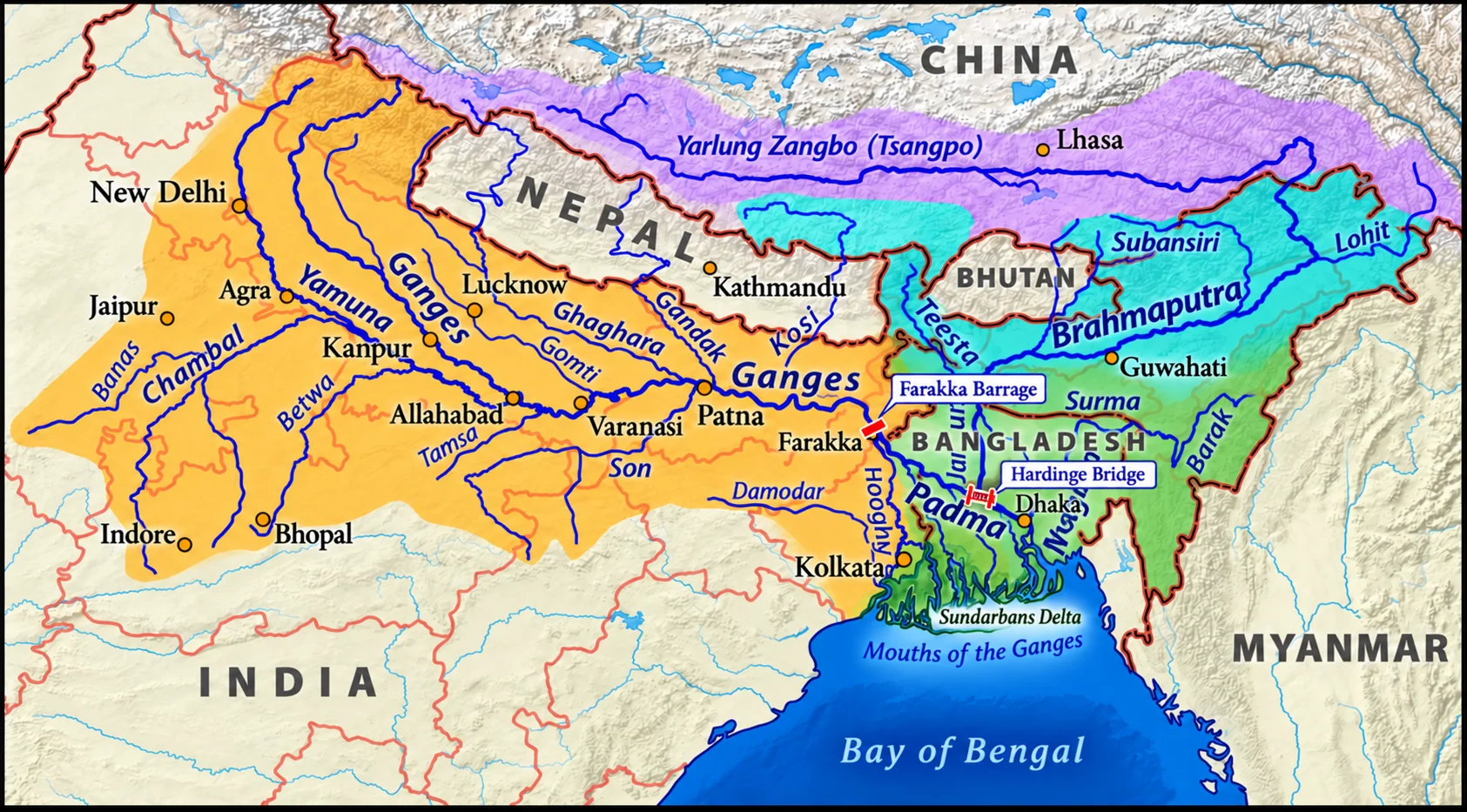
Ganges Water-Sharing Treaty Nears 30-Year Mark: India and Bangladesh Face Need for Future Framework
India and Bangladesh are approaching an important point in their long-standing cooperation over the sharing of Ganges waters, as the 30-year Ganges Water-Sharing Treaty signed on December 12, 1996, reaches the end of its current validity in December 2026. The approaching deadline has renewed attention on the future management of the river's water resources and the possibility of a revised or renewed framework between the two countries.
The treaty established a mechanism for sharing Ganges waters at the Farakka Barrage in West Bengal during the lean season, from January 1 to May 31. Under the agreement, water availability at Farakka is assessed and the two countries receive shares according to a formula set out in the treaty. The arrangement has been implemented annually since 1997.
Over the past three decades, the agreement has provided a framework for regulating the use of Ganges water between India and Bangladesh. However, changing environmental conditions, variations in rainfall and growing demand for water have increased the importance of assessing whether the existing framework remains adequate for present and future requirements.
One area of discussion is the availability and reliability of water during the dry season. Changes in rainfall patterns, temperature, river flows and other hydrological conditions can affect water availability in the Ganges basin. At the same time, population growth, agriculture, industrial activity and expanding urban areas have increased pressure on freshwater resources.
The existing treaty provides for water sharing on a 10-day basis during the lean season. It also provides for consultations between the two governments when the flow at Farakka falls below 50,000 cusecs during any 10-day period. The treaty includes specific sharing provisions based on the flow available at Farakka, including arrangements for guaranteed flows during certain periods of the dry season.
As the treaty approaches the end of its 30-year term, discussions about its future could also focus on updated hydrological data and more comprehensive river-basin management. Regular exchange of information on river flows, rainfall, groundwater and water availability could help both countries assess changing conditions and reduce the possibility of disagreements over water allocation.
Climate-related risks may also be relevant to any future framework. Provisions addressing droughts, floods, prolonged low flows and other extreme weather conditions could help the two countries respond more effectively to changing environmental circumstances while maintaining their respective water requirements.
Environmental considerations could form another part of future discussions. Maintaining appropriate river flows is important not only for human water requirements but also for fisheries, wetlands, aquatic biodiversity and downstream ecosystems. A broader river-basin approach could therefore consider both water use and the ecological health of the river.
The issue also has domestic implications for India, particularly in states such as West Bengal and Bihar, where water availability is linked to agriculture, drinking water and regional development. Any future framework would therefore need to consider the interests of affected Indian regions alongside the requirements of downstream areas in Bangladesh.
Water sharing also carries wider diplomatic significance for India-Bangladesh relations. Bangladesh depends on the Ganges for agriculture, fisheries, livelihoods and freshwater resources in downstream areas, while India has its own requirements linked to agriculture, population and regional development. Continued bilateral consultations and an effective mechanism for addressing disagreements could therefore remain important.
The December 2026 deadline provides an opportunity for India and Bangladesh to assess the existing arrangement and discuss the way forward. A future framework, if negotiated, could take into account updated scientific information, changing water requirements, climate-related risks and ecological considerations while seeking to protect the interests of people on both sides of the border.
Note: The existing treaty has a 30-year validity period. Any renewal or replacement arrangement would depend on decisions and negotiations between the two countries. The discussion of possible future provisions in this article represents areas that could be considered and should not be read as confirmed terms of a new agreement.