India Has Overtaken Britain. Or Has It?
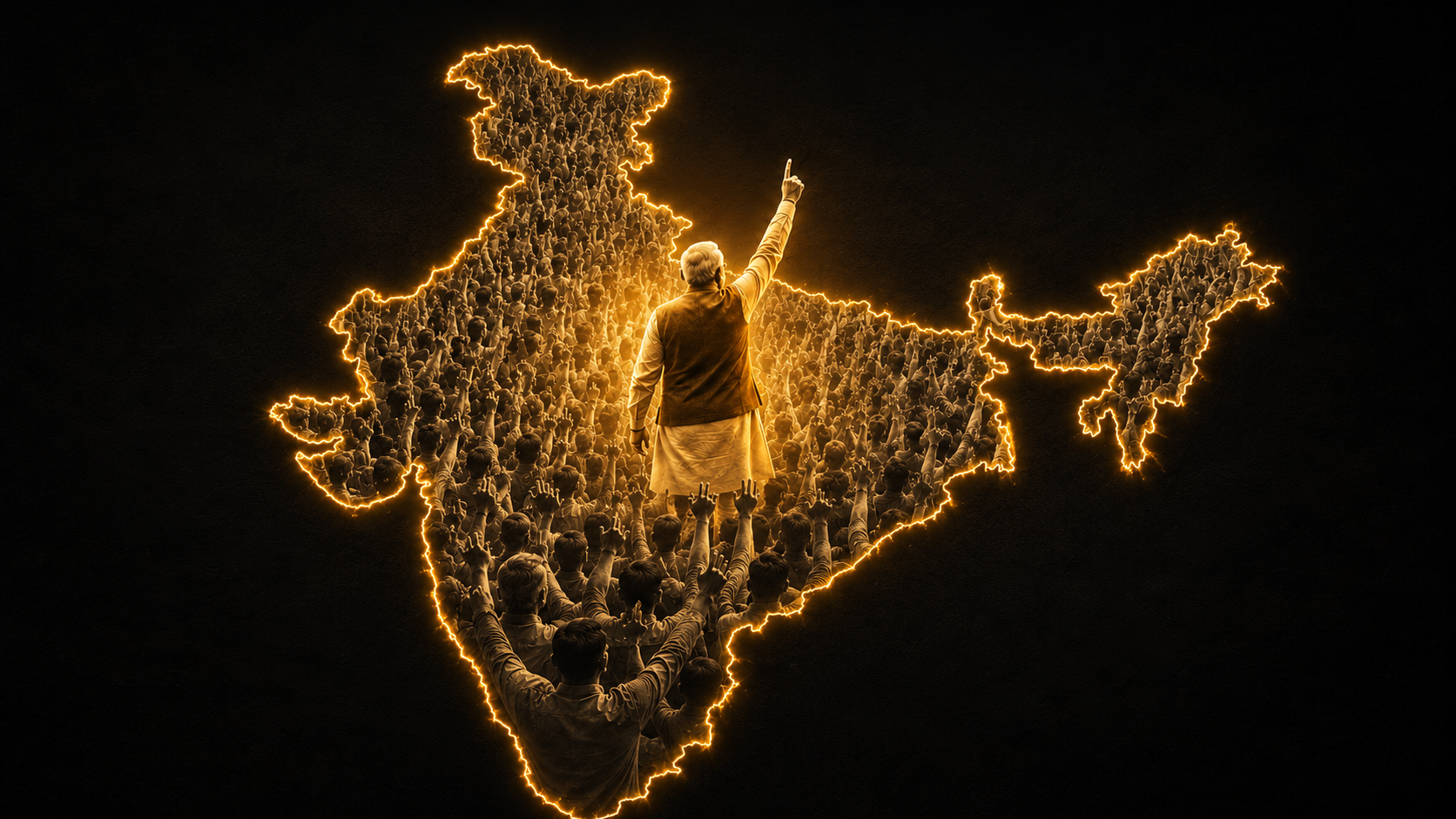
India overtook the United Kingdom in the GDP rankings a few years ago. So, naturally, I arrived in Britain as a citizen of a nation that had achieved this economic milestone.
We had finally surpassed our former coloniser, the country that had ruled us for nearly two centuries. It had taken us seventy-five years, but the GDP rankings appeared to mark a historic change.
I travelled through Manchester, Edinburgh, London, Inveraray and several towns and villages, including the beautiful village of Luss.
Frankly, Britain did not look particularly impressive at first.
I saw few enormous bridges or six-lane expressways. Most cars were modest hatchbacks, with surprisingly few SUVs. Railway stations were simple and often old, although generally clean.
There were no gleaming bullet trains. Many trains reminded me of our Shatabdi Express. Even Manchester Airport was not especially impressive, and some London Underground trains were old, rattling and noisy.
I felt delighted.
After all, we have grand expressways, gigantic bridges and glittering airports that increasingly resemble shopping malls. By these visible measures, we seemed to have surpassed them.
And yet, something was troubling me.
It had been raining almost continuously since I arrived in Manchester, but there were hardly any potholes. I could walk comfortably on pavements.
This appeared rather unfair. If rain is responsible for our potholes, British roads should have disappeared centuries ago.
Still, I continued walking with the confidence of a citizen from a rising economic power, proud of India and reassured by its GDP ranking.
Then, on 19 September, I noticed hundreds of Indian students who had recently arrived to begin their studies at British universities. Many appeared to be pursuing undergraduate courses rather than specialised research or doctoral degrees.
I wondered why they had come here.
Why were families from a country that had supposedly overtaken Britain spending their savings to send their eighteen-year-olds to study in the country we had supposedly left behind?
Then I met Jignesh, a cab driver.
He cheerfully introduced himself and asked how I liked Manchester. I hesitated, searching for a suitable answer.
Before I could respond, he offered his own.
“There is dignity here. Everything has a system and a process.”
That was when my mental faculties, temporarily distracted by GDP statistics, began to reopen.
I started noticing things differently.
The old bridges, buildings, pubs and railway stations told me something about Britain's relationship with its heritage. Rather than discard everything old in the name of modernisation, the British often seemed determined to preserve it.
Their parliamentarians still sit in a nineteenth-century building. Even the remains of Roman fortifications have survived centuries of change.
And Scotland and England, after centuries of conflict, had found a way to share a political union.
Perhaps there were lessons here beyond GDP.
Perhaps development was not merely about highways, enormous apartment complexes, shopping-mall airports and bullet trains.
Perhaps it was also about systems, procedures, order and dignity in everyday life.
And perhaps these things could not be achieved simply by circulating patriotic messages on WhatsApp.
The drain that was not a drain
A canal ran beside the residence where I was staying.
My Indian instinct immediately classified it as a nullah.
But something was wrong.
The water was clean. There was no stench, floating garbage or plastic bags clinging to its banks.
Large boats were moored along the canal. Some were houseboats in which people actually lived. Beside one boat, a gentleman sat peacefully on a chair, smoking.
I tried imagining a similar scene beside a drain in Indore.
It was difficult.
Indeed, beside many urban drains in India, smoking might seem like the healthier of the two activities.
That small scene disturbed my grand GDP celebration more than any economic argument could have done.
Where were the politicians?
At Manchester's Science and Industry Museum, I encountered another surprise.
Engineers, scientists and inventors were being credited for transforming society.
Their achievements ranged from improving sanitation and water supply to developing textile machinery, computing technologies and industrial equipment.
Here were the people who had changed the lives of millions.
I searched for a smiling photograph of a politician claiming personal credit.
There was none.
As I walked through Manchester, another thing struck me. I did not see enormous roadside banners congratulating politicians on their achievements or wishing them happy birthdays.
Coming from India, this was deeply confusing.
Back home, politicians often inaugurate public toilets, parks, railway stations and infrastructure projects in ways that present them as personal gifts to society.
Such achievements are sometimes advertised using public funds.
Think of E. Sreedharan, whose engineering leadership helped build the Delhi Metro. How often do we give engineers and scientists the public recognition we routinely give politicians standing at inauguration ceremonies?
The same question applies to the achievements of ISRO, DRDO and HAL. Scientific and technological accomplishments are frequently presented as political triumphs.
Politicians may occupy the stage. Engineers and scientists quietly build it.
Of course, political leadership matters. Institutions require resources, decisions and public accountability. But there is a difference between enabling progress and claiming personal ownership of it.
Perhaps this difference reflects something deeper: whether governance revolves around institutions and processes or the personalities of those temporarily occupying public office.
A pub in the middle of the road
On another walk, I encountered an old pub that had not been demolished when the road was widened.
Instead, the road simply divided and passed around it.
The pub remained standing in the middle, rather like the temples and mazars around which roads are sometimes diverted in India.
Here, however, the protected structure served beer.
Manchester has many firsts to its name. It stood at the heart of the Industrial Revolution, manufactured machinery and aircraft, and once supplied cotton textiles to markets across the world.
Yet, walking through the city, I seemed to encounter more pubs and cafés than churches.
The British, it appeared, had discovered their own route to spiritual peace.
For a moment, I even wondered—entirely without historical evidence—whether Dr Harivansh Rai Bachchan might have found the inspiration for Madhushala somewhere in Britain.
It was, of course, only my imagination.
But having witnessed the importance of pubs in British public life, the thought seemed rather appealing.
A city that walks
I walked eight to ten kilometres almost every day.
Not because I possess extraordinary stamina, but because the cities allowed me to walk.
The weather certainly did not encourage it. It rained frequently, sometimes without warning, and the wind could be unpleasantly cold.
But the pavements made walking easy.
They were broad, even and largely free from encroachment. Pedestrian crossings felt safe. Elderly people, parents pushing prams and people using wheelchairs could move without treating every journey as an obstacle course.
In some places, the combined width of the pavements appeared greater than that of the road itself.
There were fewer cars on the streets than I had expected, but far more people on foot. Motorcycles and scooters were surprisingly rare, while bicycles were common, with cyclists riding along dedicated lanes.
Perhaps that also explained why modest hatchbacks were sufficient.
While visiting Edinburgh, I came across a statue of the Scottish philosopher David Hume. I later learnt about his association with the idea of creating a public path for “the health and amusement of the inhabitants.”
That expression stayed with me.
Health and amusement.
A path was not merely leftover space beside a road. It was part of public life—a place where people could walk, breathe, meet others and enjoy their city.
In India, when we discuss walking and cycling, we immediately invoke the weather.
It is too hot. It rains too much. Our cities are too crowded.
These are genuine difficulties. But can they explain everything?
In many parts of India, the weather is pleasant enough for walking during several months of the year. Yet even on a beautiful morning, a pedestrian may encounter broken pavements, parked vehicles, encroachments, open drains and footpaths that abruptly disappear.
Britain has difficult weather but usable pavements.
We often have usable weather but difficult pavements.
Perhaps the difference is not simply climate. It is whether walking and cycling are treated as legitimate forms of transport or merely as activities people endure until they can afford a car or motorcycle.
We do not need to persuade citizens to walk by lecturing them about fitness.
We need roads on which walking does not require courage.
And to demonstrate development, perhaps we do not always need another four-lane or six-lane highway.
Sometimes, a decent pavement is a much greater achievement.
The six-foot gap
One day, while waiting outside a trial room to try on a pair of trousers, I noticed something strange.
The woman ahead of me stood nearly six feet behind the person in front of her.
Why was she leaving such an enormous gap?
Then I looked behind me.
The man standing there was also five or six feet away.
My first instinct was to worry that somebody would occupy the empty space.
Nobody did.
People simply stood where they were and waited for their turn.
In India, we often stand pressed against one another in queues. Even in traffic, we move our cars and motorcycles as close as possible to the vehicle ahead.
Not necessarily because we enjoy physical proximity, but because we fear that any space we leave will be captured by someone else.
We expect someone to jump the queue because experience has taught us that someone probably will.
But here, nobody seemed particularly anxious about losing their place.
It was a small observation, but it made me think about social trust.
When people trust that others will respect their turn, they do not have to defend every inch of space.
A queue, therefore, is not merely a queue.
It can be a quiet measure of the trust that exists between strangers.
And perhaps development also lies there—in six feet of empty space that nobody tries to capture.
Democracy on the road
The roads taught me one final lesson.
We usually associate democracy with elections, Parliament, political parties and voting.
But perhaps its character is also revealed in ordinary public spaces.
Consider a well-designed road.
It accommodates cars, buses, cyclists and pedestrians. It provides crossings for children and elderly people, access for wheelchairs and space for those who cannot afford private vehicles.
Each person has a legitimate claim to that public space.
In that sense, a road can be a small working model of democracy.
Now consider a road where the largest vehicle claims everything.
Pedestrians squeeze along broken edges. Cyclists compete with speeding traffic. Wheelchair users cannot move. A person trying to cross the street waits helplessly while vehicles rush past.
It becomes survival of the biggest and the most powerful.
And the rules seem strangely familiar.
Those with power, wealth and influence occupy the greatest space. Others must adjust, negotiate, plead or protect themselves as best they can.
This made me wonder: if we cannot protect ordinary citizens on our roads, how confidently can we claim to protect them elsewhere?
We may construct world-class hospitals for those who can afford them, while another citizen struggles to obtain basic treatment.
We may establish excellent schools for affluent families, while another child waits for a functioning classroom, a competent teacher and a usable toilet.
The question is not whether India can build excellent infrastructure. Clearly, it can.
The question is whether the quality of everyday life is improving for everyone.
A society cannot be judged only by what its wealthiest citizens can purchase. It must also be judged by what its ordinary citizens can access without wealth or influence.
This, to me, is where development and democracy meet.
Democracy should not end at the ballot box. It should be visible at pedestrian crossings, inside government hospitals, in municipal schools and in the space provided for a wheelchair on a pavement.
India may continue climbing the global GDP rankings. We may build more expressways, larger airports and taller buildings. And each achievement will undoubtedly be celebrated with banners, speeches and television debates.
There is nothing wrong with celebrating economic progress.
But a larger economy does not automatically mean a better everyday life.
Development is also the dignity we extend to people who possess neither money nor influence. It is the quality of our institutions, the reliability of public services and the respect we show strangers.
Concrete and steel can build infrastructure.
But they cannot, by themselves, build an inclusive society.
On that journey, we still have a long road ahead.
And unfortunately, much of it does not yet have a pavement.