"SARAGARHI: 21 MEN, ONE DUTY, AND A LEGACY THAT STILL SPEAKS"
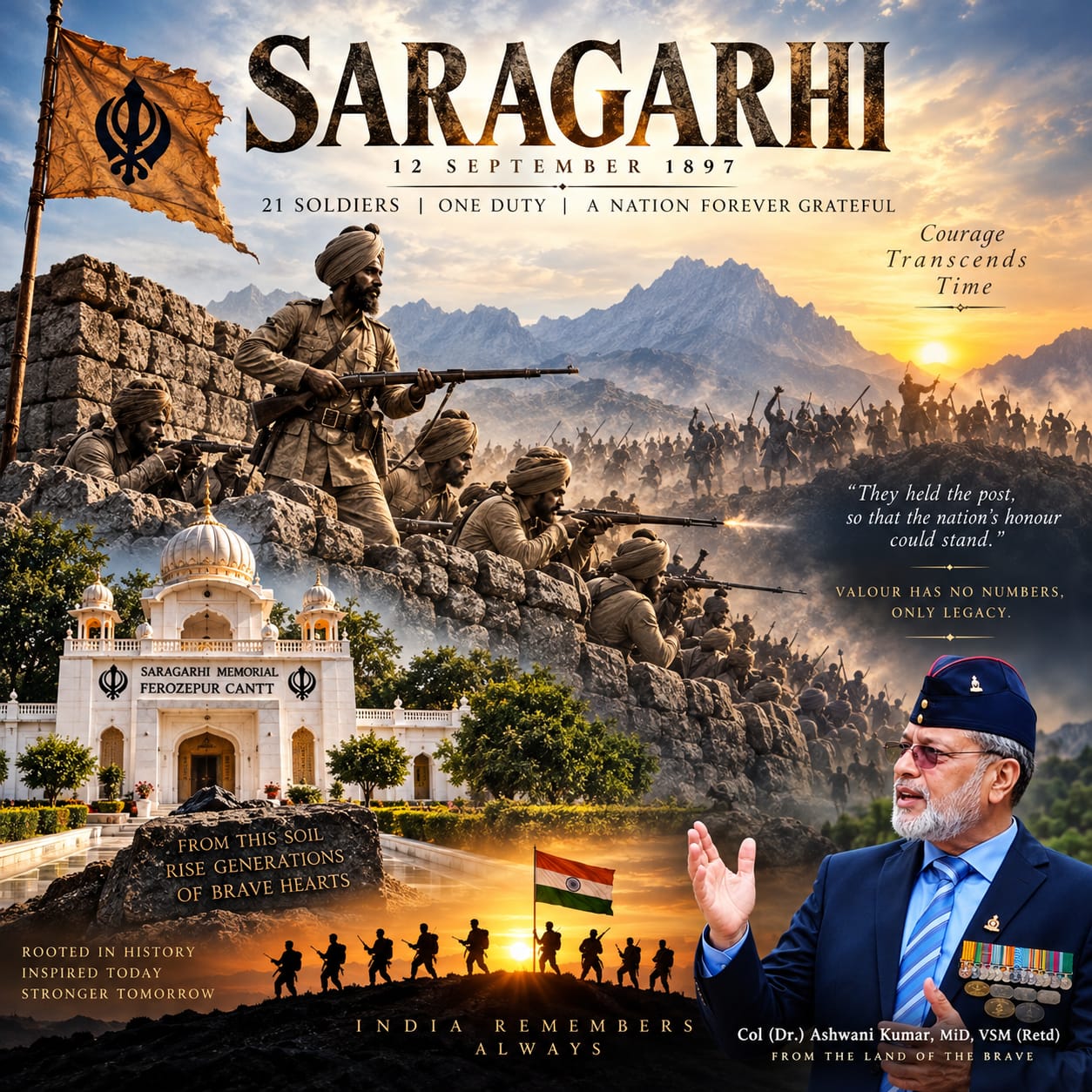
Saragarhi: From the Battlefield of 1897 to the Soldier’s Battlefield of Today
Every year, 12 September brings back the memory of one of the most extraordinary acts of military courage in history — the Battle of Saragarhi.
Twenty-one soldiers of the 36th Sikh Regiment stood at a small frontier post against a much larger force. Led by Havildar Ishar Singh, they fought for hours, refused to surrender and ultimately died defending their position. But Saragarhi is more than the story of 21 soldiers who died in battle.
For me, Saragarhi is deeply personal.
I belong to Ferozepur. I was born and brought up in a land associated with soldiers, martyrs and freedom fighters. The courage associated with this region is not merely something I read about in books; it is part of the environment in which I grew up.
The lessons of those who served at Saragarhi became part of my thinking:
- Fight for your rights.
- Defend your nation.
- Never accept injustice.
- Live with dignity.
- Never surrender your self-respect.
The Background
The 36th Sikh Regiment was raised at Ferozepur in 1887. In 1897, the regiment was serving on the North-West Frontier, where a chain of fortified posts protected important positions in a difficult frontier region.
Saragarhi was a small signalling post between Fort Lockhart and Fort Gulistan. Its importance lay in its role in maintaining communication between the two larger posts. On 12 September 1897, a large tribal force surrounded Saragarhi. According to records cited by the Ferozepur District Administration, the attacking force numbered approximately 10,000, while 21 Sikh soldiers were inside the post.
The Battle of Saragarhi
The battle began in the morning of 12 September 1897. The attacking force surrounded Saragarhi and took positions close to the post before opening fire. The 21 Sikh defenders returned fire. Among them was Sepoy Gurmukh Singh, the signaller, who maintained communication with Fort Lockhart through the heliograph and reported that Saragarhi was under attack.
The small garrison was commanded by Havildar Ishar Singh. The attackers repeatedly attempted to approach and breach the post, while the defenders continued to resist. The battle lasted for several hours.
As the situation deteriorated, casualties increased and ammunition began to run short. The garrison reported that its ammunition was running out and requested additional supplies. No reinforcement or ammunition could reach them, and the defenders continued to hold their position.
The attackers eventually succeeded in entering the post, leading to close-quarter fighting. Havildar Ishar Singh continued to resist until he was killed. Sepoy Gurmukh Singh also continued his signalling duties during the battle.
Saragarhi eventually fell, but the resistance of the 21 soldiers became an enduring example of courage, duty and military commitment.
Ferozepur and the Legacy of Saragarhi
For me, the story carries a meaning that goes beyond military history. I belong to Ferozepur and was born and brought up in the region. I also had the opportunity to be posted at Ferozepur and to visit the Saragarhi Memorial Gurdwara in Ferozepur Cantonment.
Standing at the memorial and reading about the 21 soldiers made the history feel personal rather than merely academic. According to the Ferozepur District Administration, the Saragarhi Memorial Gurdwara was built in memory of the 21 Sikh soldiers and opened in 1904. Saragarhi Day is observed there every year on 12 September.
Ferozepur’s military heritage therefore represents not only a source of pride but also a responsibility to remember those who served.
Personal Connection with Saragarhi
I also carry personal memories associated with Saragarhi. My school was constructed from bricks associated with Saragarhi, while my college was built from soil associated with Saragarhi. Whether viewed as physical connections or symbols of heritage, these associations have had a lasting meaning for me.
After becoming a soldier myself, I continued to view Saragarhi as more than an event from the past. My experiences in uniform strengthened my understanding of the values of courage, responsibility and service.
What Saragarhi Taught Me as a Soldier
A soldier is often described as brave. Having worn the uniform and experienced war, I believe bravery is closely connected with responsibility. A soldier understands the risks of the battlefield and the possible consequences for his family and then performs his duty despite those risks.
The soldier does not necessarily become fearless. Rather, he learns to place responsibility above personal fear. That sense of responsibility is an important part of military service.
The Soldier’s Duty and the Nation’s Responsibility
Saragarhi also raises a broader question about the relationship between the soldier and the nation. A soldier has responsibilities towards the country, while the nation also has a responsibility to ensure that serving personnel, veterans and their families receive due dignity and consideration.
A soldier should not have to face unnecessary difficulties in securing legitimate rights or entitlements after completing his service. The welfare and dignity of veterans and their families are important aspects of the broader relationship between the armed forces and society.
A Salute Is Not Enough
Memorial ceremonies, wreath-laying and tributes are important ways of remembering military sacrifice. However, remembrance can also be reflected through continued attention to the legitimate concerns of serving personnel, veterans and the families of fallen soldiers.
The true meaning of remembrance lies not only in annual ceremonies but also in ensuring that those who served the country and their families are treated with dignity and fairness.
Only Dying in Battle Is Not the Measure of Sacrifice
There is also a need to understand that military courage is not measured only by death in battle. A soldier who accomplishes a mission and returns safely to his family has also demonstrated courage and professionalism.
The purpose of military operations is to accomplish the mission while protecting personnel wherever possible. Survival after successfully completing a mission should not be viewed as a lesser form of service.
Saragarhi represents the other side of this responsibility — a situation in which the defenders had limited options and continued to hold their position despite overwhelming circumstances.
A Soldier Deserves Status, Dignity and Accountability
The soldier does not necessarily seek privilege over other citizens. What he deserves is fairness, institutional respect and recognition of the responsibilities entrusted to him.
A soldier accepts significant risks while serving people who may never know his name. That responsibility deserves corresponding attention to his dignity and legitimate rights, both during service and after retirement.
When legitimate concerns arise, institutional mechanisms should provide a fair opportunity for them to be addressed. Accountability and effective grievance redressal are important parts of maintaining trust between the armed forces and the institutions they serve.
Lessons for the Modern Battlefield
Technology has significantly changed modern warfare. Today’s soldiers operate with drones, satellites, precision weapons, electronic warfare, cyber capabilities, night-vision systems and advanced communications. Yet many fundamental military principles remain relevant.
- Leadership matters.
- Communication matters.
- Training matters.
- Cohesion matters.
- Morale matters.
- Trust matters.
- Responsibility matters.
Technology can increase military capability, but discipline, training and character remain important in determining how that capability is used under difficult circumstances.
Epilogue: The Relationship Between the Soldier and the Nation
The Battle of Saragarhi ended on 12 September 1897, but its legacy continues to influence discussions about courage, duty and military service.
For me, Saragarhi represents both history and inheritance. I come from Ferozepur, grew up with stories of its martyrs and later wore the uniform myself. These experiences have shaped my understanding of what it means for a soldier to accept responsibility while knowing what is at stake.
The 21 soldiers of Saragarhi demonstrated the importance of duty, courage and dignity. Their story also provides an opportunity to reflect on the responsibility of the nation towards those who serve.
A soldier serves the nation with the expectation that the nation will stand behind him and his family. That responsibility extends beyond the battlefield and includes the welfare, dignity and legitimate rights of serving personnel, veterans and their families.
Let us therefore remember Saragarhi not merely by saluting the 21 fallen heroes, but also by reflecting on the values they represented — courage, duty, discipline, responsibility and service.
To the 21 heroes of Saragarhi, my salute.
To every soldier who has served India, my respect.
And to every soldier seeking his legitimate rights, my solidarity.
Bole So Nihal!
Sat Sri Akal!
About the Author
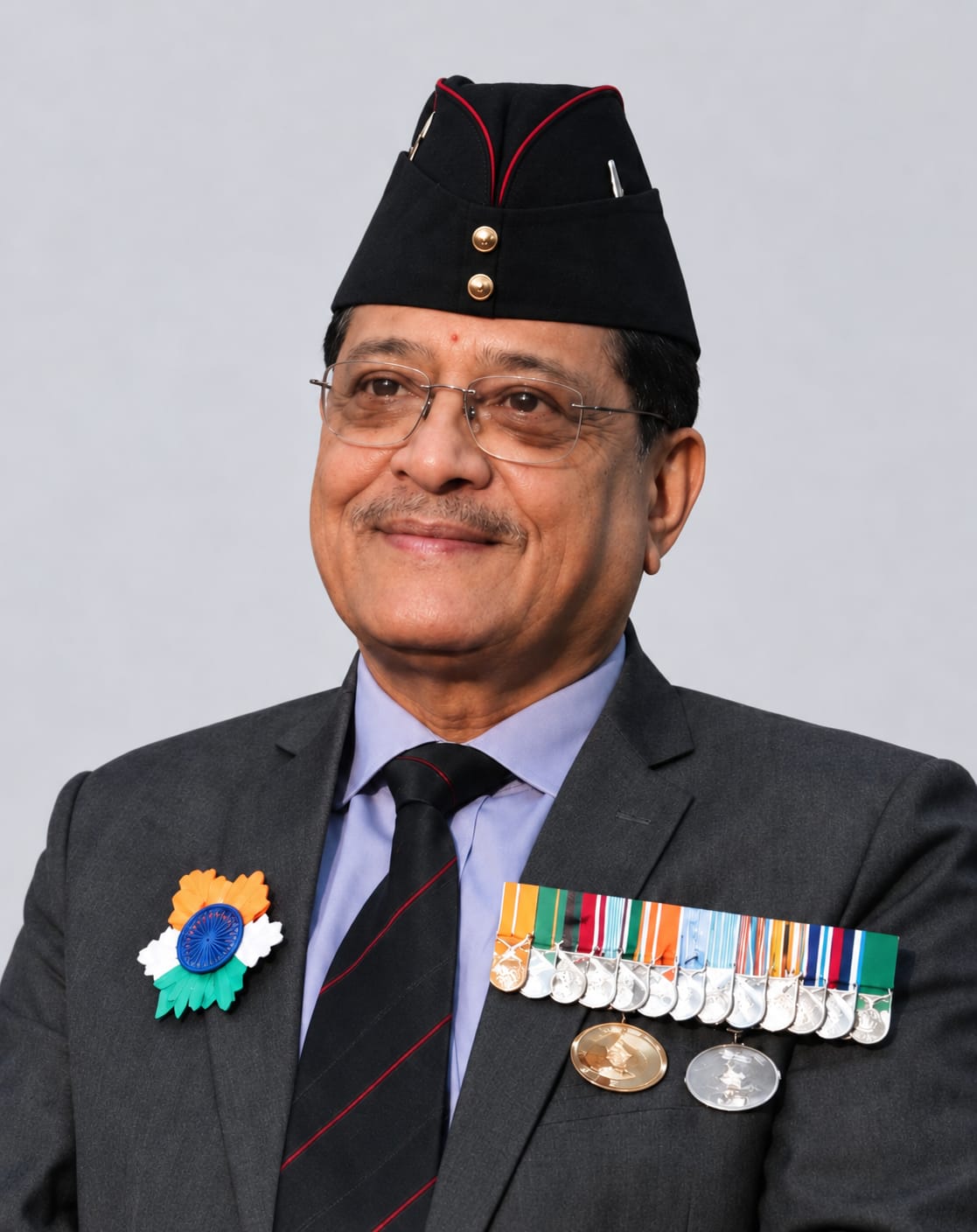
Col (Dr.) Ashwani Kumar, MiD, VSM (Retd) is a retired soldier, defence expert, writer and military historian. Born and brought up in Ferozepur, he has a personal connection with the military heritage of the region. During his service, he was posted at Ferozepur and had the opportunity to visit the Saragarhi Memorial Gurdwara in Ferozepur Cantonment.
His writings draw upon military history, personal experience of soldiering and his perspective on the relationship between the armed forces and the nation they serve.
Disclaimer
This is an independent historical and personal military perspective written to commemorate the heroes of Saragarhi and to encourage discussion on military values, soldier welfare, dignity and institutional responsibility. Historical accounts of the battle contain variations in certain operational details, including estimates of the opposing force. Personal references to Ferozepur, Saragarhi-associated educational institutions and the author’s experiences are presented as part of the author’s personal recollection and perspective. The views expressed are those of the author and do not represent any government department, political organisation or military formation.