Thane Village Sets Eco-Friendly Ganeshotsav Example With Shadu Clay Idol And Natural Decorations
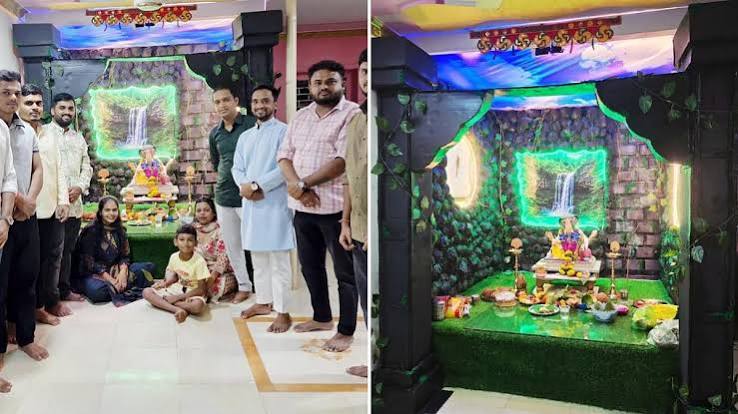
As Ganeshotsav celebrations continue across Maharashtra, a village in Thane has set an example of environmentally conscious celebrations by opting for an eco-friendly Ganesh idol made from shadu clay and using natural materials for decorations.
The initiative reflects a growing effort to celebrate the festival while reducing the environmental impact associated with idols and decorative materials.
Shadu Clay Idol And Natural Colours
The Ganesh idol installed in the village has been crafted using shadu clay, a material that is considered more environmentally friendly for idol-making compared with non-biodegradable alternatives.
The idol has also been painted using natural colours, avoiding the use of materials that can contribute to water pollution during immersion.
Decorations Made From Natural Materials
The village has also chosen natural and locally available materials for its Ganeshotsav decorations. The approach aims to reduce the use of plastic and other materials that can generate waste after the celebrations.
Instead of focusing on elaborate artificial decorations, the celebrations highlight traditional and sustainable methods, combining religious devotion with environmental awareness.
Focus On Sustainable Celebrations
Eco-friendly Ganeshotsav initiatives have gained attention in Maharashtra as concerns over waste generation and water pollution during idol immersion continue to remain part of public discussions.
The village's decision to use a shadu clay idol and natural colours demonstrates how traditional celebrations can be organised with greater attention to environmental concerns.
The initiative also sends a message that festive celebrations do not necessarily have to come at the cost of the environment. By choosing biodegradable materials and avoiding harmful decorative products, local communities can contribute towards more sustainable festivities.
As Ganeshotsav continues, such community-led efforts highlight the possibility of combining faith, tradition and environmental responsibility during one of Maharashtra's most widely celebrated festivals.