The Voice of the People: A Defining Moment for India's Democracy
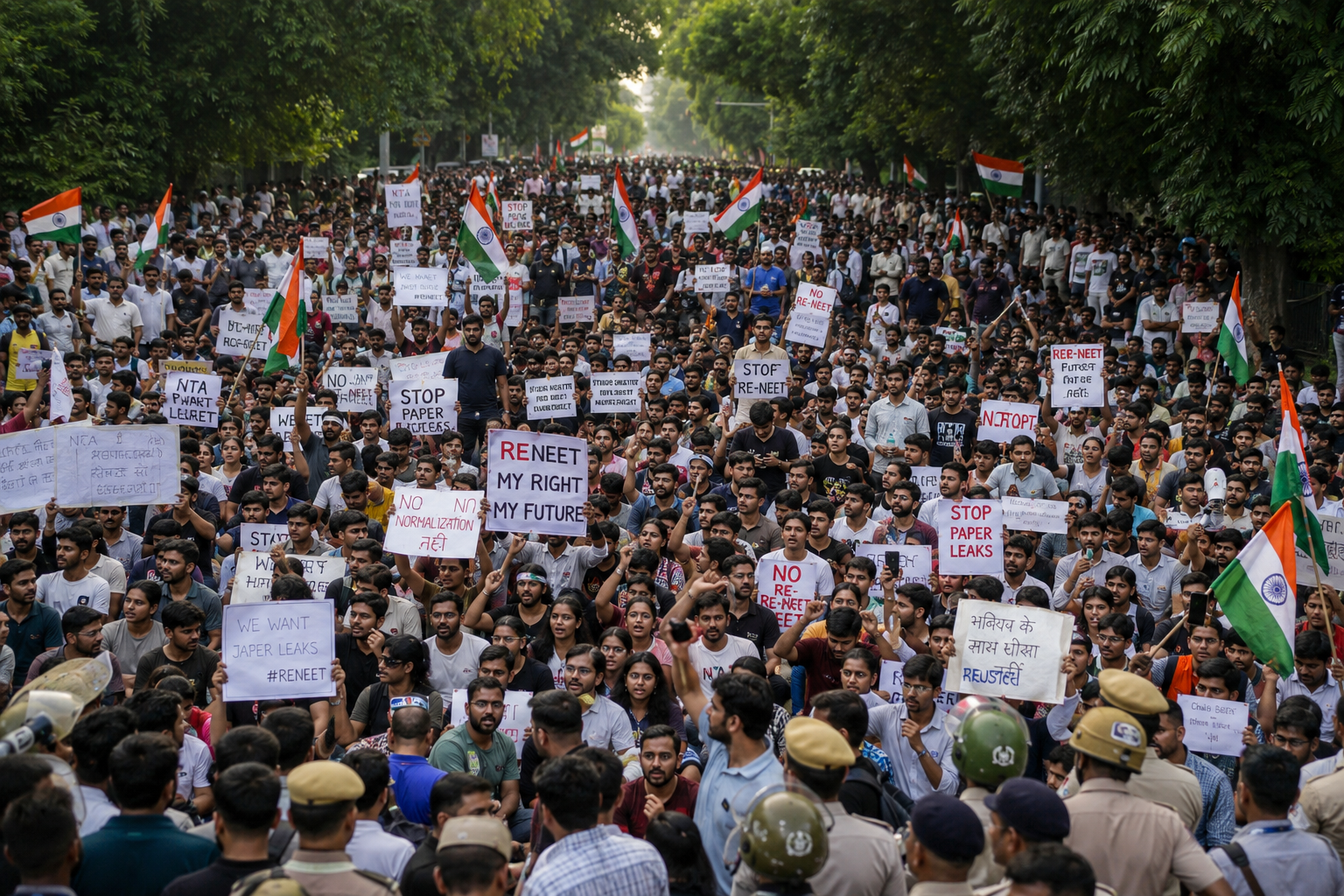
India witnessed an extraordinary display of public participation today as thousands of citizens from different parts of the country converged in the national capital to demand greater accountability, transparency, and reforms in the education system. The demonstrations, held on the opening day of Parliament's Monsoon Session, have become one of the most significant public movements of the year, drawing students, parents, professionals, social activists, and supporters from across the country.
The movement, which began as a response to recurring examination paper leak controversies, has evolved into a broader call for fairness, equal opportunity, and institutional accountability. For many young Indians, the protest represents more than a single issue. It reflects years of hard work, sacrifice, and the hope that merit and honesty should determine success rather than administrative failures.
At the heart of the movement is education reform advocate Sonam Wangchuk, whose hunger strike has become a symbol of peaceful resistance. His campaign has inspired students across India, with many viewing it as a call to protect the future of millions of aspiring young Indians. Following his hospitalization, public participation increased, and supporters gathered in even larger numbers to continue the movement.
The demonstrations also received expressions of solidarity from several public figures, opposition leaders, activists, and sections of civil society. Reports indicate that political representatives, social organizations, and some personalities from the entertainment industry have voiced support for the movement, highlighting the growing national attention surrounding the issue.
Security remained tight across central Delhi as authorities restricted marches toward Parliament, citing safety concerns during the Monsoon Session. Protesters nevertheless attempted to move forward, leading to confrontations with police, barricades, and the use of crowd-control measures in some locations. While authorities emphasized the need to maintain law and order, protesters argued that peaceful democratic expression deserves protection and dialogue rather than confrontation.
Beyond the streets of Delhi, the movement has sparked conversations in universities, coaching centres, workplaces, and homes across the country. Social media platforms have been flooded with messages from students sharing stories of years spent preparing for competitive examinations and expressing concerns about fairness in the recruitment and education systems. Many families say they have invested their life savings to help their children pursue education, making transparency and trust in these systems a matter of national importance.
India's Constitution guarantees every citizen the right to peacefully assemble and express their views. Throughout the country's history, public participation has played an important role in shaping policies and strengthening democratic institutions. Today's demonstrations are another reminder that democracy flourishes when citizens actively engage in public life and institutions respond with openness, accountability, and meaningful dialogue.
As Parliament begins its session, millions of Indians will be watching closely to see whether the concerns raised by students and citizens are reflected in policy discussions and concrete reforms. Regardless of differing political opinions, the movement has highlighted a shared aspiration among many Indians: a nation where opportunity is earned through merit, public institutions inspire confidence, and every young person can believe that hard work will be rewarded fairly.