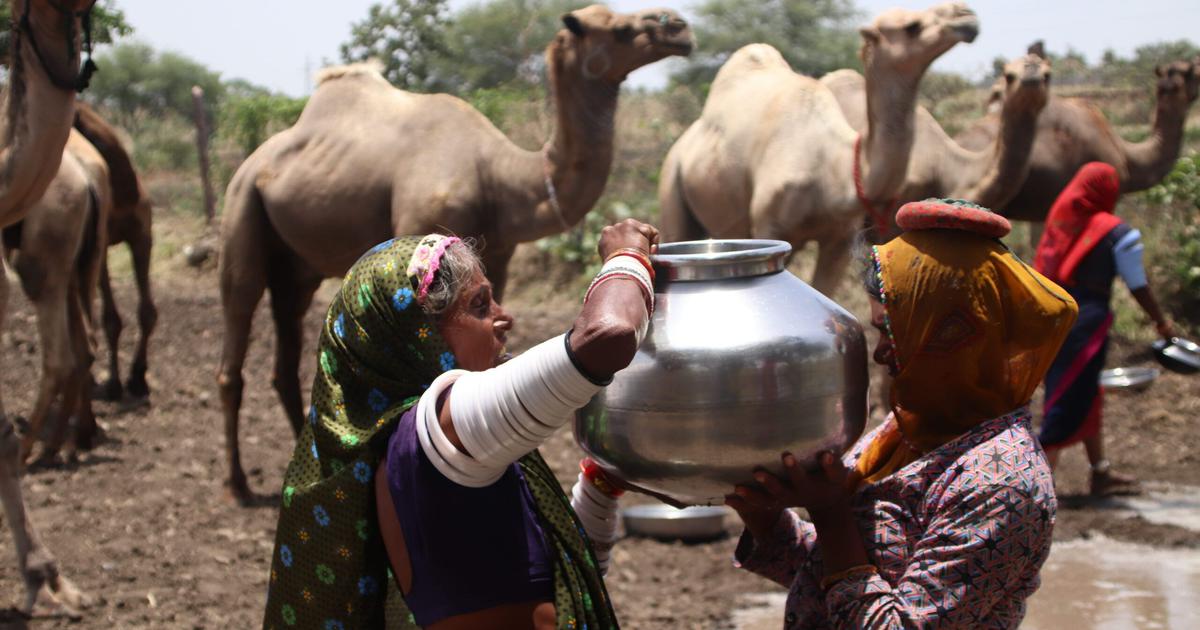
In the heart of Madhya Pradesh’s Neemuch district, Narayan Rabari, a 42-year-old shepherd from the Raika community, embarks on a relentless journey in search of grazing grounds for his sheep and camels. Over the past two days, Narayan has traversed 17 kilometers on foot, yet this distance is merely a fraction of the nearly 300 kilometers he has already covered since departing from his village in Rajasthan’s Pali district. The Raika community, traditionally known for their migratory agropastoral lifestyle across western India, now finds itself in dire straits.
The plight of the Raika pastoralists highlights a larger crisis facing nomadic communities in India. With the rapid transformation of landscapes due to urbanization, shrinking grazing lands, and vanishing migration routes, their way of life is increasingly threatened. As land that once provided communal grazing spaces is swallowed up by private farms and infrastructural development, the Raika people are struggling to keep their traditions alive.
Narayan recalls a time when open pastures dotted the landscape, albeit not sufficient to support all the cattle in his village. “In my youth, there was grazing land around; it wasn’t enough, but it existed. Now, much of that land has been converted to private agriculture or cleared for roads. The remnants are barren, devoid of any grass. There’s hardly any grazing land left near our homes,” he lamented.
This transformation has not only affected the availability of grazing land but has also disrupted the traditional migration routes that the Raika have followed for generations. Younger members of the community, seeking more stable livelihoods, are increasingly abandoning herding for wage labor, which poses a significant threat to the continuity of their ancestral practices. While the older generations remain committed to their nomadic lifestyle, they face the challenge of navigating a landscape that has become increasingly inhospitable.
The story of Narayan Rabari is emblematic of the struggles faced by many nomadic pastoralists in India today. As they walk further and rest less in their quest for fodder, they grapple with the harsh realities of a changing environment that no longer accommodates their traditional practices. The survival of the Raika and similar communities hinges on the urgent need to address land-use policies and restore access to common grazing lands, ensuring that these vibrant cultures do not fade into oblivion.