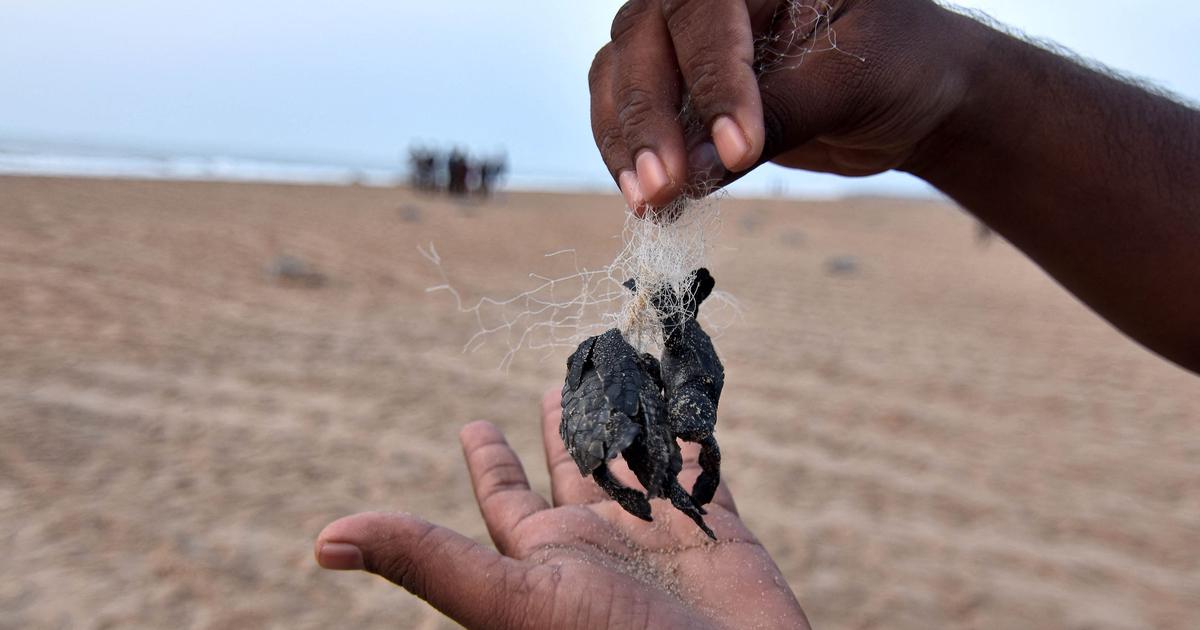
The Rushikulya rookery, located in the Ganjam district of Odisha, stands as one of the planet’s most significant nesting sites for olive ridley sea turtles (Lepidochelys olivacea). Each year, this vital habitat witnesses a remarkable phenomenon known as ‘arribada,’ where hundreds of thousands of these turtles come ashore to lay their eggs. In February 2025 alone, almost 700,000 olive ridleys returned to the shores to continue this ancestral ritual. However, the beauty of this natural spectacle is increasingly overshadowed by a looming environmental crisis: plastic pollution.
A recent study conducted by the National Institute of Oceanography in Goa has unveiled alarming findings regarding the extent of plastic litter along the 10-kilometer stretch of the Rushikulya coastline. The research highlighted the pervasive presence of plastic waste and discarded fishing nets across four key nesting sites: New Podampetta, Purunabandha, Siddhantnagar, and Prayagi. These findings reflect a growing global issue of marine plastic pollution, which poses an immediate threat to the delicate ecosystem of the area.
During the peak nesting season of 2025, researchers surveyed the four nesting beaches and recorded over 1,100 pieces of litter. Shockingly, more than 85% of this debris was plastic. Items like bottles, wrappers, and bags were prevalent, pointing to two significant sources of pollution: runoff from the land and direct human activities. This plastic waste not only harms the environment but also complicates the nesting process for the olive ridleys, jeopardizing the survival of their hatchlings.
Moreover, the survey revealed that discarded fishing gear, often referred to as “ghost gear,” constituted a staggering 41% of the total litter found across all surveyed sites. This includes various types of debris such as lost or abandoned fishing nets, thermocol packaging, and nylon ropes. At New Podampetta beach, fishing nets alone accounted for about 32% of the recorded litter, while thermocol represented a little over 31%. The sheer volume of this waste underscores the urgent need for effective waste management strategies and community awareness initiatives.
The plight of the olive ridley turtles serves as a poignant reminder of the broader environmental challenges facing India’s coastal regions. As plastic pollution continues to escalate, the risk it poses to wildlife, marine biodiversity, and future generations becomes increasingly grave. Local authorities, environmentalists, and citizens must unite in combating plastic pollution to ensure the survival of these remarkable creatures and preserve the natural beauty of Odisha’s coastline.