Pope Leo XIV Challenges Trump’s Foreign Policy: A Stand for Peace or Political Overreach?
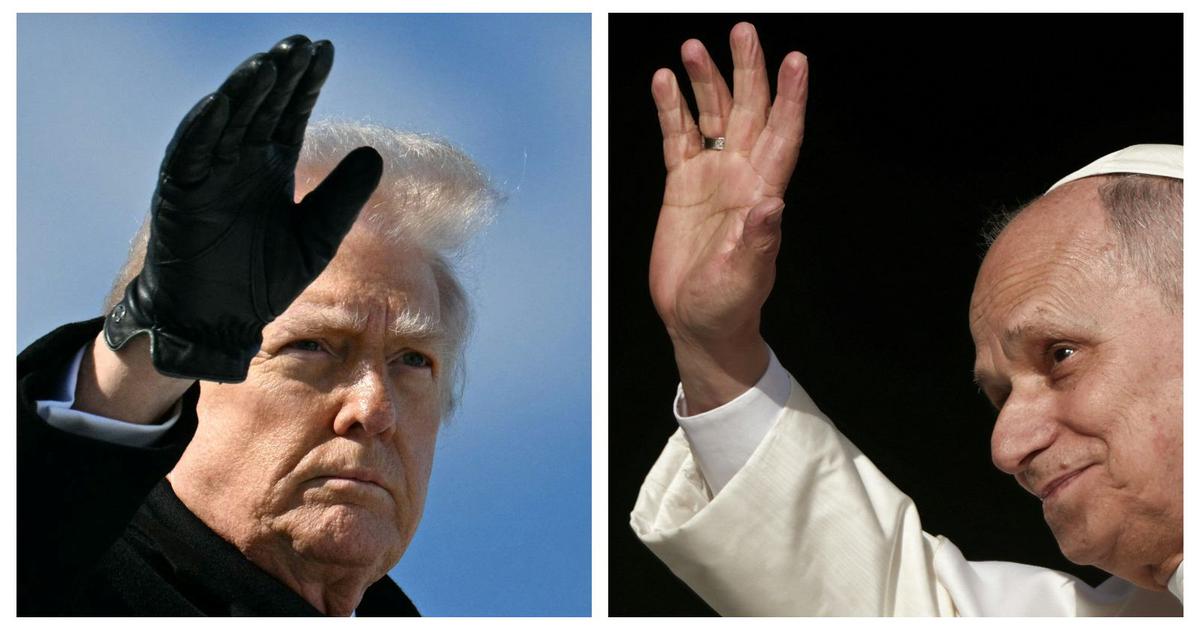
Pope Leo XIV’s recent remarks condemning the threats against Iranian civilization have sparked a significant controversy, particularly a sharp response from former U.S. President Donald Trump. The Pope referred to such threats as “truly unacceptable,” igniting a fiery exchange that raises questions about the intersection of religious leadership and political discourse.
Trump did not hold back, taking to social media to criticize the Pope’s stance. He labeled Leo as “weak on crime” and accused him of failing in foreign policy, suggesting that the Pope was stepping beyond his ecclesiastical duties into the political arena. However, the crux of the matter might not just be the accusations but how Pope Leo responded. Rather than retreating under pressure, he reaffirmed his commitment to his principles, emphasizing that his mission was to spread the gospel and not to be intimidated by political figures.
In his response, Pope Leo XIV declared, “I have no fear of the Trump administration. I don’t believe the message of the Gospel is meant to be misused by political entities.” This stance sheds light on his approach to papal authority, suggesting that he aims to set boundaries for political actions rather than engage directly in politics.
The situation escalated further when Trump shared an AI-generated image depicting himself as Jesus, a post that triggered outrage even among his own followers. Although he later deleted the controversial image, it represents a troubling trend where religious symbolism is co-opted for political gain, stirring discontent across various communities, including those in India, where the intersection of faith and politics is a delicate matter.
As the world reflects on the Pope’s statements regarding the Iran conflict, it is crucial to consider the implications for international relations and the responsibility of leaders—both spiritual and political. In a landscape where diplomatic ties can be fragile, the Pope’s condemnation of war serves as a reminder of the moral obligations that transcend political boundaries. His unwavering position might inspire other leaders to prioritize peace and dialogue over aggression.
In India, where religious sentiments play a significant role in society, the Pope’s remarks could resonate strongly. Amidst the backdrop of various geopolitical tensions, including those in South Asia, it brings to the fore the need for leaders to prioritize humanitarian concerns over military posturing. In essence, Pope Leo XIV’s stand against the Iran war is not merely an act of political defiance; it is a call for a return to the core values of compassion and peace that are central to many faiths, including those held by numerous communities in India.