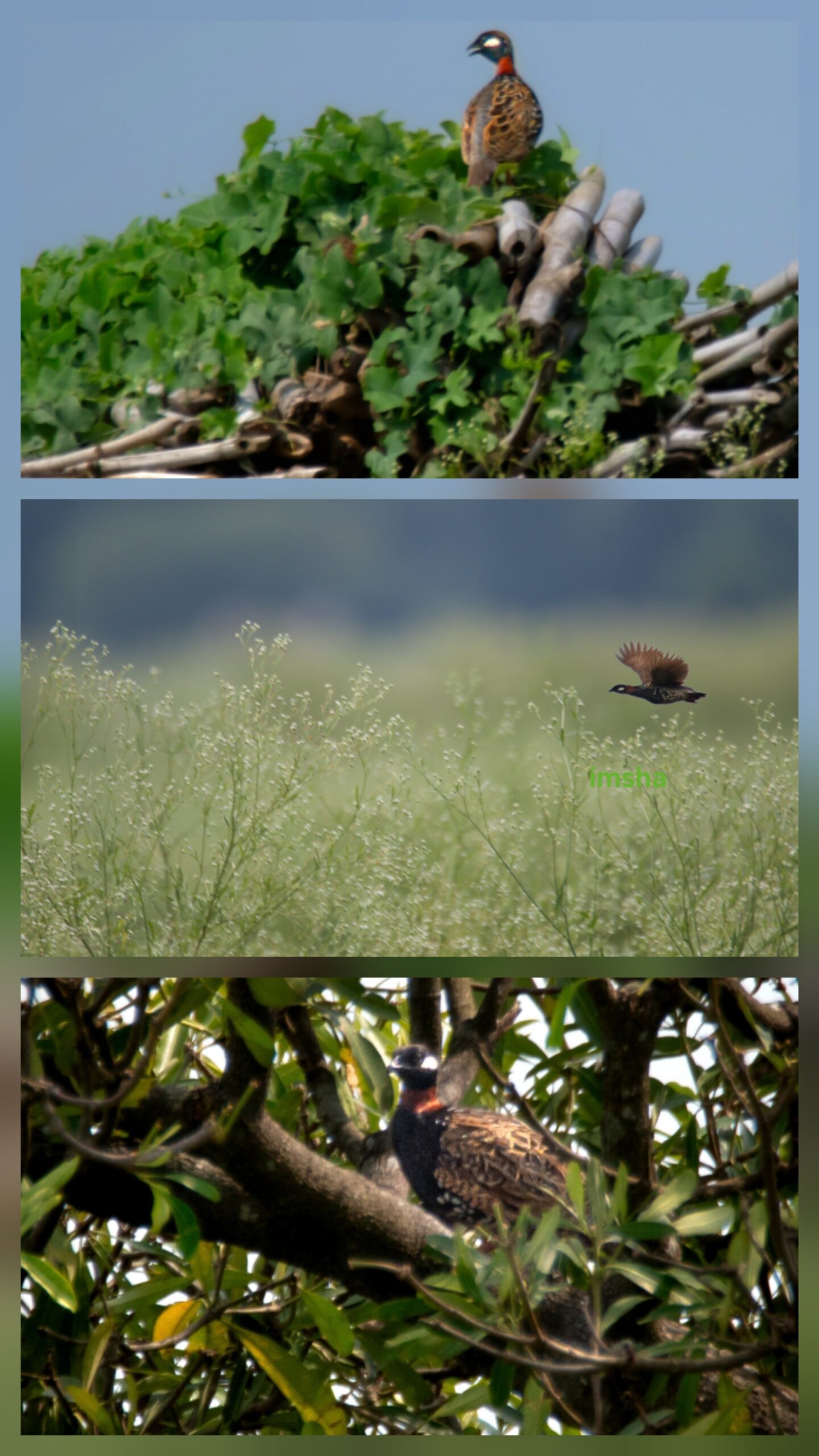
A rare sighting of the beautiful Black Francolin has recently been recorded at the Damodar River Bank in Bardhaman, drawing the attention of bird lovers and wildlife photographers from different places. Known for its striking black plumage, chestnut neck patch, and melodious call, the Black Francolin is considered an uncommon sight in this region.
The unexpected appearance of this shy ground bird has created excitement among local nature enthusiasts and birdwatchers. Early morning hours along the river bank have now become a gathering point for photographers hoping to capture this rare avian beauty in its natural habitat.
Environmentalists believe that the sighting reflects the ecological importance of the Damodar riverbank area and highlights the need for conservation of natural habitats and wetlands. Such rare appearances also encourage awareness about biodiversity and the protection of native bird species in West Bengal.
Food Habits-
Black Francolins are omnivorous birds. Their diet includes:
Seeds and grains
Grass shoots and small berries
Termites, ants, beetles, and other insects
Small snails and tiny invertebrates
They usually search for food on the ground during early morning and late afternoon.
Habitat-
They prefer:
Tall grasslands
Riverbank vegetation
Agricultural fields
Marshy lands and scrub jungles
In India, they are often seen near paddy fields, canals, and riverine habitats such as the Damodar riverbank areas of West Bengal.
Nature & Behaviour-
Mostly ground-dwelling and shy in nature
Runs quickly through grass instead of flying long distances
Lives singly, in pairs, or small family groups
Males are territorial during breeding season and call loudly from elevated spots
Active mainly during dawn and dusk
Identification
Male
Black face and underparts
White cheek patch
Rich chestnut collar around the neck
Spotted wings with striking patterns
Female
More brownish and less colorful
Better camouflage for nesting
Breeding
Breeding season in India is generally from March to September
Nest is made on the ground hidden in grass
Female lays about 6–10 eggs